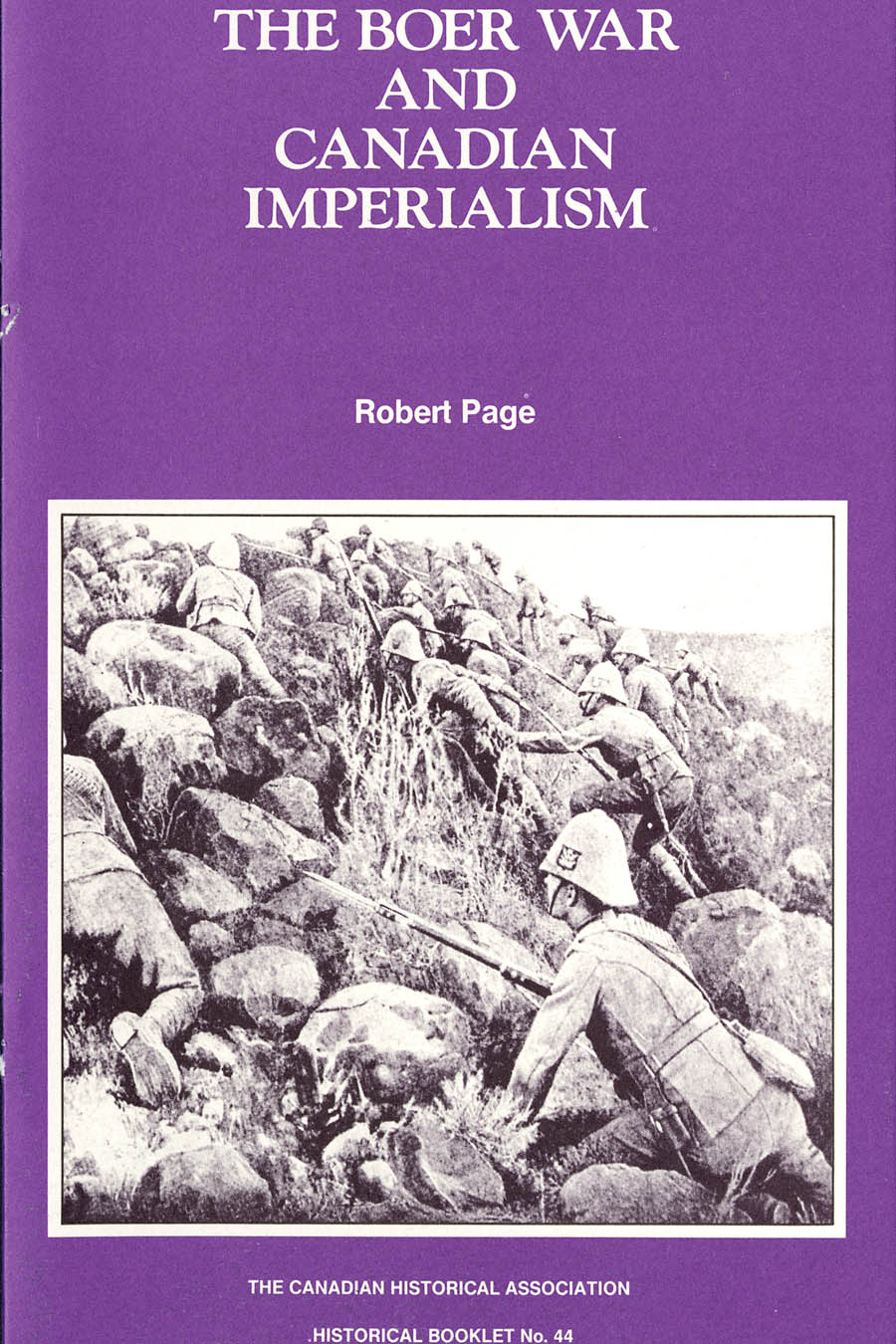
Number 44 in the Canadian Historical Association's Historical Booklets.
Very informative, brief summary of the importance of Canada's participation in the Boer War, particular with regards to domestic discussions regarding the country's place in the British Empire, the effects of participation in the war on English/French relations, and Canadian militarism.
Reflections by Dr. Gregory Klages on non-fiction books dealing primarily with politics, history, and religion. Significant attention to Canadian content. Mail me/comment if you read anything. I love to hear feedback!
Showing posts with label African history. Show all posts
Wednesday, 30 July 2014
Tuesday, 17 June 2014
Eric Williams, "Capitalism and Slavery" (1944)
Fuller comments will follow in future.
Williams wrote a highly influential, challenging, detailed history of the relationship between the economic gains to be made in the sugar trade that motivated the British and West Indians to develop and support slavery. The voluminous detail Williams includes reminded me of texts such as Solzhenitsyn's Gulag Archipelago, Tooze's Wages of Sin, and the documentary Shoah. In this respect, the book is not for the faint of heart, nor does it constitute 'light and informative' reading.
Williams' analysis is challenging in that it does not place racism at the forefront of its investigation, but rather sees racism as a contributing factor to economic needs. Williams text is not fiery Marxism, however, but rather close economic analysis, complete with profit and loss reporting, investment track records, and consideration of the sundry interests of landowners, sugar refinery operators, shippers, slave traders, and government.
The text also explores the 'triangular trade' of slaves, sugar, and manufactured goods that provided the foundation for British imperial trade monopolies of the 18th-century.
A bootleg version of the text can be located at: archives.org.
Williams wrote a highly influential, challenging, detailed history of the relationship between the economic gains to be made in the sugar trade that motivated the British and West Indians to develop and support slavery. The voluminous detail Williams includes reminded me of texts such as Solzhenitsyn's Gulag Archipelago, Tooze's Wages of Sin, and the documentary Shoah. In this respect, the book is not for the faint of heart, nor does it constitute 'light and informative' reading.
Williams' analysis is challenging in that it does not place racism at the forefront of its investigation, but rather sees racism as a contributing factor to economic needs. Williams text is not fiery Marxism, however, but rather close economic analysis, complete with profit and loss reporting, investment track records, and consideration of the sundry interests of landowners, sugar refinery operators, shippers, slave traders, and government.
The text also explores the 'triangular trade' of slaves, sugar, and manufactured goods that provided the foundation for British imperial trade monopolies of the 18th-century.
A bootleg version of the text can be located at: archives.org.
Labels:
African history,
book reviews,
business,
economics,
European history,
French history,
racism
Wednesday, 9 January 2013
David Wallechinsky, "Tyrants" (2006)
Subtitle: "The World's 20 Worst Living Dictators"
I have to admit that I was a little cynical about this book when I first picked it up. It was the kind of thing that I decided to read as a bit of a palate-cleanser, or when I didn't feel I could give my full attention to more meaningful reading.
Essentially, Wallechinsky has written short profiles of twenty dictators, organized as a series of discrete profiles of varying length and detail. In many ways, his approach reminds me of the CIA nation summaries. He usually tries to give a sense of the long-term trajectory of a state and people's development, he never loses sight of the fact that these set-ups are primarily backdrops for the 'real' story he is trying to tell. Most of his profiles try to give some sort of insights into the personal development of authoritarian leaders, such as their family background (where the information is available, and in many cases it is sketchy. He narrates their political ascent to power, where such information is available, with an eye to casting the figure as perpetually bloodthirsty and aggressive, or in a few cases as well-meaning politicians who were somehow spoiled by power.
Tyrants could very easily have gone the route of merely pandering to the often shocking habits of dictators: the excesses of their personal lives, the inconsistencies between their public pronouncements and private lives, and the arcane cults of personality that they work to develop. Wallechinsky does not shy from discussing these things, but also turns his attention to political initiatives, international policies, relations with dissident political bodies within their countries, and domestic issues such as poverty, oppression, and electoral malfeasance.
Generally speaking, the book serves as a good, though reductive overview of the tyrants in question, and the countries they lead. Although, of course, information for some of the countries has already gotten out of date, for other countries, such as Syria, for instance, it provides a handy, quick reference source to familiarize yourself with the key players, groups, and issues.
Monday, 11 June 2012
Sherene Razack, "Dark Threats & White Knights..." (2004)
The full title of this text is Dark Threats & White Knights: The Somalia Affair, Peacekeeping, and the New Imperialism. 
The sad events associated with the activities of the Canadian Airborne Regiment before they were deployed as part of a UN force in Somalia, as well as the reprehensible conduct of some of these soldiers while in Somalia are difficult to understand. Racist hazing rituals carried out by white soldiers on a black soldier in Canada, video recordings of racist epithets used to describe the mission in Somalia and Somalians, and photographs of hooded, manacled, and beaten Somali youth beside grinning, shameless Canadian soldiers are images that deeply conflict with the modern Canadian perception of ourselves as tolerant, helpful, peace loving intermediaries between conflicting parties. The government (in particular the national defence apparatus), the national media – not to mention most Canadians - were able to make sense of the shameful episode by believing that a few soldiers who got out of control produced the problems. Few asked deeper and more probing questions regarding the complicity of the military leadership, and the core beliefs that allowed the country to engage in a foreign country with its military.
Razack offers a probing analysis of what she characterizes as a distinctly Canadian form of imperialism – peacekeeping – investigating not only how its character shaped the behaviour of Canadian soldiers serving in an African nation, but how the character of this imperialism also relates to the domestic realization of imperial sensibilities.
Razack also does not avoid the difficult questions regarding the role of Aboriginal and/or mixed heritage soldiers in the Canadian Forces UN contingent, and carefully considers their unique location within Canadian imperial efforts.
Additionally, much to her credit, she does not leave unchallenged the tidy excuses that blame the panoply of transgressions carried out by Canadian soldiers on a few ‘bad apples.’
The sad events associated with the activities of the Canadian Airborne Regiment before they were deployed as part of a UN force in Somalia, as well as the reprehensible conduct of some of these soldiers while in Somalia are difficult to understand. Racist hazing rituals carried out by white soldiers on a black soldier in Canada, video recordings of racist epithets used to describe the mission in Somalia and Somalians, and photographs of hooded, manacled, and beaten Somali youth beside grinning, shameless Canadian soldiers are images that deeply conflict with the modern Canadian perception of ourselves as tolerant, helpful, peace loving intermediaries between conflicting parties. The government (in particular the national defence apparatus), the national media – not to mention most Canadians - were able to make sense of the shameful episode by believing that a few soldiers who got out of control produced the problems. Few asked deeper and more probing questions regarding the complicity of the military leadership, and the core beliefs that allowed the country to engage in a foreign country with its military.
Razack offers a probing analysis of what she characterizes as a distinctly Canadian form of imperialism – peacekeeping – investigating not only how its character shaped the behaviour of Canadian soldiers serving in an African nation, but how the character of this imperialism also relates to the domestic realization of imperial sensibilities.
Razack also does not avoid the difficult questions regarding the role of Aboriginal and/or mixed heritage soldiers in the Canadian Forces UN contingent, and carefully considers their unique location within Canadian imperial efforts.
Additionally, much to her credit, she does not leave unchallenged the tidy excuses that blame the panoply of transgressions carried out by Canadian soldiers on a few ‘bad apples.’
Thursday, 10 March 2011
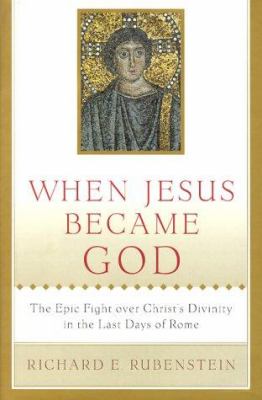
Richard Rubinstein, "When Jesus Became God" (2001)
The full title of this book is When Jesus Became God: The Struggle to Define Christianity During the Last Days of Rome.
Rubinstein manages the difficult job of making early Christian church debates about the nature of Christ easy-to-read with aplomb. The first fifty pages or so fairly clearly and efficiently explain the difference between the Arians and anti-Arians (who, essentially, debated whether Christ was man or God). By mid-text, however, the narrative seems far more concerned with the ebb and flow of the political arms of these debates than the theological elements.
It is not until the last 30 pages or so that Rubinstein reveals that what he has really been narrating is the long-trajectory development of the Nicene Creed, an oath of sorts intended to provide a foundational 'basic contract' of what Catholics (and later, Roman Catholics) believe. The book outlines disagreements that developed between the Arians and anti-Arians, particularly around the question of the relationship (and/or differences between) Jesus Christ and God in early Christian belief. Through a patient, sometimes laborious tracking of political contests (there was clearly no separation of Church and State during this time!) Rubinstein illustrates how church elders, theologians, and Roman imperial leadership fought for political and theological power. With the adoption of the Nicene Creed, and its evolution over the course of fifty years or so, the anti-Arians won - leading to the promulgation of concepts such as the Holy Trinity, with its complex singularity of and yet difference between God, Jesus, and the Holy Spirit.
Click here to read some excerpts.
Rubinstein manages the difficult job of making early Christian church debates about the nature of Christ easy-to-read with aplomb. The first fifty pages or so fairly clearly and efficiently explain the difference between the Arians and anti-Arians (who, essentially, debated whether Christ was man or God). By mid-text, however, the narrative seems far more concerned with the ebb and flow of the political arms of these debates than the theological elements.
It is not until the last 30 pages or so that Rubinstein reveals that what he has really been narrating is the long-trajectory development of the Nicene Creed, an oath of sorts intended to provide a foundational 'basic contract' of what Catholics (and later, Roman Catholics) believe. The book outlines disagreements that developed between the Arians and anti-Arians, particularly around the question of the relationship (and/or differences between) Jesus Christ and God in early Christian belief. Through a patient, sometimes laborious tracking of political contests (there was clearly no separation of Church and State during this time!) Rubinstein illustrates how church elders, theologians, and Roman imperial leadership fought for political and theological power. With the adoption of the Nicene Creed, and its evolution over the course of fifty years or so, the anti-Arians won - leading to the promulgation of concepts such as the Holy Trinity, with its complex singularity of and yet difference between God, Jesus, and the Holy Spirit.
Click here to read some excerpts.
Labels:
African history,
book reviews,
European history,
religion
Tuesday, 30 November 2010
Martin Meredith, "The Fate of Africa" (2006)
The full title of this release is "The Fate of Africa: From the Hopes of Freedom to the Heart of Despair - Fifty Years of Independence".
Although Meredith offers a short introduction of pre-World War II African history, his story really begins with the deposition of Egypt's King Farouk and the Suez Crisis of 1956.
In the first half of the book, Meredith avoids getting bogged down in details, and concentrates on narrative. By 200 pages in, however, the narrative momentum is difficult to maintain. As he describes how individual countries pursued different paths to independence, and responded to the challenges of independence differently, a macro/regional approach makes less sense. It also makes tougher writing, of course. Attempting to track the development of individual countries starts to considerably complicate the narrative, and boggles the casual reader.
Likely as a way to manage this challenge, Meredith moves to a thematic focus, using chapters to deal with individual countries or themes such as AIDS. Placed within the complicated context he has narrated, the unpacking of tragedies such as Rwanda and the Congo made much more sense.
Meredith has set himself an impressive, difficult to manage task: to write a fifty-year history of the continent that has seen some of the most rapid and dangerous social, political, and economic changes since World War II. Weaknesses are to be expected. His book is... ok. As casual reading it is a bit of a slog, but does provide a useful reference, and does concisely and clearly establish some of the major lines of African contemporary history. He also, for better or worse, places his ideological premises front and centre, making no apologies for the positive roles he feels international trade, as well as international financial and political organizations can and have played in Africa since the Second World War.
Although Meredith offers a short introduction of pre-World War II African history, his story really begins with the deposition of Egypt's King Farouk and the Suez Crisis of 1956.
In the first half of the book, Meredith avoids getting bogged down in details, and concentrates on narrative. By 200 pages in, however, the narrative momentum is difficult to maintain. As he describes how individual countries pursued different paths to independence, and responded to the challenges of independence differently, a macro/regional approach makes less sense. It also makes tougher writing, of course. Attempting to track the development of individual countries starts to considerably complicate the narrative, and boggles the casual reader.
Likely as a way to manage this challenge, Meredith moves to a thematic focus, using chapters to deal with individual countries or themes such as AIDS. Placed within the complicated context he has narrated, the unpacking of tragedies such as Rwanda and the Congo made much more sense.
Meredith has set himself an impressive, difficult to manage task: to write a fifty-year history of the continent that has seen some of the most rapid and dangerous social, political, and economic changes since World War II. Weaknesses are to be expected. His book is... ok. As casual reading it is a bit of a slog, but does provide a useful reference, and does concisely and clearly establish some of the major lines of African contemporary history. He also, for better or worse, places his ideological premises front and centre, making no apologies for the positive roles he feels international trade, as well as international financial and political organizations can and have played in Africa since the Second World War.
Labels:
African history,
book reviews,
Cold War history
Subscribe to:
Posts (Atom)