Subtitle: "Remembering All the Things I Drank to Forget."
Read, but comments not yet written.
Consider this a placeholder.
For a similar read, see my comments on Lauren Davis' The Empty Room.
Reflections by Dr. Gregory Klages on non-fiction books dealing primarily with politics, history, and religion. Significant attention to Canadian content. Mail me/comment if you read anything. I love to hear feedback!
Showing posts with label addiction. Show all posts
Wednesday, 21 October 2015
Tuesday, 23 June 2015
Joan Didion, "The Year of Magical Thinking" (2006)
Didion explores a critical year in her life in its immediate aftermath. Her daughter experiences a near-fatal medical condition. Her husband dies at home in front of her. In short, her world stops, lets her off, and then proceeds to drive over a cliff. She is left standing at the top, watching, and wondering what the hell happened.
Grief is a funny thing, perhaps like addiction. It's difficult to explain to those who haven't been there, and to them, any description makes the experience seem silly and indulgent. Any description seems incomplete, though, inadequate to the strength of the emotions felt and not felt.
Didion's book is both frustrating and touching. I chalk this up to the idea that it was written less for her audience than for herself. It is almost like a diary… like having a coffee with someone who is grieving, and who is thinking out loud. Her writing is compelling. Her thinking is circular, repetitive, and obsessive. She second-guesses her decision, plays scenarios (important and innocuous) over and over through her thoughts, and members and re-members her memories, attempting to construct a clear, linear, comprehensible narrative that explains what she is feeling.
Jim Murdoch offers a very insightful review.
Some noteworthy quotations:
- Chapter 5: "one more case of maintaining a fixed focus on the clear blue sky from which the plane fell…"
I just really like this image. It captures grief so well.
- Chapter 15: "John would wait until I came uptown at eleven or so to have dinner with me. We would walk to Coco Pazzo on those hot July nights and split an order of pasta and a salad at one of the little unreserved tables in the bar. I do not think we ever discussed the convention during these late dinners. On the Sunday afternoon before it began I had talked him into going uptown with me to a Louis Farrakhan event that never materialized, and between the improvisational nature of the scheduling and the walk back downtown from 125th Street his tolerance for the 1992 Democratic convention was pretty much exhausted. Still. He waited every night to eat with me. I thought about all this on the Tower C escalator and suddenly it occurred to me: I had spent a minute or two on this escalator thinking about the November night in 2003 before we flew to Paris and about those July nights in 1992 when we would eat late at Coco Pazzo and about the afternoon we had stood around 125th Street waiting for the Louis Farrakhan event that never happened."
This section reminds me of Gertrude Stein's 'Making of Americans'. There's something about the elliptical narrative, the fruitless repetition that is observed but unstoppable which resides somewhere between obsession and compulsion which is fascinating.
- Chapter 22: "if we are to live ourselves there comes a point at which we must relinquish the dead, let them go, keep them dead."
This suggestion resonates, but is difficult to reconcile with my interest in memorialization, public history, and myth-making.
Grief is a funny thing, perhaps like addiction. It's difficult to explain to those who haven't been there, and to them, any description makes the experience seem silly and indulgent. Any description seems incomplete, though, inadequate to the strength of the emotions felt and not felt.
Didion's book is both frustrating and touching. I chalk this up to the idea that it was written less for her audience than for herself. It is almost like a diary… like having a coffee with someone who is grieving, and who is thinking out loud. Her writing is compelling. Her thinking is circular, repetitive, and obsessive. She second-guesses her decision, plays scenarios (important and innocuous) over and over through her thoughts, and members and re-members her memories, attempting to construct a clear, linear, comprehensible narrative that explains what she is feeling.
Jim Murdoch offers a very insightful review.
Some noteworthy quotations:
- Chapter 5: "one more case of maintaining a fixed focus on the clear blue sky from which the plane fell…"
I just really like this image. It captures grief so well.
- Chapter 15: "John would wait until I came uptown at eleven or so to have dinner with me. We would walk to Coco Pazzo on those hot July nights and split an order of pasta and a salad at one of the little unreserved tables in the bar. I do not think we ever discussed the convention during these late dinners. On the Sunday afternoon before it began I had talked him into going uptown with me to a Louis Farrakhan event that never materialized, and between the improvisational nature of the scheduling and the walk back downtown from 125th Street his tolerance for the 1992 Democratic convention was pretty much exhausted. Still. He waited every night to eat with me. I thought about all this on the Tower C escalator and suddenly it occurred to me: I had spent a minute or two on this escalator thinking about the November night in 2003 before we flew to Paris and about those July nights in 1992 when we would eat late at Coco Pazzo and about the afternoon we had stood around 125th Street waiting for the Louis Farrakhan event that never happened."
This section reminds me of Gertrude Stein's 'Making of Americans'. There's something about the elliptical narrative, the fruitless repetition that is observed but unstoppable which resides somewhere between obsession and compulsion which is fascinating.
- Chapter 22: "if we are to live ourselves there comes a point at which we must relinquish the dead, let them go, keep them dead."
This suggestion resonates, but is difficult to reconcile with my interest in memorialization, public history, and myth-making.
Labels:
addiction,
biography,
book reviews,
Historiography,
mental health,
self-help
Wednesday, 18 March 2015
Roy Porter, "Madness: A Brief History" (2002)
This short but pithy and informative book is an excellent read.
This similarly short and to-the-point review from Medical History will suffice to whet your appetite.
Comments and references that caught my attention:
- 32/33: “John Locke wrote to insist upon The Reasonableness of Christianity (1694): even religion now had to be rational. This pathologization of religious madness led Enlightenment free-thinkers to pathologize religiosity at large. In effect, this was also, much later, Freud’s position. God was an illusion, faith ‘wish-fulfilment’, and belief, though all too real, was a mental projection satisfying neurotic needs, to be explained in terms of the sublimation of suppressed sexuality or of the death wish. In reducing religion to psychopathology, Freud was echoing the more biting of the philosophes, like Voltaire and Diderot, who adjudged Christian beliefs the morbid secretion of sick brains. These days, while the Churches continue to accept, in principle, the reality of visions, spirit possession, and exorcism, they are profoundly suspicious of credulity and deception. The Roman Catholic or Anglican who claims to be assailed by the Devil has become an embarrassment. His priest may try to persuade him that such doctrines are merely metaphorical; and, if he persists, he may be urged to see a psychotherapist.”
- 89: “Foucault claimed that the great confinement essentially involved the sequestration of the mad poor by supporters of the bourgeois work ethic, and in his Madmen and the Bourgeoisie: A Social History of Insanity and Psychiatry (1981) Klaus Doerner followed suit. But there is little trace of organized labour in early asylums—indeed, critics accused them of being dens of idleness. And enterprising madhouse proprietors naturally sought rich and genteel patients, who would not be expected to work.”
- 93/94: “The decades around 1800 brought surging faith in the efficacy of personal treatment in sheltered asylum environments. In England, such doctors as Thomas Arnold, Joseph Mason Cox, and Francis Willis (called in to treat George III in 1788) followed Battie’s watchword that ‘management did more than medicine’ and pioneered a ‘moral management’ through which the experienced therapist would outwit the deluded psyche of his patient.”
- 94: “Shortly afterwards, the York Retreat developed ‘moral therapy’, with its emphasis upon community life in a domestic environment designed to recondition behaviour. The York Asylum, a charitable institution, had become bemired in scandal. By way of a counterinitiative, the local Quaker community, led by a tea merchant, William Tuke, established an alternative, the Retreat, opened in 1796. It was modelled on the ideal of bourgeois family life, and restraint was minimized. Patients and staff lived, worked, and dined together in an environment where recovery was encouraged through praise and blame, rewards and punishment, the goal being the restoration of self-control.”
- 98/99: “Criticism thus led not to the abolition of the madhouse, but to its rebirth, and institutionalization was transformed from a hand-to-mouth expedient into a positive ideal. In France the reforms of Pinel and the new legal requirements of the Napoleonic Code were further codified in the key statute of 1838. This formally required each departement either to establish public asylums, or to ensure the provision of adequate facilities. It guarded against improper confinement by establishing rules for the certification of lunatics by medical officers—though for paupers a prefect’s signature remained sufficient. Prefects were also given powers to inspect. Similar legislation was passed in Belgium twelve years later.
A comparable reform programme was put through in England, despite opposition from vested medical interests. Scandals revealing the improper confinement of the sane had already led to the Madhouses Act of 1774. Under its provisions, private madhouses had to be licensed annually by magistrates; a maximum size for each asylum was established; renewal of licences would depend upon satisfactory maintenance of admissions registers. Magistrates were empowered to carry out visitations (in London the inspecting body was a committee of the Royal College of Physicians). Most importantly, certification was instituted. Henceforth, although paupers could continue to be confined by magistrates, for all others a letter from a medical practitioner would be required to make confinement lawful. Further reforms followed. The 1774 legislation was strengthened in a series of Acts passed from 1828, above all establishing the Commissioners in Lunacy, first for the metropolis and then for the whole country. The Commissioners constituted a permanent body of inspectors (made up of doctors and lawyers) empowered to prosecute unlawful practices and to deny renewal of licences. They also took it upon themselves to improve and standardize care and treatment. The Commission ensured eradication of the worst abuses, for example, by requiring that all cases of the use of restraint should be documented. Safeguards against improper confinement were extended. Under an influential consolidating Act of 1890, two medical certificates were required for the detention of all patients.”
- 100: “Similar developments occurred in the United States, where the asylum arrived in the nineteenth century. The success of the York Retreat was the impulse behind the Frankford Asylum in Pennsylvania (1817), the Friends’ Asylum near Philadelphia (1817), the McClean Hospital in Boston (1818), the Bloomingdale Asylum in New York (1821), and the Hartford Retreat in Hartford, Connecticut, founded in 1824. Most early American asylums combined private (paying) and public (charity) patients. As in France, the early asylum era in America was spearheaded by physicians specializing in mental disorders, notably Samuel B. Woodward at the Worcester State Hospital and Pliny Earle of the Bloomingdale Asylum in New York, both of whom integrated medical and moral therapies in a climate of Pinelian therapeutic optimism. They were among the thirteen originators of the Association of Medical Superintendents of American Institutions for the Insane, established in 1844—it later became the American Psychiatric Association.”
- 101/102: “Throughout Europe, it was the nineteenth century which brought a skyrocketing in the number and scale of mental hospitals. In England, patient numbers climbed from perhaps 10,000 in 1800 to ten times that number in 1900. The jump in numbers was especially marked in new nation states. In Italy, no more than 8,000 had been confined as late as 1881; by 1907 that had soared to 40,000. Such increases are not hard to explain. Positivistic, bureaucratic, utilitarian, and professional mentalities vested great faith in institutional solutions in general— indeed quite literally in bricks and mortar. Schools, workhouses, prisons, hospitals, and asylums—would these not contain and solve the social problems spawned by demographic change, urbanization, and industrialization?”
- 103/104: “In England ‘non-restraint’ was introduced in the 1830s, by Robert Gardiner Hill at the Lincoln Asylum and independently John Conolly at the new Middlesex County Lunatic Asylum at Hanwell on London’s western outskirts. Taking moral therapy to its logical conclusion, Hill and Conolly renounced all forms of mechanical coercion whatsoever: not just irons and manacles but fabric cuffs and straitjackets too. These would be replaced by surveillance under ample trained attendants and a regime of labour, which would stimulate the mind and discipline the body.”
- 105: “…absolute non-restraint was seen by Continental reformers as a quixotically English idée fixe, a foible of doctrinaire liberalism, and it was little imitated. But French and German reformers made resourceful use of the asylum environment in their own ways. Work therapy was widely favoured. Planted in the countryside, the asylum typically became a self-sufficient colony, with its own farms, laundries, and workshops, partly for reasons of economy, partly to implement cures through labour. In France balneological treatments became a key feature of ‘asylum science’ (police intérieure). In Germany, C. F. W. Roller spelt out detailed directives for such matters as non-slip, smell-proof flooring, good drains, apparel, diet, and exercise at the influential Illenau asylum in Baden, where music and movement therapies were also pioneered. Everywhere, the care and cure of the mad became the subjects of the new ‘science’ of asylum management, spread by professional organs such as the significantly named Asylum Journal.”
- 139: “To some extent, psychiatrists were victims of their own propaganda. They had insisted that many of the aberrant and antisocial behaviours traditionally labelled vice, sin, and crime were actually mental disorders in need of the doctor and the asylum. As a result, magistrates deflected difficult cases from the workhouse or jail, but superintendents then discovered to their dismay and cost that rehabilitation posed more problems than anticipated. Furthermore, the senile and the demented, along with epileptics, paralytics, sufferers from tertiary syphilis (GPI), and other degenerative neurological disorders were increasingly shepherded through the asylum gates. For all such conditions, the prognosis was gloomy, and the asylum became a dustbin for hopeless cases.”
- 156: “Pinel’s favourite follower was Jean-Etienne Dominique Esquirol (1772-1840), whose Mental Maladies (1838) was the outstanding psychiatric text of his age. While asserting the ultimately organic nature of psychiatric disorders, Esquirol concentrated, like his mentor, on their psycho-social triggers. The diagnosis of ‘monomania’ was developed to describe a partial insanity identified with affective disorders, especially those involving paranoia, and he further delineated such conditions as kleptomania, nymphomania, and pyro-mania, detectable in advance only to the trained eye. A champion of the asylum as a therapeutic instrument, he became an authority on its design, and planned the National Asylum at Charenton, a suburb of Paris, of which he was appointed director. (It briefly housed the ageing Marquis de Sade.)”
- 156/7: “…the condition known as general paresis of the insane (one manifestation of tertiary syphilis) was elucidated in 1822 by Antoine Laurent Bayle. Although the micro-organism which causes syphilis had not yet been discovered—the bacteriological era lay ahead— the neurological and psychological features of GPI (notably euphoria and expansiveness), combined with the organic changes revealed by autopsy, supported Esquirol’s conviction that psychiatric disorders could be revealed using the techniques championed by such great French pathological anatomists as Laennec who had investigated tuberculosis and other internal conditions. Closely related to GPI, tabes dorsalis was another disorder, prevalent in the nineteenth century, which became the focus of neuro-pathological research. It was the subject of a masterly clinical study published in 1858 by Guillaume Duchenne, which established its syphilitic origin: so definitive was his account that it was soon named ‘Duchenne’s disease’. He was also at the forefront in describing many other neurological disorders involving personality degeneration, including progressive muscular atrophy and locomotor ataxia (lack of coordination in movement).”
- 177: “in the new world, where George M. Beard (1839-83) popularized the concept of ‘neurasthenia’, nervous breakdown produced by the frantic pressures of advanced civilization, which drained the individual’s reserves of ‘nerve force’. ‘American nervousness is the product of American civilization’ , he pronounced with mingled pride and regret. Neurasthenia’s prevalence in the modern era was no mystery, held Beard: the telegraph, railroad, press, and the market-driven rat race of Wall Street had rendered life insupportably hectic, intense, and stressful. Civilization made demands on nervous systems that nature had never anticipated. As with the eighteenth-century ‘English malady’, neurasthenia struck the elite and flagged up civilization and its discontents. Beard’s ideas were given a practical twist by Silas Weir Mitchell, who introduced the ‘Weir Mitchell treatment’—bed rest, strict isolation, fattening up with milk puddings, and passive massage—to counter such fatiguing tendencies amongst the neurasthenic.”
- 181: “The insanity plea became controversial in Britain when the trial in 1843 of Daniel M’Naghten for the murder of Prime Minister Sir Robert Peel’s private secretary was stopped on the grounds of insanity. The resulting furore led to new guidelines being drawn up, by the House of Lords, to clarify the legal basis for criminal insanity. The M’Naghten Rules (1844) grounded the insanity defence in the defendant’s inability to distinguish right from wrong. This pre-empted the claim advanced by post-Esquirolian psychiatrists that the grounds should be ‘irresistible impulse’, that is, disorders of emotion and volition, independently of delusions of the understanding. In France by contrast, ‘irresistible impulse’ and partial and temporary insanity figured large in the plea of insanity and crime passionelle. Disputes over the insanity defence (who was bad? who was mad?) highlighted conflicts between legal and psychiatric models of the person, and left the public standing of psychiatry dubious.”
- 182: “Mental illness, Hunter and Macalpine believed, was not psychogenic. Hence the utterances of the insane were but cries of distress—and not necessarily even good clues to its nature. You don’t crack mental illness by decoding what the mad say: for, they held, mental disease had a biological base. Powerful psychiatric currents have furthered such tendencies to silence the insane, especially in institutional environments.”
- 183: “…did not the methods of the natural sciences prescribe observation and objectivity, not interaction and interpretation? The noisiest patients were shunted off into the back wards, and all too often those who were shut up were, indeed, ‘shut up’—or at least nobody attended to what they were uttering, there being less communication than excommunication.”
- 215: “The course of psychiatric illness, he insisted, offered the best clue to its nature, rather than, as in common practice, the raft of symptoms the patient showed at a particular moment. On this basis, Kraepelin wrought a great innovation in disease concepts and classification. Amalgamating Morel’s demence precoce with the notion of hebephrenia (psychosis in the young, marked by regressive behaviour) developed by Karl Kahlbaum and his pupil Ewald Hecker, he launched the model of a degenerative condition which he named dementia praecox, to be decisively distinguished from manic-depressive psychoses (Falret’s ‘circular insanity’). The archetypal dementia praecox sufferer as pictured by Kraepelin on the basis of meticulous clinical experience might be astute and clever, but he seemed to have forsaken his humanity, abandoned all desire to participate in society, and withdrawn into a solipsistic world of his own, perhaps mute, violent, and paranoid. Kraepelin routinely used phrases like ‘atrophy of the emotions’ and ‘vitiation of the will’ to convey the sense that they were moral perverts, psychopaths, almost a species apart. As the precursor to schizophrenia, Kraepelin’s dementia praecox has left an indelible mark on modern psychiatry.”
- 242: “Invasive treatments equally reflect the powerlessness of patients in the face of arrogant and reckless doctors, and the ease with which they became experimental fodder. In a now notorious experiment, hundreds of black mental patients at the Tuskeegee Asylum in Alabama were guinea pigs without their knowledge or consent in an experiment to test longterm responses to syphilis, a minor echo of the atrocities committed by Nazi psychiatrists.”
- 272: “The growing centrality of women to psychiatry over the last couple of centuries is superbly handled in Elaine Showalter’s The Female Malady: Women, Madness, and English Culture, 1830-1980 (New York: Pantheon Press, 1986)…”
- 272: “Andrew Scull, Museums of Madness: The Social Organization of Insanity in Nineteenth-Century England (London: Allen Lane, 1979)—this has appeared in revised form as The Most Solitary of Afflictions: Madness and Society in Britain, 1700—1900 (New Haven and London: Yale University Press, 1993)”
- 276: “Leonard D. Smith, Cure, Comfort and Safe Custody: Public Lunatic Asylums in Early Nineteenth-Century England (London: Cassell, 1999)”
- 279: “Extracts from nineteenth-century English psychiatric texts may be found in Vieda Skultans, Madness and Morals: Ideas on Insanity in the Nineteenth Century (London and Boston: Routledge & Kegan Paul, 1975).”
- 279: “Autobiographical writings of ‘mad’ people have been anthologized and surveyed in Dale Peterson (ed.), A Mad People’s History of Madness (Pittsburgh: University of Pittsburgh Press, 1982); Michael Glenn (ed.), Voices from the Asylum (New York: Harper & Row, 1974); Allan Ingram, Voices of Madness: Four Pamphlets, 16831796 (Stroud: Sutton Publishing, 1997) and Roy Porter (ed.), The Faber Book of Madness (London: Faber, 1991; paperback 1993). Some attempt at reproducing their ‘view’ is offered in Roy Porter, A Social History of Madness: Stories of the Insane (London: Weidenfeld & Nicolson, 1987).”
This similarly short and to-the-point review from Medical History will suffice to whet your appetite.
Comments and references that caught my attention:
- 32/33: “John Locke wrote to insist upon The Reasonableness of Christianity (1694): even religion now had to be rational. This pathologization of religious madness led Enlightenment free-thinkers to pathologize religiosity at large. In effect, this was also, much later, Freud’s position. God was an illusion, faith ‘wish-fulfilment’, and belief, though all too real, was a mental projection satisfying neurotic needs, to be explained in terms of the sublimation of suppressed sexuality or of the death wish. In reducing religion to psychopathology, Freud was echoing the more biting of the philosophes, like Voltaire and Diderot, who adjudged Christian beliefs the morbid secretion of sick brains. These days, while the Churches continue to accept, in principle, the reality of visions, spirit possession, and exorcism, they are profoundly suspicious of credulity and deception. The Roman Catholic or Anglican who claims to be assailed by the Devil has become an embarrassment. His priest may try to persuade him that such doctrines are merely metaphorical; and, if he persists, he may be urged to see a psychotherapist.”
- 89: “Foucault claimed that the great confinement essentially involved the sequestration of the mad poor by supporters of the bourgeois work ethic, and in his Madmen and the Bourgeoisie: A Social History of Insanity and Psychiatry (1981) Klaus Doerner followed suit. But there is little trace of organized labour in early asylums—indeed, critics accused them of being dens of idleness. And enterprising madhouse proprietors naturally sought rich and genteel patients, who would not be expected to work.”
- 93/94: “The decades around 1800 brought surging faith in the efficacy of personal treatment in sheltered asylum environments. In England, such doctors as Thomas Arnold, Joseph Mason Cox, and Francis Willis (called in to treat George III in 1788) followed Battie’s watchword that ‘management did more than medicine’ and pioneered a ‘moral management’ through which the experienced therapist would outwit the deluded psyche of his patient.”
- 94: “Shortly afterwards, the York Retreat developed ‘moral therapy’, with its emphasis upon community life in a domestic environment designed to recondition behaviour. The York Asylum, a charitable institution, had become bemired in scandal. By way of a counterinitiative, the local Quaker community, led by a tea merchant, William Tuke, established an alternative, the Retreat, opened in 1796. It was modelled on the ideal of bourgeois family life, and restraint was minimized. Patients and staff lived, worked, and dined together in an environment where recovery was encouraged through praise and blame, rewards and punishment, the goal being the restoration of self-control.”
- 98/99: “Criticism thus led not to the abolition of the madhouse, but to its rebirth, and institutionalization was transformed from a hand-to-mouth expedient into a positive ideal. In France the reforms of Pinel and the new legal requirements of the Napoleonic Code were further codified in the key statute of 1838. This formally required each departement either to establish public asylums, or to ensure the provision of adequate facilities. It guarded against improper confinement by establishing rules for the certification of lunatics by medical officers—though for paupers a prefect’s signature remained sufficient. Prefects were also given powers to inspect. Similar legislation was passed in Belgium twelve years later.
A comparable reform programme was put through in England, despite opposition from vested medical interests. Scandals revealing the improper confinement of the sane had already led to the Madhouses Act of 1774. Under its provisions, private madhouses had to be licensed annually by magistrates; a maximum size for each asylum was established; renewal of licences would depend upon satisfactory maintenance of admissions registers. Magistrates were empowered to carry out visitations (in London the inspecting body was a committee of the Royal College of Physicians). Most importantly, certification was instituted. Henceforth, although paupers could continue to be confined by magistrates, for all others a letter from a medical practitioner would be required to make confinement lawful. Further reforms followed. The 1774 legislation was strengthened in a series of Acts passed from 1828, above all establishing the Commissioners in Lunacy, first for the metropolis and then for the whole country. The Commissioners constituted a permanent body of inspectors (made up of doctors and lawyers) empowered to prosecute unlawful practices and to deny renewal of licences. They also took it upon themselves to improve and standardize care and treatment. The Commission ensured eradication of the worst abuses, for example, by requiring that all cases of the use of restraint should be documented. Safeguards against improper confinement were extended. Under an influential consolidating Act of 1890, two medical certificates were required for the detention of all patients.”
- 100: “Similar developments occurred in the United States, where the asylum arrived in the nineteenth century. The success of the York Retreat was the impulse behind the Frankford Asylum in Pennsylvania (1817), the Friends’ Asylum near Philadelphia (1817), the McClean Hospital in Boston (1818), the Bloomingdale Asylum in New York (1821), and the Hartford Retreat in Hartford, Connecticut, founded in 1824. Most early American asylums combined private (paying) and public (charity) patients. As in France, the early asylum era in America was spearheaded by physicians specializing in mental disorders, notably Samuel B. Woodward at the Worcester State Hospital and Pliny Earle of the Bloomingdale Asylum in New York, both of whom integrated medical and moral therapies in a climate of Pinelian therapeutic optimism. They were among the thirteen originators of the Association of Medical Superintendents of American Institutions for the Insane, established in 1844—it later became the American Psychiatric Association.”
- 101/102: “Throughout Europe, it was the nineteenth century which brought a skyrocketing in the number and scale of mental hospitals. In England, patient numbers climbed from perhaps 10,000 in 1800 to ten times that number in 1900. The jump in numbers was especially marked in new nation states. In Italy, no more than 8,000 had been confined as late as 1881; by 1907 that had soared to 40,000. Such increases are not hard to explain. Positivistic, bureaucratic, utilitarian, and professional mentalities vested great faith in institutional solutions in general— indeed quite literally in bricks and mortar. Schools, workhouses, prisons, hospitals, and asylums—would these not contain and solve the social problems spawned by demographic change, urbanization, and industrialization?”
- 103/104: “In England ‘non-restraint’ was introduced in the 1830s, by Robert Gardiner Hill at the Lincoln Asylum and independently John Conolly at the new Middlesex County Lunatic Asylum at Hanwell on London’s western outskirts. Taking moral therapy to its logical conclusion, Hill and Conolly renounced all forms of mechanical coercion whatsoever: not just irons and manacles but fabric cuffs and straitjackets too. These would be replaced by surveillance under ample trained attendants and a regime of labour, which would stimulate the mind and discipline the body.”
- 105: “…absolute non-restraint was seen by Continental reformers as a quixotically English idée fixe, a foible of doctrinaire liberalism, and it was little imitated. But French and German reformers made resourceful use of the asylum environment in their own ways. Work therapy was widely favoured. Planted in the countryside, the asylum typically became a self-sufficient colony, with its own farms, laundries, and workshops, partly for reasons of economy, partly to implement cures through labour. In France balneological treatments became a key feature of ‘asylum science’ (police intérieure). In Germany, C. F. W. Roller spelt out detailed directives for such matters as non-slip, smell-proof flooring, good drains, apparel, diet, and exercise at the influential Illenau asylum in Baden, where music and movement therapies were also pioneered. Everywhere, the care and cure of the mad became the subjects of the new ‘science’ of asylum management, spread by professional organs such as the significantly named Asylum Journal.”
- 139: “To some extent, psychiatrists were victims of their own propaganda. They had insisted that many of the aberrant and antisocial behaviours traditionally labelled vice, sin, and crime were actually mental disorders in need of the doctor and the asylum. As a result, magistrates deflected difficult cases from the workhouse or jail, but superintendents then discovered to their dismay and cost that rehabilitation posed more problems than anticipated. Furthermore, the senile and the demented, along with epileptics, paralytics, sufferers from tertiary syphilis (GPI), and other degenerative neurological disorders were increasingly shepherded through the asylum gates. For all such conditions, the prognosis was gloomy, and the asylum became a dustbin for hopeless cases.”
- 156: “Pinel’s favourite follower was Jean-Etienne Dominique Esquirol (1772-1840), whose Mental Maladies (1838) was the outstanding psychiatric text of his age. While asserting the ultimately organic nature of psychiatric disorders, Esquirol concentrated, like his mentor, on their psycho-social triggers. The diagnosis of ‘monomania’ was developed to describe a partial insanity identified with affective disorders, especially those involving paranoia, and he further delineated such conditions as kleptomania, nymphomania, and pyro-mania, detectable in advance only to the trained eye. A champion of the asylum as a therapeutic instrument, he became an authority on its design, and planned the National Asylum at Charenton, a suburb of Paris, of which he was appointed director. (It briefly housed the ageing Marquis de Sade.)”
- 156/7: “…the condition known as general paresis of the insane (one manifestation of tertiary syphilis) was elucidated in 1822 by Antoine Laurent Bayle. Although the micro-organism which causes syphilis had not yet been discovered—the bacteriological era lay ahead— the neurological and psychological features of GPI (notably euphoria and expansiveness), combined with the organic changes revealed by autopsy, supported Esquirol’s conviction that psychiatric disorders could be revealed using the techniques championed by such great French pathological anatomists as Laennec who had investigated tuberculosis and other internal conditions. Closely related to GPI, tabes dorsalis was another disorder, prevalent in the nineteenth century, which became the focus of neuro-pathological research. It was the subject of a masterly clinical study published in 1858 by Guillaume Duchenne, which established its syphilitic origin: so definitive was his account that it was soon named ‘Duchenne’s disease’. He was also at the forefront in describing many other neurological disorders involving personality degeneration, including progressive muscular atrophy and locomotor ataxia (lack of coordination in movement).”
- 177: “in the new world, where George M. Beard (1839-83) popularized the concept of ‘neurasthenia’, nervous breakdown produced by the frantic pressures of advanced civilization, which drained the individual’s reserves of ‘nerve force’. ‘American nervousness is the product of American civilization’ , he pronounced with mingled pride and regret. Neurasthenia’s prevalence in the modern era was no mystery, held Beard: the telegraph, railroad, press, and the market-driven rat race of Wall Street had rendered life insupportably hectic, intense, and stressful. Civilization made demands on nervous systems that nature had never anticipated. As with the eighteenth-century ‘English malady’, neurasthenia struck the elite and flagged up civilization and its discontents. Beard’s ideas were given a practical twist by Silas Weir Mitchell, who introduced the ‘Weir Mitchell treatment’—bed rest, strict isolation, fattening up with milk puddings, and passive massage—to counter such fatiguing tendencies amongst the neurasthenic.”
- 181: “The insanity plea became controversial in Britain when the trial in 1843 of Daniel M’Naghten for the murder of Prime Minister Sir Robert Peel’s private secretary was stopped on the grounds of insanity. The resulting furore led to new guidelines being drawn up, by the House of Lords, to clarify the legal basis for criminal insanity. The M’Naghten Rules (1844) grounded the insanity defence in the defendant’s inability to distinguish right from wrong. This pre-empted the claim advanced by post-Esquirolian psychiatrists that the grounds should be ‘irresistible impulse’, that is, disorders of emotion and volition, independently of delusions of the understanding. In France by contrast, ‘irresistible impulse’ and partial and temporary insanity figured large in the plea of insanity and crime passionelle. Disputes over the insanity defence (who was bad? who was mad?) highlighted conflicts between legal and psychiatric models of the person, and left the public standing of psychiatry dubious.”
- 182: “Mental illness, Hunter and Macalpine believed, was not psychogenic. Hence the utterances of the insane were but cries of distress—and not necessarily even good clues to its nature. You don’t crack mental illness by decoding what the mad say: for, they held, mental disease had a biological base. Powerful psychiatric currents have furthered such tendencies to silence the insane, especially in institutional environments.”
- 183: “…did not the methods of the natural sciences prescribe observation and objectivity, not interaction and interpretation? The noisiest patients were shunted off into the back wards, and all too often those who were shut up were, indeed, ‘shut up’—or at least nobody attended to what they were uttering, there being less communication than excommunication.”
- 215: “The course of psychiatric illness, he insisted, offered the best clue to its nature, rather than, as in common practice, the raft of symptoms the patient showed at a particular moment. On this basis, Kraepelin wrought a great innovation in disease concepts and classification. Amalgamating Morel’s demence precoce with the notion of hebephrenia (psychosis in the young, marked by regressive behaviour) developed by Karl Kahlbaum and his pupil Ewald Hecker, he launched the model of a degenerative condition which he named dementia praecox, to be decisively distinguished from manic-depressive psychoses (Falret’s ‘circular insanity’). The archetypal dementia praecox sufferer as pictured by Kraepelin on the basis of meticulous clinical experience might be astute and clever, but he seemed to have forsaken his humanity, abandoned all desire to participate in society, and withdrawn into a solipsistic world of his own, perhaps mute, violent, and paranoid. Kraepelin routinely used phrases like ‘atrophy of the emotions’ and ‘vitiation of the will’ to convey the sense that they were moral perverts, psychopaths, almost a species apart. As the precursor to schizophrenia, Kraepelin’s dementia praecox has left an indelible mark on modern psychiatry.”
- 242: “Invasive treatments equally reflect the powerlessness of patients in the face of arrogant and reckless doctors, and the ease with which they became experimental fodder. In a now notorious experiment, hundreds of black mental patients at the Tuskeegee Asylum in Alabama were guinea pigs without their knowledge or consent in an experiment to test longterm responses to syphilis, a minor echo of the atrocities committed by Nazi psychiatrists.”
- 272: “The growing centrality of women to psychiatry over the last couple of centuries is superbly handled in Elaine Showalter’s The Female Malady: Women, Madness, and English Culture, 1830-1980 (New York: Pantheon Press, 1986)…”
- 272: “Andrew Scull, Museums of Madness: The Social Organization of Insanity in Nineteenth-Century England (London: Allen Lane, 1979)—this has appeared in revised form as The Most Solitary of Afflictions: Madness and Society in Britain, 1700—1900 (New Haven and London: Yale University Press, 1993)”
- 276: “Leonard D. Smith, Cure, Comfort and Safe Custody: Public Lunatic Asylums in Early Nineteenth-Century England (London: Cassell, 1999)”
- 279: “Extracts from nineteenth-century English psychiatric texts may be found in Vieda Skultans, Madness and Morals: Ideas on Insanity in the Nineteenth Century (London and Boston: Routledge & Kegan Paul, 1975).”
- 279: “Autobiographical writings of ‘mad’ people have been anthologized and surveyed in Dale Peterson (ed.), A Mad People’s History of Madness (Pittsburgh: University of Pittsburgh Press, 1982); Michael Glenn (ed.), Voices from the Asylum (New York: Harper & Row, 1974); Allan Ingram, Voices of Madness: Four Pamphlets, 16831796 (Stroud: Sutton Publishing, 1997) and Roy Porter (ed.), The Faber Book of Madness (London: Faber, 1991; paperback 1993). Some attempt at reproducing their ‘view’ is offered in Roy Porter, A Social History of Madness: Stories of the Insane (London: Weidenfeld & Nicolson, 1987).”
Monday, 15 December 2014
Motley Crue, "The Dirt" (2001)
This book, authored by five members of the band, as well as collaborator Neil Strauss (who also assisted with Jenna Jameson's autobiography discussed on this site), chronicles the excesses (alcoholic, drug, sexual, hygienic, emotional, and beyond) of the band Motley Crue from its genesis to the end of the 1990s.
The book is eminently readable. One of the advantages is that it takes a "Pulp Fiction"-esque, post-modern approach to narrative; it offers multiple, divergent versions of events provided by various band members. This approach also serves to allow band members to introduce their own stories, whether it be about their childhood, their relationships, their insecurities, or their legal troubles. Allowing each member to offer their concerns and experiences as credible and unique makes the book more interesting than a straight, single, authoritative narrative. It also reinforces some of the discussion of band differences, collaboration, mutual suspicion, and flawed communication.
Generally, a fun book, a decent read, and better than much of the band's rather glammy version of West coast 80s rock (excepting - of course - their first two albums, which are fantastic).
The book is eminently readable. One of the advantages is that it takes a "Pulp Fiction"-esque, post-modern approach to narrative; it offers multiple, divergent versions of events provided by various band members. This approach also serves to allow band members to introduce their own stories, whether it be about their childhood, their relationships, their insecurities, or their legal troubles. Allowing each member to offer their concerns and experiences as credible and unique makes the book more interesting than a straight, single, authoritative narrative. It also reinforces some of the discussion of band differences, collaboration, mutual suspicion, and flawed communication.
Generally, a fun book, a decent read, and better than much of the band's rather glammy version of West coast 80s rock (excepting - of course - their first two albums, which are fantastic).
Labels:
addiction,
biography,
book reviews,
rock music history
Wednesday, 3 December 2014
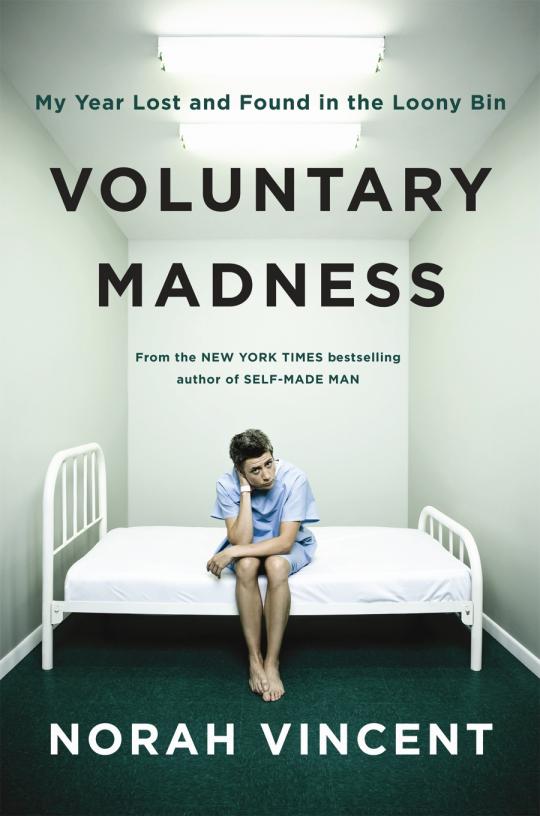
Norah Vincent, "Voluntary Madness" (2008)
Vincent undertook to understand the treatment of mental illness by 'immersing' herself in three different American treatment centres: one a public urban institution, one a private rural institution, and one a private 'progressive' institution in the US mid-west. Not purely a 'tourist' or 'poseur', Vincent believes that she may indeed have some form of mental illness, but her problems are not so debilitating as to render her incapable of researching and writing a book.
Her narrative of time spent in these institutions is believable. She captures details of scenery and thought that those who have spent time in psychiatric wards and asylums, particularly as patients, will recognize. In this regard, the work provides excellent insight, something like the affirmation of experiential commonality that an addict finds in a twelve-step program. She offers the kind of insights that "One Flew Over the Cuckoo's Nest" can't, and yet affirms in many respects that the situation in America's psychiatric institutions has not greatly improved or even changed.
Her desire to understand mental illness, to document its treatment and challenge some of the premises under which treatment is premised, was not convincing, however. Her capacity to stand back (or willingness to believe that she was) from her own mental illness, and to achieve some kind of overarching or privileged critical position, is unconvincing. The very reality that someone was putting up thousands of dollars for her to enter and stay in these institutions separates her experience from that of many people who find themselves in them - particularly when entry is not voluntary, but as incarceration by court order. I would expect that forced membership in the asylum not only alters the experience, it alters the perception of the experience. While Vincent is critical of many of her peers in the 'system', she particularly directs attention to persons incarcerated in the final institution (the nicest of the three) who do not seem to 'want to get better'. Of course they don't want to get better! They were sent there by court order. A system for caring for mental patients based on force by its very nature is likely going to be much different than one based on a preventative healthcare model.
You can read a short excerpt at Smith Magazine.
The Guardian offers a very prescient review.
Her narrative of time spent in these institutions is believable. She captures details of scenery and thought that those who have spent time in psychiatric wards and asylums, particularly as patients, will recognize. In this regard, the work provides excellent insight, something like the affirmation of experiential commonality that an addict finds in a twelve-step program. She offers the kind of insights that "One Flew Over the Cuckoo's Nest" can't, and yet affirms in many respects that the situation in America's psychiatric institutions has not greatly improved or even changed.
Her desire to understand mental illness, to document its treatment and challenge some of the premises under which treatment is premised, was not convincing, however. Her capacity to stand back (or willingness to believe that she was) from her own mental illness, and to achieve some kind of overarching or privileged critical position, is unconvincing. The very reality that someone was putting up thousands of dollars for her to enter and stay in these institutions separates her experience from that of many people who find themselves in them - particularly when entry is not voluntary, but as incarceration by court order. I would expect that forced membership in the asylum not only alters the experience, it alters the perception of the experience. While Vincent is critical of many of her peers in the 'system', she particularly directs attention to persons incarcerated in the final institution (the nicest of the three) who do not seem to 'want to get better'. Of course they don't want to get better! They were sent there by court order. A system for caring for mental patients based on force by its very nature is likely going to be much different than one based on a preventative healthcare model.
You can read a short excerpt at Smith Magazine.
The Guardian offers a very prescient review.
Labels:
addiction,
biography,
book reviews,
education,
law,
self-help,
social history,
U.S.A. history,
women's history
Tuesday, 28 October 2014
Jenna Jameson and Neil Strauss, "How to Make Love Like a Porn Star: A Cautionary Tale" (2004)
Jameson, for those who don't know, is the Madonna of porn. With a carefully managed career, she has graduated from stripping to magazine work to porn to managing what her husband refers to as a "porn conglomerate". She is the name behind what seems to be a very successful group of websites, cellphone services, films, and still collects royalties from the over 50 films she made before going 'indy'.
Her story both fits within and frustrates how sex industry workers are often portrayed. In her autobiography, she outlines a sordid and tragic history of sexual abuse, drug and alcohol abuse, violence, industry corruption, misogyny, alienation from her family... the list goes on. She also, however, suggests that her life experiences led her to the level of financial and career success, as well as personal satisfaction, that she has attained.
The book is well written, on the whole. It combines first-person narrative, comic-book format, simulated diary notes, interview transcripts, photos, and guidance for those seeking to enter the industry. This variety sometimes comes across a scattershot, but does help to break up what might otherwise begin to become monotonous or repetitive. It sparkles with occasional wit, while not glossing over what outsiders suspect about genuinely negative and dysfunctional aspects of making one's living as a sex worker.
If you are interested in this book, you might also peruse my notes regarding:
- "Porn King", the autobiography of John Holmes written by his wife
- Jimmy McDonough's "Big Bosoms and Square Jaws: The Biography of Russ Meyer, King of the Sex Film"
Her story both fits within and frustrates how sex industry workers are often portrayed. In her autobiography, she outlines a sordid and tragic history of sexual abuse, drug and alcohol abuse, violence, industry corruption, misogyny, alienation from her family... the list goes on. She also, however, suggests that her life experiences led her to the level of financial and career success, as well as personal satisfaction, that she has attained.
The book is well written, on the whole. It combines first-person narrative, comic-book format, simulated diary notes, interview transcripts, photos, and guidance for those seeking to enter the industry. This variety sometimes comes across a scattershot, but does help to break up what might otherwise begin to become monotonous or repetitive. It sparkles with occasional wit, while not glossing over what outsiders suspect about genuinely negative and dysfunctional aspects of making one's living as a sex worker.
If you are interested in this book, you might also peruse my notes regarding:
- "Porn King", the autobiography of John Holmes written by his wife
- Jimmy McDonough's "Big Bosoms and Square Jaws: The Biography of Russ Meyer, King of the Sex Film"
Wednesday, 1 October 2014
Robyn Doolittle, "Crazy Town: The Rob Ford Story" (2014)
Doolittle is a Toronto Star reporter who covers the City Hall beat. While a flurry of books and investigative media pieces have told the Ford story, this is likely the best of the bunch. Doolittle not only coherently assesses the Ford rise to the mayoralty of Toronto, but places the Mayor within the context of his family history, changes within city politics, and as a player within a political 'machine'. Of course, she describes the chase for the now-infamous 'crack video(s)', but to her credit she also relates many of the details of how the Star's decision-making process worked with regard to not purchasing the video, and deciding to go to print with the information it had once the video's existence had been broken by other media.
You can read an excerpt from the book here.
You can read my discussion of a similar book, How Rob Ford Happened (from the National Post, a competitor to the newspaper Doolittle works for). In short, Doolittle does a better job of telling the story. The Post text seems pretty opportunistic.
You can read an excerpt from the book here.
You can read my discussion of a similar book, How Rob Ford Happened (from the National Post, a competitor to the newspaper Doolittle works for). In short, Doolittle does a better job of telling the story. The Post text seems pretty opportunistic.
Monday, 21 July 2014
Keith Richards, "Life" (2010)
Loved much of this book. Witty without being maudlin, honest, and informative. The momentum waned for the last 20% or so, somewhat paralleling the decline in the Rolling Stones' performance, division between Keith and Mick Jagger, etc. The book is fleshed out with a bit of fluff in this section, including cooking advice and a recipe. Nothing wrong with that, I suppose, and it does serve as a reminder that Keith is a human being who has to eat and all that.
You can read excerpts from Life here.
You can listen to a few interviews and Richards' speaking engagements here.
You can read excerpts from Life here.
You can listen to a few interviews and Richards' speaking engagements here.
Wednesday, 16 July 2014
"How Rob Ford Happened" (2013)
Subtitle: "A History of the Toronto Mayor From the Pages of the National Post."
For those not aware, Rob Ford is Toronto's mayor.
From the early 2000s, Ford represented one side in the polar divide of Toronto political life. Hailing from a somewhat dog-eared suburb, suffering from a distinct lack of social graces, and hailing himself as simultaneously "the peoples' mayor" and the "king of the regular people," Ford went from combative city counsellor with an eye on saving money and cutting government waste to the mayor known internationally for his corpulence, addictions, and his and his family's rather murky past with drug-related crimes.
This book smacks of opportunism. The content was all there in the National Post's files, and merely required some intern to cut-and-paste some articles referring to Ford into a chronological order. While some are quite interesting to read in retrospect, others - such as short debates between pundits - are of questionable value for gaining insight into Ford, or his history with Toronto. Particularly intriguing in this collection is the opportunity to read multiple articles by Christie Blatchford as her perspective on Ford evolves. Not being a fan of her writing, these articles served to affirm for me that her 'chippy', grouchy style of journalism doesn't really satisfy me.
For those not aware, Rob Ford is Toronto's mayor.
From the early 2000s, Ford represented one side in the polar divide of Toronto political life. Hailing from a somewhat dog-eared suburb, suffering from a distinct lack of social graces, and hailing himself as simultaneously "the peoples' mayor" and the "king of the regular people," Ford went from combative city counsellor with an eye on saving money and cutting government waste to the mayor known internationally for his corpulence, addictions, and his and his family's rather murky past with drug-related crimes.
This book smacks of opportunism. The content was all there in the National Post's files, and merely required some intern to cut-and-paste some articles referring to Ford into a chronological order. While some are quite interesting to read in retrospect, others - such as short debates between pundits - are of questionable value for gaining insight into Ford, or his history with Toronto. Particularly intriguing in this collection is the opportunity to read multiple articles by Christie Blatchford as her perspective on Ford evolves. Not being a fan of her writing, these articles served to affirm for me that her 'chippy', grouchy style of journalism doesn't really satisfy me.
Wednesday, 2 April 2014
Charlie Duff, "Detroit: An American Autopsy" (2013)
A beautiful book. Duff spares no one in his commentary from inside the belly of the corpse that is contemporary Detroit. From the trials faced by emergency responders, police, newspaper folk, regular citizens, the under- and unemployed, the homeless, city politicians, business owners, criminals... they all play a role in the decrepit stage Duff narrates his story upon.
His story is not merciless; he clearly loves the city he grew up in, and returned to. He has family there, who much like the city itself, struggle with decay, loss of dignity, and poor coping mechanisms. They figure in his story as well.
Elegiac in tone, unsparing in its assessment, frightening in its observations, Duff has indeed offered an autopsy for a patient who has died. The city he describes is a new thing, a shell of the destroyed American dream.
His story is not merciless; he clearly loves the city he grew up in, and returned to. He has family there, who much like the city itself, struggle with decay, loss of dignity, and poor coping mechanisms. They figure in his story as well.
Elegiac in tone, unsparing in its assessment, frightening in its observations, Duff has indeed offered an autopsy for a patient who has died. The city he describes is a new thing, a shell of the destroyed American dream.
Labels:
addiction,
book reviews,
dystopian,
prostitution,
racism,
social history,
U.S.A. history
Thursday, 30 January 2014
James Fitzgerald, "What Disturbs Our Blood" (2010)
The genealogical tale as Shakespearean-scale tragic suspense novel. A truly alternative history with certain commonalities to Gordon Sheppard's "Ha!" Suicide, psychotherapy, the wisdom of the medical establishment meets the inscrutable dark dogs of depression.
Fitzgerald's family history is intimately connected to medical innovation in Canada. His predecessors were instrumental in developing public vaccination programs and advancing allergy research. His family tree also exhibits an alarming prevalence of mental health problems, particularly depression and suicidal ideation. Fitzgerald narrates his investigation of his own mental health issues, as he attempts to locate himself within his family history, and his predecessors' dogmatic commitment to work, attempts to manage familial dysfunction, and coping with anxiety and insecurity.
Monday, 20 January 2014
Monday, 30 December 2013
Lauren B. Davis, "The Empty Room" (2013)
This is a fascinating consideration of adult female alcoholism.
Davis writes writes with the sympathetic and yet firm knowledge of addicted thinking gained during her own time as an alcoholic. With decades of sobriety, this book is a reflection on what her life might have been like had she not found sobriety. It is insightful. It is frightening. It is humble.
Addicts will find this book particularly compelling, as they are sure to see elements of their own experience described. They will likely see their own flawed thinking, their own rationalizing, their own desires and shortcomings. They will see parallels for the depths they have sunk to and likely kept secret, if they could. They might also read some of the same fears they have felt about admitting to their own addiction, and starting a program of recovery.
My only complaint is that this book ends too quickly. I rarely find fiction to be "page turning." Perhaps I had a particular and special interest in this book, but I finished it in about 24 hours.
Davis writes writes with the sympathetic and yet firm knowledge of addicted thinking gained during her own time as an alcoholic. With decades of sobriety, this book is a reflection on what her life might have been like had she not found sobriety. It is insightful. It is frightening. It is humble.
Addicts will find this book particularly compelling, as they are sure to see elements of their own experience described. They will likely see their own flawed thinking, their own rationalizing, their own desires and shortcomings. They will see parallels for the depths they have sunk to and likely kept secret, if they could. They might also read some of the same fears they have felt about admitting to their own addiction, and starting a program of recovery.
My only complaint is that this book ends too quickly. I rarely find fiction to be "page turning." Perhaps I had a particular and special interest in this book, but I finished it in about 24 hours.
Thursday, 12 September 2013
John Holmes, "Porn King: The Autobiography..." (2012)
The book was written/dictated by Holmes before his death, but Holmes added a preface and published the work posthumously.
As with many autobiographies by former porn stars, Holmes tells a tale of degradation and depredation. While he first enjoyed the opportunity to have sex for money (both the physical pleasure and economic perks), the opportunities being a porn actor opened up for him - both positive and negative - eventually led Holmes down paths of consumption and behaviour that would eventually lead to his demise from AIDS-related causes.
His story is simple and compelling. He makes little effort to glorify his work, or to romanticize the life it led him into. He also does not vilify his work or personal associates. Instead, his autobiography seems like a quiet reflection offered by a man who knows the end of his days are near, and merely want to leave some more meaningful or fuller record of his experience than pictures of himself having sex.
As with many autobiographies by former porn stars, Holmes tells a tale of degradation and depredation. While he first enjoyed the opportunity to have sex for money (both the physical pleasure and economic perks), the opportunities being a porn actor opened up for him - both positive and negative - eventually led Holmes down paths of consumption and behaviour that would eventually lead to his demise from AIDS-related causes.
His story is simple and compelling. He makes little effort to glorify his work, or to romanticize the life it led him into. He also does not vilify his work or personal associates. Instead, his autobiography seems like a quiet reflection offered by a man who knows the end of his days are near, and merely want to leave some more meaningful or fuller record of his experience than pictures of himself having sex.
Labels:
addiction,
biography,
book reviews,
film history,
pornography,
prostitution,
social history
Saturday, 1 December 2012
Gabor Mate, "In the Realm of Hungry Ghosts" (2008)
Subtitled, "Close Encounters with Addiction." Winner of the 2009 Hubert Evans Non-Fiction Prize.
Mate is the child of Jewish, East European immigrants, who works as a doctor for street-people, addicts, and other marginalized persons living in Vancouver's notorious East Side. The Realm of Hungry Ghosts differs from other books of its kind for two reasons: 1) Mate's professional experience as a doctor is compelling, but 2) his experience as an addict has given him unique insights into the struggles of his patients.
His book lays out a challenging, compelling, and clearly-written thesis regarding the causes of addiction, and thus offers a new understanding of how addiction works and thus what types of treatment addicts might best respond to. Essentially, Mate suggests that addiction stems in large part from thinking patterns developed in our very young, formative years, and that these thinking patterns significantly help shape the ways our brains come to process information.
Part of Mate's book outlines the physiology of the brain - how serotonin and similar chemicals are used in the brain to convey information and trigger responses - and how experiences and drugs can change this physiology. The other part discusses how personal factors such as life experiences, particularly in childhood, can affect brain chemistry and brain functioning. The combination of these two factors leads Mate to explore concepts such as neural plasticity, and to recommend treatment paths such as cognitive behaviour therapy (although he doesn't actually name this approach, and his programmatic recommendations differ somewhat from the CBT practices I've read about).
For addicts, one of the most useful sections of Mate's book will be a chapter entitled "The Four Steps, Plus One" (pgs. 353-361 of the paperback edition). Mate is not a twelve-stepper. While he has positive things to say about this approach, he has not worked one of those programs (such as AA, etc.) himself. He offers, however, a program developed by Dr. Jeffrey Schwartz, at UCLA's School of Medicine, for helping addicts interrupt what Schwartz refers to as "brain lock"; those unthinking responses and actions that help to maintain addictive habits.
For the sake of you, my reader, the four steps are briefly summarized here:
1) Re-label:
Recognize that what seems to be an imperative, desperate 'need', is actually a temporary, false feeling. This step might be understood as 'apply conscious awareness'.
2) Re-attribute:
Recognize that the message you identified in Step One is a flawed, or false product produced by an addicted mind in situations when that addiction is triggered. It is, in short, a symptom of an illness, and should not be mistaken as - or given the power of - anything more.
3) Re-focus:
Recognize that the message sent by the addicted mind is a temporary phenomenon. It will pass, and is more likely to pass without being acted on if the addict can work to put some time between recognizing the message and choosing to act on it. The key here is to "teach your brain," as Mate says, "that it doesn't have to obey the addictive call." (359).
4) Re-value:
This step involves recognizing the cost and reward of acting on the ideas produced by the addicted mind. Addicts have come to associate false value/reward to seeking and achieving the substance of their addiction. The key here is not to establish some kind of blame or guilt, it is to attempt - as realistically and critically as possible - a sense of what the addictive impulse is actually generating in terms of rewards and benefits, and what the costs of trying to achieve the rewards and benefits the addictive impulse actually result in (NOT the ones the addict believes they might produce).
5) Re-create:
The fifth step is one introduced by Mate. It is a particularly useful and intriguing one. After the 'corrective' steps in understanding identified above, Mate suggests the addicted person undertake to identify what their goals are, what rewards and benefits they seek in their life, and consider alternate methods and activities to pursue them. If, for instance, taking hard drugs does not stop painful memories of childhood abuse, perhaps writing or drawing might help to put these memories in a more manageable perspective. This step offers the addict not only negative or 'corrective' actions, but the ability to envision an 'escape hatch' that offers hope for the future.
More about the book can be found on Dr. Mate's website. There you can also read the 'Introduction' and 'Chapter One - The Only Home He's Ever Had.'
Subscribe to:
Posts (Atom)