Subtitle: "The United States' Secret Plan to Invade Canada and Canada's Secret Plan to Invade the United States."
More notes to follow soon.
Lippert's book is disappointingly brief for such a provocative concern. Essentially, he provides a fairly basic outline of Canadian-American relations since the early 1800s, highlighting armed conflicts ranging from all-out wars (War of 1812), to silly skirmishes over concerns such as ownership of a pig.
Much of Lippert's focus is on a rather fanciful Canadian plan for how it might invade the United States if circumstances ever compelled it. This feint - which hardly lives up to the promise of the book's title - was primarily intended as a delaying tactic by which Canada might dampen US enthusiasm for invasion, and destabilize US plans to assault Canada if Canada was ever able to safely and reasonably conclude it was about to be invaded by the United States. That Canada would attempt a pre-emptive invasion of the United States is a stretch of imagination, which is likely one of the reasons Lippert's book takes a rather light-hearted approach to the idea of war between the two countries.
His assessment of US plans to invade Canada are unnecessarily similarly light. Given the traditional dynamics between the two countries, that the US had plans to occupy Canada - from Manifest Destiny onwards - and that it had the capacity to do so (as if physical invasion was even really necessary after NAFTA) would seem reason to approach the idea with more circumspection.
Reflections by Dr. Gregory Klages on non-fiction books dealing primarily with politics, history, and religion. Significant attention to Canadian content. Mail me/comment if you read anything. I love to hear feedback!
Showing posts with label military. Show all posts
Saturday, 18 July 2015
Friday, 3 July 2015
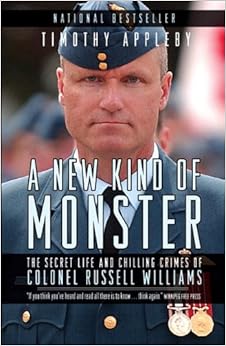
Timothy Appleby, "A New Kind of Monster" (2011)
Subtitle: "The Secret Life and Chilling Crimes of Colonel Russell Williams."
This 'true crime' book documents the many crimes committed by a well-respected, high-ranking member of Canada's military. It is a relatively easy, although certainly disturbing, read. Appleby refrains from wading into 'pop psychology' to explain Williams' behaviour, concentrating instead on narration.
Here's a link to the publisher's webpages for the book.
This 'true crime' book documents the many crimes committed by a well-respected, high-ranking member of Canada's military. It is a relatively easy, although certainly disturbing, read. Appleby refrains from wading into 'pop psychology' to explain Williams' behaviour, concentrating instead on narration.
Here's a link to the publisher's webpages for the book.
Labels:
biography,
book reviews,
Canadian history,
law,
mental health,
military,
true crime
Tuesday, 21 April 2015
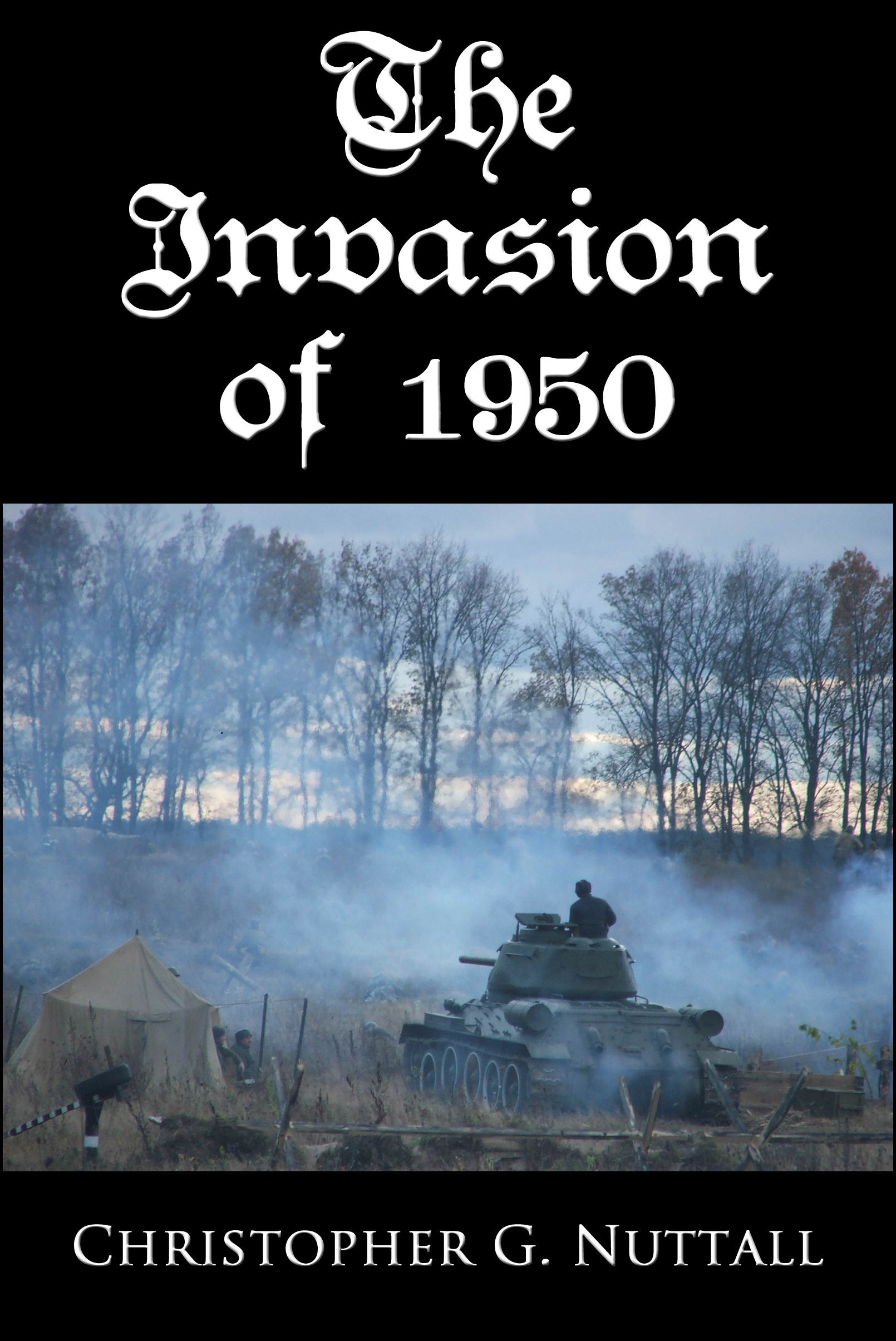
Christopher Nuttall, "The Invasion of 1950" (2013)
Just finished this self-published alt-history (allohistorical) work...
I heartily enjoyed it; worth the time, although it could use some editing. I did approach it, however, as pure escapist entertainment and not alternative history grounded in plausible variation of historical facts. More comments soon.
In the interim, travel over to the author's blog for more info.
I heartily enjoyed it; worth the time, although it could use some editing. I did approach it, however, as pure escapist entertainment and not alternative history grounded in plausible variation of historical facts. More comments soon.
In the interim, travel over to the author's blog for more info.
Labels:
book reviews,
dystopian,
European history,
fascism,
fiction,
German history,
military,
World War II
Monday, 16 March 2015
Monday, 2 February 2015
Kim Zetter, "Countdown to Zero Day" (2014)
Zetter, a senior writer at Wired magazine, has done the nearly impossible: she has written an interesting, information dense, sometimes compelling case study of Stuxnet, a computer virus dubbed as the first digital weapon.
Zetter's story is told primarily from the perspective of the code analysts who discovered and 'unpacked' Stuxnet. She certainly offers the kinds of insights and jargon that I suspect those familiar with programming and code-breaking will enjoy, while couching her commentary in enough technological and political history to make it approachable for the intelligent general reader.
In progress.
You can read an excerpt here, courtesy of Wired.
Zetter's story is told primarily from the perspective of the code analysts who discovered and 'unpacked' Stuxnet. She certainly offers the kinds of insights and jargon that I suspect those familiar with programming and code-breaking will enjoy, while couching her commentary in enough technological and political history to make it approachable for the intelligent general reader.
In progress.
You can read an excerpt here, courtesy of Wired.
Labels:
book reviews,
business,
law,
media criticism,
Middle East,
military,
U.S.A. history
Friday, 2 January 2015
William Forstchen, "One Second After" (2009)
Forstchen essentially narrates, through the vision of a typical hero of a US conflict narrative, the struggle for the citizens of a small North Carolina town to survive the year following an electromagnetic pulse (EMP) attack on the continental United States (as well as two other parts of the world).
Characterization is not Forstchen's forté. The narrator is a university history professor, former military man, widower, and father of two teenage girls. The protagonist is a bit of a cutout: former smoker falling back into the habit to manage the awful stress, stepping into difficult situations to do things no one else is willing to do, making good strategic calls for the benefit of the community, etc., etc., etc. Forstchen makes some effort to give the character some more human dimensions; he indicates that although a military man, the narrator served primarily in an administrative/leadership role and had little combat experience, he quickly starts voraciously eyeballing an attractive woman who finds herself stuck in the community, and he loves his dogs.
Where this book is intriguing, however, is as a piece of post-apocalytic/dystopian political fiction. The primary concern of the novel is exploring how societies would choose to govern themselves in the absence of 'higher temporal authority'. In this regard, Forstchen offers intriguing scenarios, poses challenging problems, and considers how they might be most likely resolved. Substantial space is given to describing discussions of the 'town council', explaining the thinking processes underlying decisions, and narrating discussions as options are weighed.
I have two core criticisms with the text. Firstly, there is little consideration given to resistance, dissension, and madness. In a dystopian scenario based on a near-instantaneous collapse of society - even within a somewhat isolated, small population centre - I would expect that many situations would dissolve into shouting matches, pushing and shoving, screaming and hair-pulling, accompanied by acts of desperation and insanity. Although Forstchen addresses looting, pillaging, rape, and cannibalism, these all seem to be marginal acts perpetrated by marginal figures in the story, and are treated clinically. Within the community, self-control and cooperation seems to be the near universal response. Perhaps this strategy was intended to underline the heroic charisma of the leaders, but for a society oriented around a revolutionary, individual rights focus, seems rather idealistic or naive.
Similarly, the enemy - the outsiders - are caricatures. Drug addicts and gang members from a nearby larger population centre, they manage to cobble together a small army to raid and terrorize other communities. While it is entirely possible that these types of groups might exist, it is difficult to see how they would manage to survive for an extended period as travelling marauders, particularly as they would likely not have the technical skills to adapt to the available technology, to generate a food supply once the existing reserves are depleted, and to create a viable leadership that is not constantly battling for dominance against competitors. It is far more likely that most communities would simply not be able to manage floods of refugees, the ravages of disease, and internal squabbling.
Overall, I think Walking Dead offers a more reasonable account of the post-apocalypse than One Second After. Of course, absent the zombies.
You can visit the book website.
Characterization is not Forstchen's forté. The narrator is a university history professor, former military man, widower, and father of two teenage girls. The protagonist is a bit of a cutout: former smoker falling back into the habit to manage the awful stress, stepping into difficult situations to do things no one else is willing to do, making good strategic calls for the benefit of the community, etc., etc., etc. Forstchen makes some effort to give the character some more human dimensions; he indicates that although a military man, the narrator served primarily in an administrative/leadership role and had little combat experience, he quickly starts voraciously eyeballing an attractive woman who finds herself stuck in the community, and he loves his dogs.
Where this book is intriguing, however, is as a piece of post-apocalytic/dystopian political fiction. The primary concern of the novel is exploring how societies would choose to govern themselves in the absence of 'higher temporal authority'. In this regard, Forstchen offers intriguing scenarios, poses challenging problems, and considers how they might be most likely resolved. Substantial space is given to describing discussions of the 'town council', explaining the thinking processes underlying decisions, and narrating discussions as options are weighed.
I have two core criticisms with the text. Firstly, there is little consideration given to resistance, dissension, and madness. In a dystopian scenario based on a near-instantaneous collapse of society - even within a somewhat isolated, small population centre - I would expect that many situations would dissolve into shouting matches, pushing and shoving, screaming and hair-pulling, accompanied by acts of desperation and insanity. Although Forstchen addresses looting, pillaging, rape, and cannibalism, these all seem to be marginal acts perpetrated by marginal figures in the story, and are treated clinically. Within the community, self-control and cooperation seems to be the near universal response. Perhaps this strategy was intended to underline the heroic charisma of the leaders, but for a society oriented around a revolutionary, individual rights focus, seems rather idealistic or naive.
Similarly, the enemy - the outsiders - are caricatures. Drug addicts and gang members from a nearby larger population centre, they manage to cobble together a small army to raid and terrorize other communities. While it is entirely possible that these types of groups might exist, it is difficult to see how they would manage to survive for an extended period as travelling marauders, particularly as they would likely not have the technical skills to adapt to the available technology, to generate a food supply once the existing reserves are depleted, and to create a viable leadership that is not constantly battling for dominance against competitors. It is far more likely that most communities would simply not be able to manage floods of refugees, the ravages of disease, and internal squabbling.
Overall, I think Walking Dead offers a more reasonable account of the post-apocalypse than One Second After. Of course, absent the zombies.
You can visit the book website.
Monday, 29 December 2014
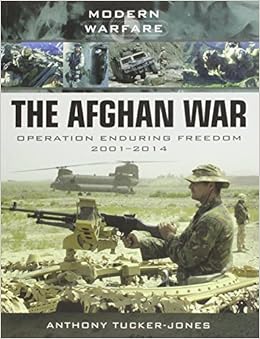
Anthony Tucker-Jones, "The Afghan War" (2014)
Subtitle: "Operation Enduring Freedom 2001-2014."
Some observations I found useful:
Pagination corresponds to my digital version, and should not be seen as consistent with the hard copy.
18: “The very day after 9/11 Bush declared the attacks on the American homeland as acts of war and requested Congress provide the resources to fight the terrorists wherever they might be in the shape of $20 billion. Congress’s response was to approve double this sum. The following day US Secretary of State, Colin Powell, confirmed that Osama bin Laden, believed to be hiding in Afghanistan, was a key suspect.”
20: “Initially, al-Qaeda had planned hijacking a total of ten planes with the intention of crashing them into targets on both coasts of the US. The targets would have included nuclear power plants and tall buildings in California and Washington State. This could have been devastating, but as it was just four planes had the desired effect. The US asked itself what had it done to inspire such an act of hatred by militant members of islam? The international community was also put on notice that such outrages would become more commonplace in the world’s capitals over the next decade.
Following 9/11 the international community immediately rallied to the US. The very next day UN Security Council resolution 1368 and General Assembly resolution 56/1 called for immediate international cooperation to bring the perpetrators to justice. They also called for much broader cooperation against global terrorism and this was followed on 28 September 2001 by UN Security Council resolution 1373. Enacted under Chapter VII of the UN Charter, it required every member state to undertake seventeen measures against all those who support, directly or indirectly, acts of terrorism.
For the very first time the NATO invoked its mutual defence clause on 2 October 2001, whereby an attack on a member state is considered an attack on all.”
76: “NATO assumed control of ISAF in 2003 and expanded its area of responsibility from Kabul to encompass the country’s southern and eastern provinces three years later. This meant bringing the 12,000 American and other Coalition forces in the region under NATO control. It gave ISAF responsibility for the whole of Afghanistan, with around 40,000 troops. The upshot of this was greater integration in the south with the American-led Operation Enduring Freedom. However, the two operations continued to be directed separately, the rationale being that ISAF had a stabilisation and security mission, while OEF was overtly counter-terrorism.”
94: “ISAF was created in accordance with the Bonn Conference in December 2001. NATO assumed leadership of the ISAF operation on 11 August 2003, ending the six-month national rotations. The Alliance became responsible for the command, coordination and planning of the force, including the provision of a force commander and headquarters on the ground in Afghanistan. ISAF’s mandate was initially limited to providing security in and around Kabul. In October 2003, the United Nations extended ISAF’s mandate to cover the whole of Afghanistan (United Nations Security Council Resolution 1510), paving the way for an expansion of the mission across the country.”
127: “Urgent Operational Requirements (UORs) thrown up by the British army’s deployments to Afghanistan and Iraq resulted in the provision of a plethora of new military vehicles. Force protection became the primary focus for armoured vehicles, rather than the more traditional mechanised warfare role. While offensive battle groups still played their part, getting forces from A to B and conducting patrols unscathed in the face of a mounting IED threat became a greater priority. In total some 2,700 vehicles were supplied to the British army during the period November 2008 to April 2011 consisting of 18 different types.”
149: the international intervention in Afghanistan was in many ways a unique operation. While the application of air power and special forces brought the Taliban down, Coalition ground troops were needed to keep the resurgent Taliban at bay and safeguard the fledgling democratic government in Kabul. Like the Balkans Wars of the 1990s, Afghanistan became an unwelcome and often unpopular open-ended military commitment that dragged on for over a decade. As with the war in Bosnia, the campaign in Afghanistan only achieved a precarious peace after more and more ground troops were sucked in.”
Some observations I found useful:
Pagination corresponds to my digital version, and should not be seen as consistent with the hard copy.
18: “The very day after 9/11 Bush declared the attacks on the American homeland as acts of war and requested Congress provide the resources to fight the terrorists wherever they might be in the shape of $20 billion. Congress’s response was to approve double this sum. The following day US Secretary of State, Colin Powell, confirmed that Osama bin Laden, believed to be hiding in Afghanistan, was a key suspect.”
20: “Initially, al-Qaeda had planned hijacking a total of ten planes with the intention of crashing them into targets on both coasts of the US. The targets would have included nuclear power plants and tall buildings in California and Washington State. This could have been devastating, but as it was just four planes had the desired effect. The US asked itself what had it done to inspire such an act of hatred by militant members of islam? The international community was also put on notice that such outrages would become more commonplace in the world’s capitals over the next decade.
Following 9/11 the international community immediately rallied to the US. The very next day UN Security Council resolution 1368 and General Assembly resolution 56/1 called for immediate international cooperation to bring the perpetrators to justice. They also called for much broader cooperation against global terrorism and this was followed on 28 September 2001 by UN Security Council resolution 1373. Enacted under Chapter VII of the UN Charter, it required every member state to undertake seventeen measures against all those who support, directly or indirectly, acts of terrorism.
For the very first time the NATO invoked its mutual defence clause on 2 October 2001, whereby an attack on a member state is considered an attack on all.”
76: “NATO assumed control of ISAF in 2003 and expanded its area of responsibility from Kabul to encompass the country’s southern and eastern provinces three years later. This meant bringing the 12,000 American and other Coalition forces in the region under NATO control. It gave ISAF responsibility for the whole of Afghanistan, with around 40,000 troops. The upshot of this was greater integration in the south with the American-led Operation Enduring Freedom. However, the two operations continued to be directed separately, the rationale being that ISAF had a stabilisation and security mission, while OEF was overtly counter-terrorism.”
94: “ISAF was created in accordance with the Bonn Conference in December 2001. NATO assumed leadership of the ISAF operation on 11 August 2003, ending the six-month national rotations. The Alliance became responsible for the command, coordination and planning of the force, including the provision of a force commander and headquarters on the ground in Afghanistan. ISAF’s mandate was initially limited to providing security in and around Kabul. In October 2003, the United Nations extended ISAF’s mandate to cover the whole of Afghanistan (United Nations Security Council Resolution 1510), paving the way for an expansion of the mission across the country.”
127: “Urgent Operational Requirements (UORs) thrown up by the British army’s deployments to Afghanistan and Iraq resulted in the provision of a plethora of new military vehicles. Force protection became the primary focus for armoured vehicles, rather than the more traditional mechanised warfare role. While offensive battle groups still played their part, getting forces from A to B and conducting patrols unscathed in the face of a mounting IED threat became a greater priority. In total some 2,700 vehicles were supplied to the British army during the period November 2008 to April 2011 consisting of 18 different types.”
149: the international intervention in Afghanistan was in many ways a unique operation. While the application of air power and special forces brought the Taliban down, Coalition ground troops were needed to keep the resurgent Taliban at bay and safeguard the fledgling democratic government in Kabul. Like the Balkans Wars of the 1990s, Afghanistan became an unwelcome and often unpopular open-ended military commitment that dragged on for over a decade. As with the war in Bosnia, the campaign in Afghanistan only achieved a precarious peace after more and more ground troops were sucked in.”
Labels:
book reviews,
Middle East,
military,
U.S.A. history,
U.S.A. politics
Friday, 7 November 2014
Norman Mailer, "Oswald's Tale: An American Mystery" (1995)
If you're not aware already, the Oswald in question here is Lee Harvey Oswald, assassin of US President Kennedy. Mailer is one of the US's best-known 'old white male' authors, primarily known for his fiction work.
Oswald's Tale is bit of a "dog's breakfast"; the first forty-percent of the book is a close consideration of Oswald's time living in the Soviet Union. Mailer and associates spent about six months locating and interviewing people who had contact with Oswald, ranging through love interests, co-workers, and KGB agents who spied on Oswald. Information gained from these interviews is supplemented with knowledge gained from documents produced during that time, primarily by Soviet state agencies. The second, sixty-percent of the book consists of Mailer's quoting at length from already-published works, interspersed with his own, rather unique speculations about Oswald's activities and motivations.
The first portion of the book is intriguing, and seems to bring some new insights to discussion of Oswald. The second is far more troubling, in that it offers little in the way of insights, and overwhelms with its dubious psychoanalysis and conjecture.
Mailer does try to use observations from the first section to ground some of his ideas developed in the second. For instance, based on some (rather dicey) proposals that Oswald may have been engaged in some kind of homosexual contact during his stint in the Marines, as well as later in Russia, Mailer later tries to propose that Oswald was perhaps receiving money from a male lover in Texas during the year preceding Kennedy's assassination. Mailer suggests also that Oswald's sapiosexuality might explain his sexual relationship with his wife, which apparently went through lengthy periods of non-interest.
Mailer's ideas are generally fairly loosely developed. While this can suggest openness, it can also lead him into excess. Evidence? Read the two following quotations.
I found Mailer's consideration of history writing, particular when trying to understand the motivations of historical characters, intriguing.
You can read the final two chapters of the book here, on the Frontline website.
A good review of the book by Thomas Powers can be found in the NY Times.
If you are interested in the Kennedy assassination, I have previously discussed the following:
- Vincent Bugliosi, Reclaiming History: The Assassination of President John F. Kennedy (2007)
- Jeff Greenfield, Then Everything Changed: Stunning Alternate Histories of American Politics: JFK, RFK, Carter, Ford, Reagan (2010)
- David Aaronovitch, Voodoo Histories: The Role of the Conspiracy Theory in Shaping Modern History (2009)
Oswald's Tale is bit of a "dog's breakfast"; the first forty-percent of the book is a close consideration of Oswald's time living in the Soviet Union. Mailer and associates spent about six months locating and interviewing people who had contact with Oswald, ranging through love interests, co-workers, and KGB agents who spied on Oswald. Information gained from these interviews is supplemented with knowledge gained from documents produced during that time, primarily by Soviet state agencies. The second, sixty-percent of the book consists of Mailer's quoting at length from already-published works, interspersed with his own, rather unique speculations about Oswald's activities and motivations.
The first portion of the book is intriguing, and seems to bring some new insights to discussion of Oswald. The second is far more troubling, in that it offers little in the way of insights, and overwhelms with its dubious psychoanalysis and conjecture.
Mailer does try to use observations from the first section to ground some of his ideas developed in the second. For instance, based on some (rather dicey) proposals that Oswald may have been engaged in some kind of homosexual contact during his stint in the Marines, as well as later in Russia, Mailer later tries to propose that Oswald was perhaps receiving money from a male lover in Texas during the year preceding Kennedy's assassination. Mailer suggests also that Oswald's sapiosexuality might explain his sexual relationship with his wife, which apparently went through lengthy periods of non-interest.
Mailer's ideas are generally fairly loosely developed. While this can suggest openness, it can also lead him into excess. Evidence? Read the two following quotations.
Pg. 491: “All through February and March he prepares himself to strike at Walker. The notion that the General was a Hitler in the making was key to choosing him for a target. The soft underbelly, however, of so lofty a notion – stop the second Hitler before he arises - comes in large degree because of Oswald’s concealed sense of himself – even from himself! – of also being a putative Hitler. A physical resemblance between the two men had to be, consciously or unconsciously, in Oswald’s mind. One need only pencil in a mustache on any photograph of Oswald in profile to feel the force of the resemblance. In his fantasies, would Oswald have refused a Faustian pact? Allow him to steal Hitler’s powers of ascendancy, and he could convert them to his own vastly more idealistic vision. But first he must kill a minor god.”
Pg. 551: “It was as if his murderous impulses could only be gathered if he was without sexual release. To continue his marriage was to condemn himself, therefore, to a life of mediocrity, yet – there is no other explanation for so many of his actions – a sizeable part of him adored Marina, and this quite apart from his full affection for June. For that matter, devotion to June was like an open display of his infatuation with himself. But Marina he loved as his woman, his difficult, caustic contrary, and often wholly attractice wife – even if he could hardly tolerate her for most of the month. Are half of the young husbands in existence all that much unlike him? Or young wives?”
I found Mailer's consideration of history writing, particular when trying to understand the motivations of historical characters, intriguing.
Pg. 605: “This book, however, was undertaken without a fixed conclusion in either direction; indeed, it began with a prejudice in favor of the conspiracy theorists. All the same, one’s plan for the work was to take Oswald on his own terms as long as that was possible – that is, to try and comprehend his deeds as arising from nothing more than himself until such a premise lost all headway. To study his life in this manner produced a hypothesis: Oswald was a protagonist, a prime mover, a man who made things happen… Indeed, this point of view has by now taken hold to a point where the writer would not like to relinquish it for too little. There is the danger! Hypotheses commence as our servant – they enable us to keep our facts in order while we attempt to learn more about a partially obscured subject. Once the profits of such a method accumulate, however, one is morally obliged… to be scrupulously on guard against one’s own corruption. Otherwise, the hitherto useful hypothesis will insist on prevailing over everything that comes in and so will take over the integrity of the project.”
You can read the final two chapters of the book here, on the Frontline website.
A good review of the book by Thomas Powers can be found in the NY Times.
If you are interested in the Kennedy assassination, I have previously discussed the following:
- Vincent Bugliosi, Reclaiming History: The Assassination of President John F. Kennedy (2007)
- Jeff Greenfield, Then Everything Changed: Stunning Alternate Histories of American Politics: JFK, RFK, Carter, Ford, Reagan (2010)
- David Aaronovitch, Voodoo Histories: The Role of the Conspiracy Theory in Shaping Modern History (2009)
Tuesday, 28 October 2014
Deborah Lipstadt, "History on Trial: My Day in Court with a Holocaust Denier" (2005)
This book details Lipstadt's court battle to prove that her assertion that author David Irving had engaged in a long-standing effort to falsify history: selectively using and misrepresenting documents to cast Adolf Hitler in a favourable light, as well as denying the very existence of an intentional, widespread, systematic, and state-sanctioned effort to slaughter Europe's Jewish population.
The case stemmed from claims Lipstadt made in her 1993 book, Denying the Holocaust: The Growing Assault on Truth and Memory, wherein she discussed Irving's work as well as the efforts of other 'deniers'. (See my discussion of the book here). Three years later, Irving sued Lipstadt and her publisher, Penguin, for libel (stemming from the statements in her book). According to British law, the onus was placed on the defendants to prove that their assertions could be supported by evidence.
Working with an impressive team of scholars and legal minds, arrayed against Irving's rather lacklustre and self-managed representation, Lipstadt and Penguin without a doubt brought Irving low. He was publicly shown to work less as a historian than an ideologue, calling into question the integrity of the entirety of his oeuvre. The revelation of his sloppy, highly biased, and clearly flawed use of documentary sources and other archival materials effectively ended his career as a historian. Banned from entering multiple countries, considered persona non grata by respectable publishers, and saddled with a significant financial burden after losing the case, Irving is unlikely to ever widely enter public consciousness other than as a sad, deluded figure.
As a result of the trial, and her unwillingness to compromise or back down from defending her observations, Lipstadt has become a far more widely known scholar and commentator on 20th-century Jewish history, particularly as it relates to the Nazi regime.
Her book is more narrative of the experiences of the trial, and exploration of some of the choices made in her legal team's efforts. In this regard, it is compelling and informative reading. For readers seeking a closer analysis of Irving's work, however, better sources are available, such as the expert analysis of Irving's work carried out for the trial by Richard Evans, Hajo Funke, and Robert Jan van Pelt. (Electronic editions of these can all be found at the Holocaust Denial on Trial website). Trial transcripts can be found at the same site.
I discuss Lipstadt's 1993 book, Denying the Holocaust, here.
I also discuss her 2011 book, The Eichmann Trial, here.
I discuss Irving's 1996 biography of Josef Goebbels here.
The case stemmed from claims Lipstadt made in her 1993 book, Denying the Holocaust: The Growing Assault on Truth and Memory, wherein she discussed Irving's work as well as the efforts of other 'deniers'. (See my discussion of the book here). Three years later, Irving sued Lipstadt and her publisher, Penguin, for libel (stemming from the statements in her book). According to British law, the onus was placed on the defendants to prove that their assertions could be supported by evidence.
Working with an impressive team of scholars and legal minds, arrayed against Irving's rather lacklustre and self-managed representation, Lipstadt and Penguin without a doubt brought Irving low. He was publicly shown to work less as a historian than an ideologue, calling into question the integrity of the entirety of his oeuvre. The revelation of his sloppy, highly biased, and clearly flawed use of documentary sources and other archival materials effectively ended his career as a historian. Banned from entering multiple countries, considered persona non grata by respectable publishers, and saddled with a significant financial burden after losing the case, Irving is unlikely to ever widely enter public consciousness other than as a sad, deluded figure.
As a result of the trial, and her unwillingness to compromise or back down from defending her observations, Lipstadt has become a far more widely known scholar and commentator on 20th-century Jewish history, particularly as it relates to the Nazi regime.
Her book is more narrative of the experiences of the trial, and exploration of some of the choices made in her legal team's efforts. In this regard, it is compelling and informative reading. For readers seeking a closer analysis of Irving's work, however, better sources are available, such as the expert analysis of Irving's work carried out for the trial by Richard Evans, Hajo Funke, and Robert Jan van Pelt. (Electronic editions of these can all be found at the Holocaust Denial on Trial website). Trial transcripts can be found at the same site.
I discuss Lipstadt's 1993 book, Denying the Holocaust, here.
I also discuss her 2011 book, The Eichmann Trial, here.
I discuss Irving's 1996 biography of Josef Goebbels here.
Wednesday, 20 August 2014
Eric Schlosser, "Command and Control" (2013)
Subtitle: "Nuclear Weapons, the Damascus Accident and the Illusion of Safety."
In progress.
Tim Oliver of Johns Hopkins University (USA) published a good review of the book in International Affairs.
Schlosser commissioned a film related to the themes of Command and Control.
In progress.
Tim Oliver of Johns Hopkins University (USA) published a good review of the book in International Affairs.
Schlosser commissioned a film related to the themes of Command and Control.
Labels:
book reviews,
Cold War history,
military,
Soviet history,
U.S.A. history
Wednesday, 30 July 2014
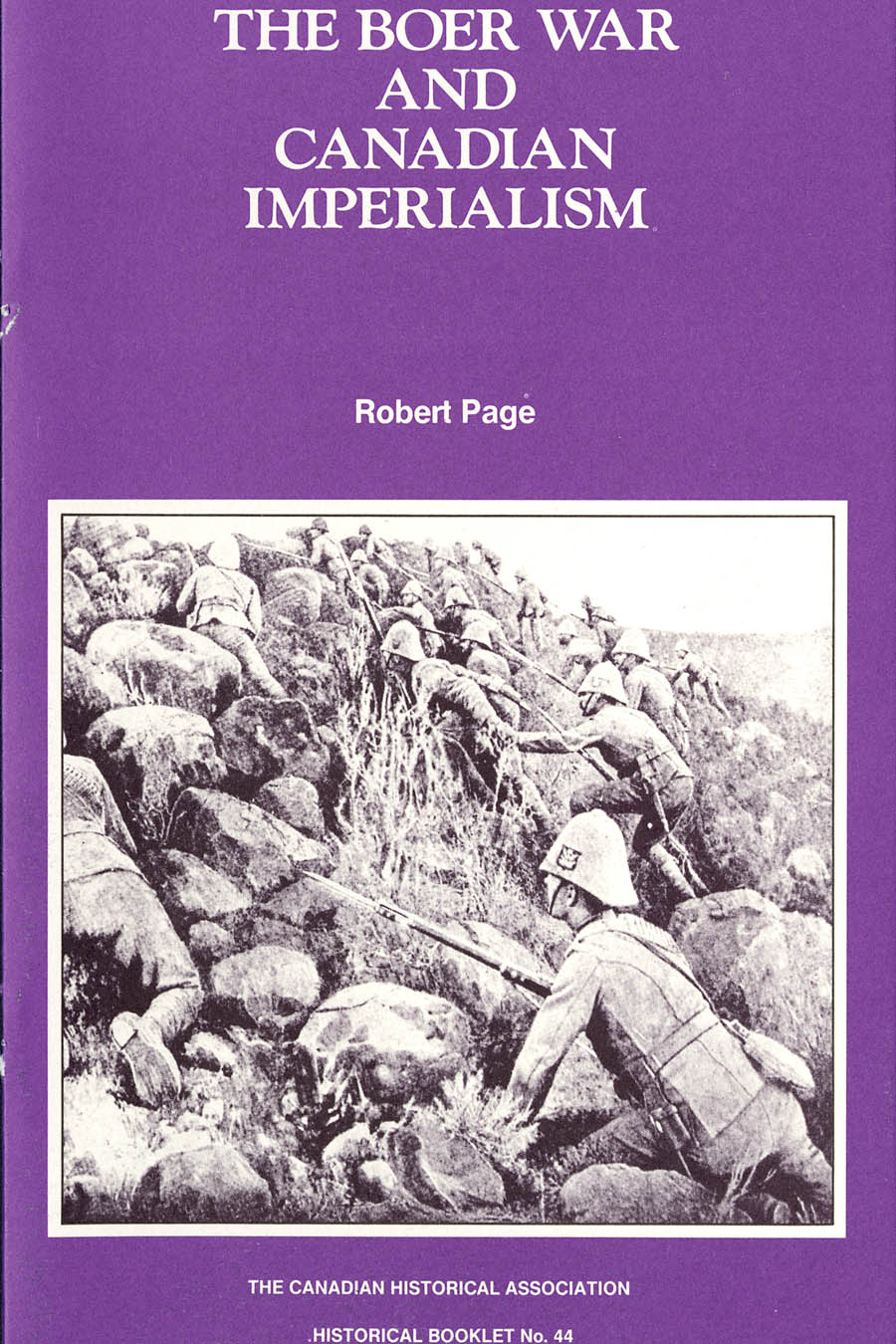
Robert Page, "Canadian Imperialism and the Boer War" (1987)
Number 44 in the Canadian Historical Association's Historical Booklets.
Very informative, brief summary of the importance of Canada's participation in the Boer War, particular with regards to domestic discussions regarding the country's place in the British Empire, the effects of participation in the war on English/French relations, and Canadian militarism.
Thursday, 26 June 2014
Duncan Anderson, "The Falklands War 1982" (2002)
A bit of a guilty indulgence. Osprey is known for publishing 'light' general descriptions of military history topics, including battles, technology and personalities.
This consideration of the Falklands War - a small battle though significant moment in late-20th century history - is not superficial, but provides rather closer attention to narrating the day-to-day combat than assessing the deeper geo-political and economic factors at play.
Essentially, an Argentinian military government decided that one way to distract public concern over domestic conditions while solving a long-standing desire to patriate/seize some strategically important territory would be to turf the British from several islands about 400 miles from the Argentinian coast. In May 1982, Argentine troops (disguised and in uniform) quickly overcame the very small British forces on the Falklands. In the ensuing conflict, Britain surprised the Argentines by throwing in a sizeable military response, and although taking losses, inflicting much heavier costs (particular in the air and at sea).
Losing the Falklands conflict reinforced Thatcher's reputation at home, and destroyed Galtieri's ability to govern Argentina.
This consideration of the Falklands War - a small battle though significant moment in late-20th century history - is not superficial, but provides rather closer attention to narrating the day-to-day combat than assessing the deeper geo-political and economic factors at play.
Essentially, an Argentinian military government decided that one way to distract public concern over domestic conditions while solving a long-standing desire to patriate/seize some strategically important territory would be to turf the British from several islands about 400 miles from the Argentinian coast. In May 1982, Argentine troops (disguised and in uniform) quickly overcame the very small British forces on the Falklands. In the ensuing conflict, Britain surprised the Argentines by throwing in a sizeable military response, and although taking losses, inflicting much heavier costs (particular in the air and at sea).
Losing the Falklands conflict reinforced Thatcher's reputation at home, and destroyed Galtieri's ability to govern Argentina.
Labels:
book reviews,
Cold War history,
European history,
military
Tuesday, 20 May 2014
Anne Applebaum, "Iron Curtain" (2013)
The subtitle for this book is: "The Crushing of Eastern Europe, 1945-1956."
Applebaum is the author of the critically-acclaimed Gulag, and the spouse of Poland's Foreign Minister.
Applebaum's scholarship is impressive. She has mined a voluminous and multi-language body of archival material that has only become available in the last few decades. She has also, apparently, conducted interviews with an abundance of former Communist Party workers, members of the Communist youth associations, etc. She manages to tell a compelling story clearly, making the relationships between the Central/East European countries and their overseers in the Soviet Union clear.
Essentially, Applebaum divides the Soviet era into two periods, that running from 1944 through to 1949 (the consolidation of Soviet power), and the period of 1949 to 1956 (the period she describes as "High Stalinism", as well as the immediate aftermath of Stalin's reign).
Notes of relevance to possibly no one but me (page numbers correspond to my digital edition):
p. 193 – “In the eighteenth century, Edmund Burke wrote admiringly of the ‘little platoons,’ the small social organizations from which, he believed, public spirit arose (and which he thought were threatened by the French Revolution). In the nineteenth century, Alexander de Tocqueville wrote equally enthusiastically of the ‘associations’ that ‘Americans of all ages, all conditions, and all dispositions constantly form.’ He concluded that they helped ward off dictatorship: ‘If men are to be remain civilized or to become so, the art of associating together must grow and improve.’
p. 406 - Jakub Berman was both culture minister, as well as head of secret police. Noted from Toranska, Oni: Stalin’s Polish Puppets. 1988.
p. 516 – Noting that some Poles actually sought to bring their factories closer to Marxist-oriented worker-management, Applebaum quotes Hungarian intellectual Eörsi: “That is the common trap of all quasi-revolutionary systems: the people begin to take seriously the real message of the officially declared ideology and the nationalized heroes of the system.” (From: page 110. Hegedus, “The Petofi Circle…” Journal of Communist Studies and Transition Politics 113,2, pp. 108-122.
Applebaum is the author of the critically-acclaimed Gulag, and the spouse of Poland's Foreign Minister.
Applebaum's scholarship is impressive. She has mined a voluminous and multi-language body of archival material that has only become available in the last few decades. She has also, apparently, conducted interviews with an abundance of former Communist Party workers, members of the Communist youth associations, etc. She manages to tell a compelling story clearly, making the relationships between the Central/East European countries and their overseers in the Soviet Union clear.
Essentially, Applebaum divides the Soviet era into two periods, that running from 1944 through to 1949 (the consolidation of Soviet power), and the period of 1949 to 1956 (the period she describes as "High Stalinism", as well as the immediate aftermath of Stalin's reign).
Notes of relevance to possibly no one but me (page numbers correspond to my digital edition):
p. 193 – “In the eighteenth century, Edmund Burke wrote admiringly of the ‘little platoons,’ the small social organizations from which, he believed, public spirit arose (and which he thought were threatened by the French Revolution). In the nineteenth century, Alexander de Tocqueville wrote equally enthusiastically of the ‘associations’ that ‘Americans of all ages, all conditions, and all dispositions constantly form.’ He concluded that they helped ward off dictatorship: ‘If men are to be remain civilized or to become so, the art of associating together must grow and improve.’
p. 406 - Jakub Berman was both culture minister, as well as head of secret police. Noted from Toranska, Oni: Stalin’s Polish Puppets. 1988.
p. 516 – Noting that some Poles actually sought to bring their factories closer to Marxist-oriented worker-management, Applebaum quotes Hungarian intellectual Eörsi: “That is the common trap of all quasi-revolutionary systems: the people begin to take seriously the real message of the officially declared ideology and the nationalized heroes of the system.” (From: page 110. Hegedus, “The Petofi Circle…” Journal of Communist Studies and Transition Politics 113,2, pp. 108-122.
Tuesday, 6 May 2014
Max Boot, "Savage Wars of Peace" (2002)
Subtitled: "Small Wars and the Rise of American Power."
This book is eminently readable. Not only does Boot use a wide-ranging vocabulary, but his narrative style is light and fresh. He turns descriptions of relatively obscure 19th-century imperial battles between usually poorly balanced adversaries into informative, compelling tales.
As a scholar, I find his method of source citation frustrating. Instead of using footnotes or endnotes, he opts for that (weird) system - often employed in mass media books - that uses a set of brief quotations at the end of the book as a place to indicate what the sources were, as well as to add author marginalia. I despise having to flip back and forth to this information gulag speculatively, in the hopes that the author has provided some sources. I recognize that this is my pet peeve, however, and not really a weakness on Boot's part.
His personal politics are fairly obvious, thought not off-putting (at least to this reader). He is clearly an apologist for American imperial power, though certainly not blind to the risks and negative outcomes that application and extension of that power has produced in developing or non-developed societies.
Fuller comments will follow eventually.
This book is eminently readable. Not only does Boot use a wide-ranging vocabulary, but his narrative style is light and fresh. He turns descriptions of relatively obscure 19th-century imperial battles between usually poorly balanced adversaries into informative, compelling tales.
As a scholar, I find his method of source citation frustrating. Instead of using footnotes or endnotes, he opts for that (weird) system - often employed in mass media books - that uses a set of brief quotations at the end of the book as a place to indicate what the sources were, as well as to add author marginalia. I despise having to flip back and forth to this information gulag speculatively, in the hopes that the author has provided some sources. I recognize that this is my pet peeve, however, and not really a weakness on Boot's part.
His personal politics are fairly obvious, thought not off-putting (at least to this reader). He is clearly an apologist for American imperial power, though certainly not blind to the risks and negative outcomes that application and extension of that power has produced in developing or non-developed societies.
Fuller comments will follow eventually.
Labels:
book reviews,
Cold War history,
military,
U.S.A. history
Tuesday, 18 March 2014
Deborah Lipstadt, "The Eichmann Trial" (2011)
In progress.
The New Republic offers an excellent assessment of the book.
You can also watch/listen to Lipstadt discuss the book, in a half-hour talk at University of South Florida, delivered in February 2012.
Additionally, see my discussion of Lipstadt's Denying the Holocaust: The Growing Assault on Truth and Memory (1993).
The New Republic offers an excellent assessment of the book.
You can also watch/listen to Lipstadt discuss the book, in a half-hour talk at University of South Florida, delivered in February 2012.
Additionally, see my discussion of Lipstadt's Denying the Holocaust: The Growing Assault on Truth and Memory (1993).
Monday, 17 March 2014
Nathan Tidridge, "Canada's Constitutional Monarchy" (2011)
An entertaining, informative, clearly-written assessment of Canada's relationship with the Monarchy. Admirably thinking beyond the role the British Monarchy has played in Canada, Tidridge (a secondary school teacher no less) offers insights on the role played by French royal and vice-royal figures, as well as British. He indicates an encyclopedic knowledge of cultural and legal aspects of the Monarch, including Royal Tours, issues of protocol and patronage, as well as constitutional regulations. Generally, the book is better as a reference than as a cover-to-cover read, although for those seeking to better grasp the wide and important effects that the Monarchy has in Canada can certainly benefit from the entirety of this short book.
A sample chapter is available online from the publisher, Dundurn Books.
Wednesday, 12 March 2014
Stephen McGinty, "Camp Z: The Secret Life of Rudolf Hess" (2011)
McGinty's record of Hess' time imprisoned in the United Kingdom, primarily at Mychett House outside London, records a sometimes tragic, sometimes farcical dance between a mysterious Nazi leader and his British guards, doctors, and interrogators.
More to come...
The Daily Mail provided a pretty solid summary, without much critical commentary.
More to come...
The Daily Mail provided a pretty solid summary, without much critical commentary.
Labels:
biography,
book reviews,
European history,
fascism,
German history,
military,
World War II
Monday, 3 March 2014
Patrick Coffey, "American Arsenal: A Century of Waging War" (2013)
The Los Angeles Review of Books offers an excellent review of Coffey's text.
Saturday, 8 February 2014
Graeme Smith, "The Dogs are Eating Them Now" (2013)
A brilliant reflection on over a decade of (interrupted) on-the-ground coverage of Canada and its allies war in Afghanistan. Eminently readable, compelling, and disturbing.
Labels:
book reviews,
Canadian history,
Canadian politics,
Middle East,
military
Friday, 15 November 2013
John Clearwater, "Canada's Nuclear Weapons" (1998)
Subtitle: "The Untold Story of Canada's Cold War Weapons."
More to follow.
More to follow.
Subscribe to:
Posts (Atom)