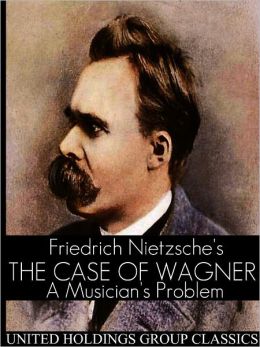
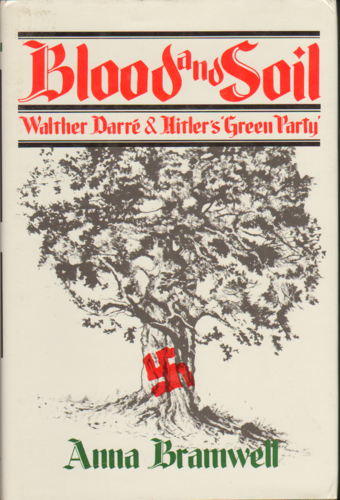
Book finished, but notes not written yet.
Consider this a placeholder.
Reflections by Dr. Gregory Klages on non-fiction books dealing primarily with politics, history, and religion. Significant attention to Canadian content. Mail me/comment if you read anything. I love to hear feedback!
Showing posts with label philosophy. Show all posts
Monday, 19 October 2015
Saturday, 4 July 2015
Butler Schaffer, "A Libertarian Critique of Intellectual Property" (2014)
This is an extended essay published by the libertarian-slanted (Ludwig von) Mises Institute, located in Alabama. Schaffer is an Associate Professor at the Southwestern University School of Law. In 2013, the Institute awarded Schaffer $10,000 for his "lifetime defence of liberty."
Schaffer's argument is not as radical as it might sound. He is not an anarchist. His criticism of intellectual property laws is that they provide incorporated bodies ('artificial' persons recognized by law) with the power to limit, control, and profit from ideas that would better benefit society as part of the creative, communicative commons. He does not suggest that property should be abolished, but that ownership of property should be limited to 'natural' persons, for information that they choose not to send forth into the community. He does raise the prospect, though, that in reality no ideas are built truly independently of the knowledge of others, thus implying that intellectual property laws should be rendered null and void.
QUOTATIONS, AND NOTES by Gregory Klages:
"...only human beings—“persons”—should be respected as property owners; that treating corporations, political institutions, and other abstractions as artificial “persons” represents a source of conflict we ought to reject."
"...the state becomes seen for what it is: an organizational tool of violence that is able to accomplish its purposes only through the willingness of its victims to accord it legitimacy. Such a practice allows lifeless fictions to transcend — and thus demean — the importance of individual human beings."
"...the essence of ownership is found in the capacity to control some resource in furtherance of one’s purposes, such a claim is lost once a product has been released to the public. The situation is similar to that of a person owning oxygen that is contained in a tank, but loses a claim to any quantity that might be released — by a leaky valve — into the air."
"True to their coercive and looting nature, governments have gone so far as to take from the 'public domain' words that belong to no one, and conferred a monopoly copyright upon various institutional interests. The word 'Olympics,' for instance, has been in common usage since at least the eighth century B.C. By political fiat, the International Olympic Committee now enjoys ownership of that word as a state-protected trademark."
"Is the creative process encouraged or hindered by this system of state-conferred monopolies? Creativity—like learning in general — is fostered by cross-fertilization and synthesis."
"The proposition that knowledge and ideas can be made the exclusive property of one who discovers or expresses what was previously unknown, is contrary to the nature of the intelligent mind, whose content is assembled from a mixture of the experiences of others and oneself. Even the language with which one formulates and communicates his or her understanding to others, has been provided by predecessors."
"If we truly believe that the creative process requires the state to grant to inventors and discoverers an immunity from having their works adopted by others, will we insist that modern producers either compensate the descendants of earlier creators for their preliminary work or, in the alternative, abandon their claims to rewards for their “originality”?"
"...the patenting process, as with government regulation generally, is an expensive and time-consuming undertaking that tends to increase industrial concentration."
"The current political mantra, “too big to fail,” is a product of the dysfunctional nature of size when an organization faces energized competition to which it must adapt if it is to survive."
"The state’s creation of patent and copyright interests doesn’t, by itself, prevent innovation by others, but it does erect hurdles that often discourage research…"
Schaffer's argument is not as radical as it might sound. He is not an anarchist. His criticism of intellectual property laws is that they provide incorporated bodies ('artificial' persons recognized by law) with the power to limit, control, and profit from ideas that would better benefit society as part of the creative, communicative commons. He does not suggest that property should be abolished, but that ownership of property should be limited to 'natural' persons, for information that they choose not to send forth into the community. He does raise the prospect, though, that in reality no ideas are built truly independently of the knowledge of others, thus implying that intellectual property laws should be rendered null and void.
QUOTATIONS, AND NOTES by Gregory Klages:
"...only human beings—“persons”—should be respected as property owners; that treating corporations, political institutions, and other abstractions as artificial “persons” represents a source of conflict we ought to reject."
"...the state becomes seen for what it is: an organizational tool of violence that is able to accomplish its purposes only through the willingness of its victims to accord it legitimacy. Such a practice allows lifeless fictions to transcend — and thus demean — the importance of individual human beings."
"...the essence of ownership is found in the capacity to control some resource in furtherance of one’s purposes, such a claim is lost once a product has been released to the public. The situation is similar to that of a person owning oxygen that is contained in a tank, but loses a claim to any quantity that might be released — by a leaky valve — into the air."
"True to their coercive and looting nature, governments have gone so far as to take from the 'public domain' words that belong to no one, and conferred a monopoly copyright upon various institutional interests. The word 'Olympics,' for instance, has been in common usage since at least the eighth century B.C. By political fiat, the International Olympic Committee now enjoys ownership of that word as a state-protected trademark."
"Is the creative process encouraged or hindered by this system of state-conferred monopolies? Creativity—like learning in general — is fostered by cross-fertilization and synthesis."
"The proposition that knowledge and ideas can be made the exclusive property of one who discovers or expresses what was previously unknown, is contrary to the nature of the intelligent mind, whose content is assembled from a mixture of the experiences of others and oneself. Even the language with which one formulates and communicates his or her understanding to others, has been provided by predecessors."
"If we truly believe that the creative process requires the state to grant to inventors and discoverers an immunity from having their works adopted by others, will we insist that modern producers either compensate the descendants of earlier creators for their preliminary work or, in the alternative, abandon their claims to rewards for their “originality”?"
"...the patenting process, as with government regulation generally, is an expensive and time-consuming undertaking that tends to increase industrial concentration."
"The current political mantra, “too big to fail,” is a product of the dysfunctional nature of size when an organization faces energized competition to which it must adapt if it is to survive."
"The state’s creation of patent and copyright interests doesn’t, by itself, prevent innovation by others, but it does erect hurdles that often discourage research…"
Labels:
book reviews,
business,
economics,
law,
philosophy
Thursday, 5 March 2015
Martin Luther, "Concerning Christian Liberty" (1520)
Page numbers are from my digital edition, and should not be regarded as authoritative:
Letter to Pope Leo X
- 2: "Your see, …which is called the Court of Rome, and which neither you nor any man can deny to be more corrupt than any Babylon or Sodom, and quite, as I believe, of a lost, desperate, and hopeless impiety, this I have verily abominated, and have felt indignant that the people of Christ should be cheated under your name and the pretext of the Church of Rome."
- 7: "I cannot bear with laws for the interpretation of the word of God, since the word of God, which teaches liberty in all other things, ought not to be bound."
- 7: "They are in error who raise you above councils and the universal Church; they are in error who attribute to you alone the right of interpreting Scripture."
- 7-8: "How much more rightly did the Apostles speak, who call themselves servants of a present Christ, not the vicars of an absent one!"
Concerning Christian Liberty
- 10: "…the things I have spoken of can be done by any impious person, and only hypocrites are produced by devotion to these things. On the other hand, it will not at all injure the soul that the body should be clothed in profane raiment, should dwell in profane places, should eat and drink in the ordinary fashion, should not pray aloud, and should leave undone all the things above mentioned, which may be done by hypocrites…"
- 10: "One thing, and one alone, is necessary for life, justification, and Christian liberty; and that is the most holy word of God, the Gospel of Christ."
- 11: "For the word of God cannot be received and honoured by any works, but by faith alone. Hence it is clear that as the soul needs the word alone for life and justification, so it is justified by faith alone, and not by any works. For if it could be justified by any other means, it would have no need of the word, nor consequently of faith."
- 11-12: "…it is solely by impiety and incredulity of heart that he becomes guilty and a slave of sin, deserving condemnation, not by any outward sin or work. Therefore the first care of every Christian ought to be to lay aside all reliance on works, and strengthen his faith alone more and more, and by it grow in the knowledge, not of works, but of Christ Jesus…"
- 12: "…the whole Scripture of God is divided into two parts: precepts and promises. The precepts certainly teach us what is good, but what they teach is not forthwith done. For they show us what we ought to do, but do not give us the power to do it. They were ordained, however, for the purpose of showing man to himself, that through them he may learn his own impotence for good and may despair of his own strength. For this reason they are called the Old Testament."
- 13: "…what is impossible for you by all the works of the law, which are many and yet useless, you shall fulfil in an easy and summary way through faith, because God the Father has made everything to depend on faith, so that whosoever has it has all things, and he who has it not has nothing."
- 14: "The highest worship of God is to ascribe to Him truth, righteousness, and whatever qualities we must ascribe to one in whom we believe. In doing this the soul shows itself prepared to do His whole will; in doing this it hallows His name, and gives itself up to be dealt with as it may please God."
- 14: "…what greater rebellion, impiety, or insult to God can there be, than not to believe His promises? What else is this, than either to make God a liar, or to doubt His truth—that is, to attribute truth to ourselves, but to God falsehood and levity?"
- 14: "For faith does truth and righteousness in rendering to God what is His… It is true and righteous that God is true and righteous; and to confess this and ascribe these attributes to Him, this it is to be true and righteous."
- 16: "It is not by working, but by believing, that we glorify God, and confess Him to be true."
- 18: "…there is nothing of which I have need—for faith alone suffices for my salvation—unless that in it faith may exercise the power and empire of its liberty."
- 19: "For though it is true that we are all equally priests, yet we cannot, nor, if we could, ought we all to, minister and teach publicly."
- 20: "There are now not a few persons who preach and read about Christ with the object of moving the human affections to sympathise with Christ, to indignation against the Jews, and other childish and womanish absurdities of that kind."
- 20: "Who can injure such a heart, or make it afraid? If the consciousness of sin or the horror of death rush in upon it, it is prepared to hope in the Lord, and is fearless of such evils, and undisturbed, until it shall look down upon its enemies. For it believes that the righteousness of Christ is its own."
- 21: "If faith does everything, and by itself suffices for justification, why then are good works commanded? Are we then to take our ease and do no works, content with faith?" Not so, impious men, I reply; not so. That would indeed really be the case, if we were thoroughly and completely inner and spiritual persons; but that will not happen until the last day, when the dead shall be raised. As long as we live in the flesh, we are but beginning and making advances in that which shall be completed in a future life."
- 21: "…he remains in this mortal life upon earth, in which it is necessary that he should rule his own body and have intercourse with men. Here then works begin; here he must not take his ease; here he must give heed to exercise his body by fastings, watchings, labour, and other regular discipline, so that it may be subdued to the spirit, and obey and conform itself to the inner man and faith, and not rebel against them nor hinder them, as is its nature to do if it is not kept under."
- 21: "…he comes into collision with that contrary will in his own flesh, which is striving to serve the world and to seek its own gratification."
- 22: "…from the requirements of his own body, a man cannot take his ease, but is compelled on its account to do many good works, that he may bring it into subjection. Yet these works are not the means of his justification before God; he does them out of disinterested love to the service of God; looking to no other end than to do what is well-pleasing to Him whom he desires to obey most dutifully in all things."
- 23: "Adam had been created by God just and righteous, so that he could not have needed to be justified and made righteous by keeping the garden and working in it; but, that he might not be unemployed, God gave him the business of keeping and cultivating paradise. These would have indeed been works of perfect freedom, being done for no object but that of pleasing God, and not in order to obtain justification, which he already had to the full, and which would have been innate in us all."
- 23: "Thus a Christian, being consecrated by his faith, does good works; but he is not by these works made a more sacred person, or more a Christian."
- 25: "For if works are brought forward as grounds of justification, and are done under the false persuasion that we can pretend to be justified by them, they lay on us the yoke of necessity, and extinguish liberty along with faith, and by this very addition to their use they become no longer good, but really worthy of condemnation. For such works are not free…"
- 25: "We do not then reject good works; nay, we embrace them and teach them in the highest degree. It is not on their own account that we condemn them, but on account of this impious addition to them and the perverse notion of seeking justification by them."
- 25: "The voice of the law should be brought forward, that men may be terrified and brought to a knowledge of their sins, and thence be converted to penitence and to a better manner of life. But we must not stop here; that would be to wound only and not to bind up, to strike and not to heal…"
- 25: "…the word of grace and of the promised remission of sin must also be preached, in order to teach and set up faith, since without that word contrition, penitence, and all other duties, are performed and taught in vain."
- 26: "…it is impossible that he should take his ease in this life, and not work for the good of his neighbours, since he must needs speak, act, and converse among men…"
- 26: "...but in all his works he ought to entertain this view and look only to this object—that he may serve and be useful to others in all that he does; having nothing before his eyes but the necessities and the advantage of his neighbour."
- 26: "It is the part of a Christian to take care of his own body for the very purpose that, by its soundness and well-being, he may be enabled to labour, and to acquire and preserve property, for the aid of those who are in want, that thus the stronger member may serve the weaker member, and we may be children of God."
- 27: "…the Apostle lays down this rule for a Christian life: that all our works should be directed to the advantage of others, since every Christian has such abundance through his faith that all his other works and his whole life remain over and above wherewith to serve and benefit his neighbour of spontaneous goodwill."
- 28: "Lo! my God, without merit on my part, of His pure and free mercy, has given to me, an unworthy, condemned, and contemptible creature all the riches of justification and salvation in Christ, so that I no longer am in want of anything, except of faith to believe that this is so. For such a Father, then, who has overwhelmed me with these inestimable riches of His, why should I not freely, cheerfully, and with my whole heart, and from voluntary zeal, do all that I know will be pleasing to Him and acceptable in His sight? I will therefore give myself as a sort of Christ, to my neighbour, as Christ has given Himself to me; and will do nothing in this life except what I see will be needful, advantageous, and wholesome for my neighbour, since by faith I abound in all good things in Christ."
- 29: "…we are quite ignorant about our own name, why we are and are called Christians. We are certainly called so from Christ, who is not absent, but dwells among us—provided, that is, that we believe in Him and are reciprocally and mutually one the Christ of the other, doing to our neighbour as Christ does to us."
- 31: "We give this rule: the good things which we have from God ought to flow from one to another and become common to all…"
- 34: "…we ought boldly to resist those teachers of tradition, and though the laws of the pontiffs, by which they make aggressions on the people of God, deserve sharp reproof, yet we must spare the timid crowd, who are held captive by the laws of those impious tyrants, till they are set free. Fight vigorously against the wolves, but on behalf of the sheep, not against the sheep."
- 34: "If you wish to use your liberty, do it secretly, as Paul says, "Hast thou faith? have it to thyself before God" (Rom. xiv. 22). … On the other hand, in the presence of tyrants and obstinate opposers, use your liberty in their despite, and with the utmost pertinacity, that they too may understand that they are tyrants, and their laws useless for justification, nay that they had no right to establish such laws."
Labels:
book reviews,
European history,
philosophy,
religion,
social history
Monday, 5 January 2015
Wednesday, 24 December 2014
Joey Comeau, "Overqualified" (2007)
Comeau's short book of cover letters written to various potential employers evokes an occasional chuckle, although when the author attempts to evoke some kind of deeper curiosity or pathos through vague references to a family death or tragedy, he left me cold. The threads are too confusing, too ambiguous, too inconsistent, and in the end, left floating without any kind of consolidation or clarification of their importance.
Frankly, Julie Schumacher's Dear Committee Members (discussed on this site) does much the same job, in a similar fashion, but in a much more readable text.
Sunday, 30 November 2014
Witold Gombrowicz, "A Guide to Philosophy in Six Hours and Fifteen Minutes" (1967)
My dating of this work is representative of the date the material originated, not of its publication. The first French edition appeared in 1995, and the English translation followed about a decade later.
Gombrowicz is one of the luminaries of Eastern European (particularly Polish) literature. He authored titles such as Ferdydurke (likely his best-known work), and was nominated for a Nobel Prize in Literature during the late 1960s. Near the end of his life, as he was ailing in the south of France, a friend asked him to provide herself and Gombrowicz's Canadian wife with an overview of his ideas about philosophy. The book is the result of the notes from these talks.
As an introduction to philosophy, this book is not particularly useful. It is distinctly one man's interpretation of who and what ideas are important, and how thought evolved over time. The notes are sometimes incomplete, or cryptic in their meaning. Preserving these ideas strikes me as unnecessarily hagiographic. I'm not sure that Gombrowicz would ever be identified as being a leading historian of the European philosophic traditions. Nonetheless, for those interested in Gombrowicz's thinking, or the views circulating among the East European intellectual diaspora during the Cold War, the Guide offers unique insights.
You can download a PDF of the book here.
Some quotations that stood out:
First Lesson
Descartes:a single important idea: absolute doubt. Here rationalism begins: subject everything to absolute doubt, until the moment when reason forces us to accept an idea.
Answer: A priorisynthetic judgments are possible in general and therefore in transcendental aesthetics, because time and space are not a property of things but rather a property of the subject. In order for something to exist for us, we must inject it with time and space.
There are three reasons why space does not exist in the objective world outside us, but is an integral part of our consciousness.” First argument. Space does not come from an experience, but is the inevitable condition of all experience. Space is not an object but the condition of the existence of the object. Space does not derive from experience. Second argument. Space is not a concept obtained by deduction. We cannot understand it as concrete, because it is not an object. Space is pure intuition.
Analytical judgments are those which derive from analysis, dissecting a whole into its significant parts.
Synthetic judgments are a posteriori, in other words, based on experience.
For the first time consciousness asks the question: What are the limits of consciousness(of reason)?
Third argument(or rather, consequence). The intuition of space is the inevitable condition of our a priori synthetic judgments, conferring objective reality on things.
Second Lesson
Consciousness is the fundamental thing. Object-subject: nothing more. 1. consciousness cannot be a mechanism, nor broken up into parts, because it has no parts. It is a whole. 2. consciousness cannot be conditioned by science. It is what permits science, but science cannot explain something to us about consciousness. Consciousness is not the brain, nor the body, because I am conscious of my brain, but the brain cannot be conscious.
Time is not a thing that can be tested, but all things are in time.
A priori synthetic judgments are confirmed in experience because they are carried out in time. In the same way, all judgments related to mathematics are a priorisynthetic judgments, confirmed by experience.
Kant demonstrates that only the co-relativity of subject and object can form a reality. The object must be seized by consciousness in order to form reality in time and space.
There is an important boundary between science and philosophy. Science establishes its methods, its laws by experience. But it is valid only in the world of phenomena. Science can give us the connection between things, but not direct knowledge about the essence of things.
To tell the truth, in philosophy, one cannot say anything.
Kant
Our reason must be limited to the phenomenological world. The phenomenon is what I see according to my faculties, and my way of seeing things.
the soul is the synthesis of all impressions, because it is man’s self (the soul) which assimilates all impressions. The soul is that which receives the perceptions.
the critique of the idea of the soul consists in demonstrating that all our perceptions are
the concept of thing, in order to reach fullness, must inevitably insert time and space, since the Cosmos signifies absolutely everything that exists. We see a contradiction here, since the Cosmos must be unlimited in time and space in order to include absolutely everything.
Kant lists three theological arguments here to demonstrate the existence of God.
We have an idea of God as a perfect being. But a perfect being, to have perfection, must also have the quality of existing. This argument seems too sophisticated to me. Kant says that the category of existence is a perception. Yet God cannot be perceived.
The world must have a cause since, according to the category of causality, each thing must have a cause. If this is so, God must also have a cause.
Everything that is in the world must have a purpose, must be the work of God. But if God is teleological, then he himself should be created for an end.
we can never know what the noumenon, the absolute, is in itself, independent of our own perceptions.
Imperatives when the will is autonomous, conditioned by nothing. Example: “One must be moral” is categorical. It does not depend on any condition
Fourth Lesson
What is the will to live for Schopenhauer? He himself says that he uses these words because nothing better comes to mind. In truth, it is more the will to be, because for Schopenhauer, not only do man and animals want to live, but also the rock that resists and the light that persists.
if I myself am a thing, I must seek my absolute in my intuition, what I am in my essence. And, says Schopenhauer, “I know that the most elementary and fundamental thing in myself is the will to live.”
when this will to live passes to the phenomenological world, becoming a phenomenon limited by time and space, then it inevitably becomes divided. By the effect of a law that Schopenhauer called principium individuationis, it becomes individual, specific.
Man can never attain individual happiness. Our will to live forces us to consume others or to be consumed by them. As a result, Schopenhauer analyzes various noble feelings (example: the woman’s love for the child); he demonstrates that all that goes against individual happiness. After that, he likewise shows that what one calls happiness or pleasure is nothing more than the satisfying of a malaise. If you enjoy eating steak, it is because you felt hungry beforehand
Fifth Lesson
Schopenhauer recognizes two possibilities: 1. To affirm the will to live by fully participating in life with its cruelties and its injustices. 2. Not suicide, but meditation.
Art shows us nature’s game and its forces, namely the will to live.
Schopenhauer sees ART. It is meditation that he sets in opposition to life.
Schopenhauer makes a very good comparison in saying that a mediocre man’s intelligence resembles a flashlight, which shines only on what it is seeking, whereas a superior intelligence is like the sun, which illuminates everything. From there derives the objectivity of the art of the genius. It is disinterested.
Hegel
I was never born. I was never born in 1904. I only know that I have the idea of my birth in 1904 in my consciousness, and that I have the idea of 1904, that is to say, of all the past years. Everything changed in a diabolical way. That changes the universe. There is nothing more than a definitive center which is consciousness and that which passes into consciousness. Consciousness is evidently alon
existentialism cannot produce any philosophy. Me, I am alone, concrete, independent of any logic, of any concept
intuition is direct knowledge without reasoning. Thus existentialism is the profound and most definitive description of our facts concerning existence.
How can one define the characteristics of “the Being in itself,” that is, the being of objects? 1. We have to say that only phenomena exist (Husserl). Everything manifests itself as a phenomenon
The Being in itself is opaque. He is as he is, that is all one can say, he is immobile. He is not subject to creation and temporality, and cannot be inferred from something (like created by God).
Existential man is concrete, alone, made of nothingness, thus free. He is condemned to freedom and he can choosehimself. What happens if we choose, for example, frivolity and not authenticity, falseness and not truth? As there is no hell, there is no punishment. From the existential point of view, the only punishment is that this man has no true existence.
Here on the subject of freedom, Sartre is very categorical. He says that the choice depends only on us, there are no pre-established values, it is our choice which creates them. One could imagine that man, with all his freedom, is nevertheless condemned to satisfy the fundamental necessities of life, such as eating. But this also depends on me. If I choose suicide, food loses all value for me. And from this absolute responsibility of man to himself is born the characteristic anguish of existentialism, as much for Heidegger as for Kierkegaard and Sartre. This anguish is the anguish of nothingness
This phenomenological method is not concerned with God, etc., but only with what is in our consciousness, when it confronts our specific being, our existence. It is phenomenological ontology. Ontology means the science of Being (existence). Phenomenological means that there are only phenomena, and one must not look for something behind the phenomena. In this sense, this method is completely atheistic. Heidegger said that complex arguments are not needed as much as heroic naïveté.
What is existence, that is, man’s specific being? He says: It defines itself by what he calls “ Da-sein,” “to be there” (over there). To be man. To exist as a man. The “Seindes” is a way for things to exist, an absurd atemporal way (a chair, it is but does not know it). But man is also a “Seindes,” and he is conscious of that: being a thing. But he also transcends this (transcendent: that which within me navigates toward the exterior), since man is a thing but he is also something more. He extends beyond the thing. He is transcendent. The word “ Sein,” to be.
curiosity is the superficial connection of man. What are they talking about? In the more profound sense, it is an interpretation of man, of the world, of being, of scientific, philosophical, or religious problems. It is also a way to make existence commonplace, to flee from existence, a way of replacing the profound sense of life by a superficial and limited science. The dramatic thing about man (and here again, Sartre comes to mind) is that man gives a meaning to things by his existence. Now, in dealing with science, for example, he gives it an inauthentic meaning. He falsifies. Existentialism refrains from science.
For Heidegger, it is the Being which appears secondarily as a contradiction of nothingness. 1. nothingness 2. Being. This definition can seem rather unfounded, but actually it leads to an extremely curious and true experience: human existence is in constant opposition to nothingness. Man always threatened by death and annihilation persists like a flame which wants to be revived, fed.
a general characteristic of existence, according to Heidegger. 1. It is “Sorge,” concern. Human life is by no means assured, but endlessly wants conquests, life is to conquer what one does not have. 2. Human beings are limited and have an end precisely because they have nothingness within them. Authentic existence asserts man’s finiteness. It has moral constants. It does not permit having a clear conscience. Never are we what we want to be, but we still want to be. Man is essentially unhappy because he is limited
How does the world appear, according to Marx? The first aspect is its materialism. Marxism is the negation of religion. He considered religion as a product of men to run from danger. And this is an instrument of the higher class to dominate the lower class. Materialism constitutes the negation of idealism, of all metaphysics, of all recourse to ideas. For Marxism, there is only the brutal, concrete reality of life. Second aspect: Marxism defines itself by the well-known formula, consciousness depends on being.
consciousness is a function of our necessities, of our relationship with nature. But since man does not depend only on nature but also and above all on society, on historic conditions produced by that society, consciousness is formed by that society. Consciousness is therefore above all a function of human history. The third aspect: need creates value.
the growing consciousness of humanity lets him organize a society and a state which are above all a system for the production of goods. In this organization, one man must be subject to another, such that it is through the exploitation of one man by another that one arrives at the accumulation of goods. The man who forms a group is subject to the laws of the group, which wants to be strong, and this strength is the consequence of the exploitation of man by man. For example, the army which obeys a single man through generals, etc., or slaves or finally castes, different stages of the feudal systems, classes. It is man who obliges man to work.
Capitalists, that is to say, members of the upper class, buy labor as if it were merchandise, thus at the best possible price. This better price represents the bare minimum that the worker needs to eat and to father children. Surplus valueis formed this way because the worker produces much more than what he is paid; the rest goes to capitalism. The worker always produces more than what he is paid. Such is surplus value. The worker’s labor is subject, like all merchandise, to Adam Smith’s famous economic law, according to which if supply is greater than demand, the value of the merchandise decreases. It is this law which explains the process of devaluation. To curb devaluation, supply, that is, production, must be increased.
Alienated man, that is, he who cannot be himself, is obliged to serve as a machine instead of having his normal life. This theory is fine, but in my view, it does not apply to capitalism. Capital is used to create other wealth, but this exploitation of man by man is not done so much for the happiness of the individual. Capitalism is not exclusively beneficial to the capitalist, since if the capitalist is able to consume his money, he cannot buy more than one hundred hats or a yacht, etc., each year. Where does the rest of his money go? To other factories, other industries, etc., and this is the way that humanity’s technical power becomes greater each time. This exploitation of man by man is a fundamental necessity for human progress, which is extremely difficult for the individual.
Marxism is not an ideology or a truth, it is just simply the freedom from human needs as a source of values. The revolution, therefore, is going to free allmen from natural needs, and on the basis of this freedom, the values will be created by themselves. It must be clearly understood that Marxism is not a revolution of ideas but rather a revolution between concrete men. It is a liberation of man. The new ideas: future thought is unpredictable and will be created by itself in this new human order.
The human race is like all the others; it is improved by a struggle and a natural selection done by life itself. Here we see the most sensational and the most provocative aspect of this philosophy: it is the opposition to Christianity, which, according to Nietzsche, was a morality of the weak imposed on the strong, harmful to the human race and, therefore, immoral.
In Zarathustra (of which he sold only forty copies and gave seven of them as gifts): 1. God is dead. This means that humanity has reached its maturity. Faith in God is already anachronistic. Man ends up all alone in the cosmos. Nothing but life. 2. (Stupid idea.) The ideal of the superman. Man is a transient phenomenon that must be overtaken. Man is thus problematic. He is a bridge and not an end in himself.
Entropy. Loss of energy through radiation. Nietzsche starts from an original cause which produces all the other causes, cause-effects, etc. Automatic process from cause to effect, thanks to which we arrive at the present moment. This will be exceeded by other cause-effects and finally will vanish, and again the first cause will return, etc., and we shall arrive again at the same situation. As time is infinite, this will repeat itself eternally.
I return to this important point about existentialism: the philosopher is in life, one of the major currents of our thinking during the 19th century. The path of this Western thought could be defined by the great questions it asked. 1. The reduction of thought. Thought for Kant becomes conscious of its limits. It already knows that one cannot demonstrate, for example, the existence of God, but that it is just as impossible to demonstrate that God does not exist.
2. The other problem is more difficult, that of life, of becoming. Philosophy, before Hegel, claimed to describe a fixed world in a state of stability where the notion of movement, of becoming, surely was disturbing (already in Greek philosophy), but was not the fundamental problem. Now Hegel is the philosophy of becoming. It is the idea of an imperfection of reason which is in the process of moving ahead, of developing.
The world is a thing, it is understood to the extent that it is assimilated by reason, by a rational consciousness.
Each day, we understand the world better, we are better aware of the reason for every phenomenon. Thus each time the world exists a little more for us. There will come a moment, the final moment of our history and of the human race, where the world will be fully assimilated. On that day, time and space will disappear and the conjunction of subject and object will be transformed into an absolute. Beyond time and space.
Hegel’s philosophy is a philosophy of becoming, which is a great step ahead, since this process of becoming does not appear in earlier philosophies. It is not only a movement, but a progression, since this dialectical process always puts us on a higher rung, until the final outcome of reason,
For Hegel, nature is not creative. It does not advance. The sun, for example, always rises and sets the same way. But what is creative is human evolution, which expresses itself especially in history.
for earlier philosophy, man was subject to a moral law instituted by God or, as in Kant, subject to a moral imperative. In other words, man functions but the law already exists. But in Hegel, everything moves. In advancing, man crafts his own law, and there is no fixed law beyond that which is constituted by the dialectical process. In Hegel, not only man but laws are in progress because they are imperfect.
Existentialism is particularly meant to be a philosophy of the concrete. But this is a dream; in concrete reality, one cannot make arguments. Arguments always use concepts, etc.
reasoning can be done only through concepts and logic, and general laws cannot be formed without concepts and without logic. On the other hand, concepts do not exist in reality
Husserl says: because we can say nothing about the noumenon(thing in itself), we put the noumenonin parentheses; that is, that the only thing one can speak of are the phenomena.
existentialism moves into structuralism.
Curious thing: this rudimentary comparison that I have managed to do can seem naïve. Yet it leads to real concepts, for example, that the human being is empty because of the well-known intentionality of consciousness. If a chair is a chair, then consciousness is never identical to itself because one must always be conscious of something. One cannot imagine empty consciousness.
The Being in itself cannot disappear. It is independent of time and space. It is as it is, nothing more. While existence, the Being for itself, is a limited being, with an end, which dies. (This is at least how our existence appears to our consciousness. Existence must be sustained like a flame.
we are absolutely sure of being free. No one can take away from me the feeling that it is I myself who decides whether I have to move my hand or not. Indeed, when we contemplate other people, they appear to us as the consequence of a cause
freedom is a feature only of existence while causality is the feature of the Being in itself.
The existentialist is a subjective, freeman. He has what one calls free will, unlike a man viewed from the scientific outside, who is always subject to causality, like a mechanism.
to be man is to be subject. It is to have a consciousness which recognizes everything else as object. If I admitted that Witold too has a consciousness, then inevitably I myself am an object for Witold, who is the subject. It is impossible to be subject and object at the same time. Here Sartre was frightened. His highly developed ethics refuses to admit that there is no other man because there are no longer any moral obligations.
We must not forget that man by his body, by his mechanism, belongs to the world dictated by causality, since if we are stabbed, evidently we are going to bleed, like every other animal. Freedom manifests itself only in existence, in that specific being which is the Being for itself.
Man, says Heidegger, must create himself. As he is not a thing, well then! he must become “man.” Banal life simply means to flee from oneself. This is in order to forget and to lose oneself. To become man is only one possibility. One does not use the word “I,” but one uses “one.” “One” goes to the movies. “One” has political opinions. And man identifies himself with his social function. “One” is an engineer, etc. You understand in which direction Heidegger’s probing is going. Man must truly become man.
It is Heidegger who introduced the notion of “completed future.” Man’s time is always the future. He is never there where he is. He is always transcendent.
according to Sartre, a man needs water in the desert because he chooses life and not death. For Marxism, a living being is obliged to choose life and one cannot speak here of free choice.
The dominant class forms the superstructure which creates philosophy, religion, law, which in a word, organizes consciousness. All of this actually serves secretly to maintain the exploitation.
The profound and unique meaning of religion is quite simply to transfer justice to another world.
The big crisis in Marxism stems quite simply from the fact that—as shown by the situation in the East—one works badly and produces very little. And why? Life is hard; if you do not force men to work, naturally they will not work.
the only country in the world which has more or less liquidated the proletariat, except among the Blacks, is the glorious United States, that is, the capitalists. The Socialists, on the other hand, are going bankrupt everywhere for the simple reason that no one is interested either to produce, nor to force others to do so, because there is no interest at stake.
if you allow men to deploy all their energy and their intelligence, inevitably one will dominate the other, one will be superior to the other. But in this case, you obtain a huge amount of energy, whereas if you want equality between men, then naturally you must curb this possibility of superiority.
The big defect in the upper class is that it is essentially a class of consumption. Consequently, it is accustomed to conveniences, becomes lazy, delicate, and degenerate. But now the upper class is increasingly composed of engineers, producers, scientists, intellectuals, lastly, some working people.
Marx’s thesis is that Marxism is an absolute historical necessity which occurs due to inexorable economic laws, by the concentration of capital in a little group that will be annihilated by the huge mass of the destitute. Marxists want to introduce the dictatorship of the proletariat, not democracy but dictatorship
Nietzsche was not a philosopher in the strict sense: he wrote aphorisms, some notes.
Nietzsche considers pessimism to be a weakness, condemned by life and optimism, a superficial (Canadian!) thing
For Nietzsche, life is not good, but we are condemned to life. This leads to paradoxes, such as his admiration for cruelty, harshness (without mercy), and for the whip, weapons.
Gombrowicz is one of the luminaries of Eastern European (particularly Polish) literature. He authored titles such as Ferdydurke (likely his best-known work), and was nominated for a Nobel Prize in Literature during the late 1960s. Near the end of his life, as he was ailing in the south of France, a friend asked him to provide herself and Gombrowicz's Canadian wife with an overview of his ideas about philosophy. The book is the result of the notes from these talks.
As an introduction to philosophy, this book is not particularly useful. It is distinctly one man's interpretation of who and what ideas are important, and how thought evolved over time. The notes are sometimes incomplete, or cryptic in their meaning. Preserving these ideas strikes me as unnecessarily hagiographic. I'm not sure that Gombrowicz would ever be identified as being a leading historian of the European philosophic traditions. Nonetheless, for those interested in Gombrowicz's thinking, or the views circulating among the East European intellectual diaspora during the Cold War, the Guide offers unique insights.
You can download a PDF of the book here.
Some quotations that stood out:
First Lesson
Descartes:a single important idea: absolute doubt. Here rationalism begins: subject everything to absolute doubt, until the moment when reason forces us to accept an idea.
Answer: A priorisynthetic judgments are possible in general and therefore in transcendental aesthetics, because time and space are not a property of things but rather a property of the subject. In order for something to exist for us, we must inject it with time and space.
There are three reasons why space does not exist in the objective world outside us, but is an integral part of our consciousness.” First argument. Space does not come from an experience, but is the inevitable condition of all experience. Space is not an object but the condition of the existence of the object. Space does not derive from experience. Second argument. Space is not a concept obtained by deduction. We cannot understand it as concrete, because it is not an object. Space is pure intuition.
Analytical judgments are those which derive from analysis, dissecting a whole into its significant parts.
Synthetic judgments are a posteriori, in other words, based on experience.
For the first time consciousness asks the question: What are the limits of consciousness(of reason)?
Third argument(or rather, consequence). The intuition of space is the inevitable condition of our a priori synthetic judgments, conferring objective reality on things.
Second Lesson
Consciousness is the fundamental thing. Object-subject: nothing more. 1. consciousness cannot be a mechanism, nor broken up into parts, because it has no parts. It is a whole. 2. consciousness cannot be conditioned by science. It is what permits science, but science cannot explain something to us about consciousness. Consciousness is not the brain, nor the body, because I am conscious of my brain, but the brain cannot be conscious.
Time is not a thing that can be tested, but all things are in time.
A priori synthetic judgments are confirmed in experience because they are carried out in time. In the same way, all judgments related to mathematics are a priorisynthetic judgments, confirmed by experience.
Kant demonstrates that only the co-relativity of subject and object can form a reality. The object must be seized by consciousness in order to form reality in time and space.
There is an important boundary between science and philosophy. Science establishes its methods, its laws by experience. But it is valid only in the world of phenomena. Science can give us the connection between things, but not direct knowledge about the essence of things.
To tell the truth, in philosophy, one cannot say anything.
Kant
Our reason must be limited to the phenomenological world. The phenomenon is what I see according to my faculties, and my way of seeing things.
the soul is the synthesis of all impressions, because it is man’s self (the soul) which assimilates all impressions. The soul is that which receives the perceptions.
the critique of the idea of the soul consists in demonstrating that all our perceptions are
the concept of thing, in order to reach fullness, must inevitably insert time and space, since the Cosmos signifies absolutely everything that exists. We see a contradiction here, since the Cosmos must be unlimited in time and space in order to include absolutely everything.
Kant lists three theological arguments here to demonstrate the existence of God.
We have an idea of God as a perfect being. But a perfect being, to have perfection, must also have the quality of existing. This argument seems too sophisticated to me. Kant says that the category of existence is a perception. Yet God cannot be perceived.
The world must have a cause since, according to the category of causality, each thing must have a cause. If this is so, God must also have a cause.
Everything that is in the world must have a purpose, must be the work of God. But if God is teleological, then he himself should be created for an end.
we can never know what the noumenon, the absolute, is in itself, independent of our own perceptions.
Imperatives when the will is autonomous, conditioned by nothing. Example: “One must be moral” is categorical. It does not depend on any condition
Fourth Lesson
What is the will to live for Schopenhauer? He himself says that he uses these words because nothing better comes to mind. In truth, it is more the will to be, because for Schopenhauer, not only do man and animals want to live, but also the rock that resists and the light that persists.
if I myself am a thing, I must seek my absolute in my intuition, what I am in my essence. And, says Schopenhauer, “I know that the most elementary and fundamental thing in myself is the will to live.”
when this will to live passes to the phenomenological world, becoming a phenomenon limited by time and space, then it inevitably becomes divided. By the effect of a law that Schopenhauer called principium individuationis, it becomes individual, specific.
Man can never attain individual happiness. Our will to live forces us to consume others or to be consumed by them. As a result, Schopenhauer analyzes various noble feelings (example: the woman’s love for the child); he demonstrates that all that goes against individual happiness. After that, he likewise shows that what one calls happiness or pleasure is nothing more than the satisfying of a malaise. If you enjoy eating steak, it is because you felt hungry beforehand
Fifth Lesson
Schopenhauer recognizes two possibilities: 1. To affirm the will to live by fully participating in life with its cruelties and its injustices. 2. Not suicide, but meditation.
Art shows us nature’s game and its forces, namely the will to live.
Schopenhauer sees ART. It is meditation that he sets in opposition to life.
Schopenhauer makes a very good comparison in saying that a mediocre man’s intelligence resembles a flashlight, which shines only on what it is seeking, whereas a superior intelligence is like the sun, which illuminates everything. From there derives the objectivity of the art of the genius. It is disinterested.
Hegel
I was never born. I was never born in 1904. I only know that I have the idea of my birth in 1904 in my consciousness, and that I have the idea of 1904, that is to say, of all the past years. Everything changed in a diabolical way. That changes the universe. There is nothing more than a definitive center which is consciousness and that which passes into consciousness. Consciousness is evidently alon
existentialism cannot produce any philosophy. Me, I am alone, concrete, independent of any logic, of any concept
intuition is direct knowledge without reasoning. Thus existentialism is the profound and most definitive description of our facts concerning existence.
How can one define the characteristics of “the Being in itself,” that is, the being of objects? 1. We have to say that only phenomena exist (Husserl). Everything manifests itself as a phenomenon
The Being in itself is opaque. He is as he is, that is all one can say, he is immobile. He is not subject to creation and temporality, and cannot be inferred from something (like created by God).
Existential man is concrete, alone, made of nothingness, thus free. He is condemned to freedom and he can choosehimself. What happens if we choose, for example, frivolity and not authenticity, falseness and not truth? As there is no hell, there is no punishment. From the existential point of view, the only punishment is that this man has no true existence.
Here on the subject of freedom, Sartre is very categorical. He says that the choice depends only on us, there are no pre-established values, it is our choice which creates them. One could imagine that man, with all his freedom, is nevertheless condemned to satisfy the fundamental necessities of life, such as eating. But this also depends on me. If I choose suicide, food loses all value for me. And from this absolute responsibility of man to himself is born the characteristic anguish of existentialism, as much for Heidegger as for Kierkegaard and Sartre. This anguish is the anguish of nothingness
This phenomenological method is not concerned with God, etc., but only with what is in our consciousness, when it confronts our specific being, our existence. It is phenomenological ontology. Ontology means the science of Being (existence). Phenomenological means that there are only phenomena, and one must not look for something behind the phenomena. In this sense, this method is completely atheistic. Heidegger said that complex arguments are not needed as much as heroic naïveté.
What is existence, that is, man’s specific being? He says: It defines itself by what he calls “ Da-sein,” “to be there” (over there). To be man. To exist as a man. The “Seindes” is a way for things to exist, an absurd atemporal way (a chair, it is but does not know it). But man is also a “Seindes,” and he is conscious of that: being a thing. But he also transcends this (transcendent: that which within me navigates toward the exterior), since man is a thing but he is also something more. He extends beyond the thing. He is transcendent. The word “ Sein,” to be.
curiosity is the superficial connection of man. What are they talking about? In the more profound sense, it is an interpretation of man, of the world, of being, of scientific, philosophical, or religious problems. It is also a way to make existence commonplace, to flee from existence, a way of replacing the profound sense of life by a superficial and limited science. The dramatic thing about man (and here again, Sartre comes to mind) is that man gives a meaning to things by his existence. Now, in dealing with science, for example, he gives it an inauthentic meaning. He falsifies. Existentialism refrains from science.
For Heidegger, it is the Being which appears secondarily as a contradiction of nothingness. 1. nothingness 2. Being. This definition can seem rather unfounded, but actually it leads to an extremely curious and true experience: human existence is in constant opposition to nothingness. Man always threatened by death and annihilation persists like a flame which wants to be revived, fed.
a general characteristic of existence, according to Heidegger. 1. It is “Sorge,” concern. Human life is by no means assured, but endlessly wants conquests, life is to conquer what one does not have. 2. Human beings are limited and have an end precisely because they have nothingness within them. Authentic existence asserts man’s finiteness. It has moral constants. It does not permit having a clear conscience. Never are we what we want to be, but we still want to be. Man is essentially unhappy because he is limited
How does the world appear, according to Marx? The first aspect is its materialism. Marxism is the negation of religion. He considered religion as a product of men to run from danger. And this is an instrument of the higher class to dominate the lower class. Materialism constitutes the negation of idealism, of all metaphysics, of all recourse to ideas. For Marxism, there is only the brutal, concrete reality of life. Second aspect: Marxism defines itself by the well-known formula, consciousness depends on being.
consciousness is a function of our necessities, of our relationship with nature. But since man does not depend only on nature but also and above all on society, on historic conditions produced by that society, consciousness is formed by that society. Consciousness is therefore above all a function of human history. The third aspect: need creates value.
the growing consciousness of humanity lets him organize a society and a state which are above all a system for the production of goods. In this organization, one man must be subject to another, such that it is through the exploitation of one man by another that one arrives at the accumulation of goods. The man who forms a group is subject to the laws of the group, which wants to be strong, and this strength is the consequence of the exploitation of man by man. For example, the army which obeys a single man through generals, etc., or slaves or finally castes, different stages of the feudal systems, classes. It is man who obliges man to work.
Capitalists, that is to say, members of the upper class, buy labor as if it were merchandise, thus at the best possible price. This better price represents the bare minimum that the worker needs to eat and to father children. Surplus valueis formed this way because the worker produces much more than what he is paid; the rest goes to capitalism. The worker always produces more than what he is paid. Such is surplus value. The worker’s labor is subject, like all merchandise, to Adam Smith’s famous economic law, according to which if supply is greater than demand, the value of the merchandise decreases. It is this law which explains the process of devaluation. To curb devaluation, supply, that is, production, must be increased.
Alienated man, that is, he who cannot be himself, is obliged to serve as a machine instead of having his normal life. This theory is fine, but in my view, it does not apply to capitalism. Capital is used to create other wealth, but this exploitation of man by man is not done so much for the happiness of the individual. Capitalism is not exclusively beneficial to the capitalist, since if the capitalist is able to consume his money, he cannot buy more than one hundred hats or a yacht, etc., each year. Where does the rest of his money go? To other factories, other industries, etc., and this is the way that humanity’s technical power becomes greater each time. This exploitation of man by man is a fundamental necessity for human progress, which is extremely difficult for the individual.
Marxism is not an ideology or a truth, it is just simply the freedom from human needs as a source of values. The revolution, therefore, is going to free allmen from natural needs, and on the basis of this freedom, the values will be created by themselves. It must be clearly understood that Marxism is not a revolution of ideas but rather a revolution between concrete men. It is a liberation of man. The new ideas: future thought is unpredictable and will be created by itself in this new human order.
The human race is like all the others; it is improved by a struggle and a natural selection done by life itself. Here we see the most sensational and the most provocative aspect of this philosophy: it is the opposition to Christianity, which, according to Nietzsche, was a morality of the weak imposed on the strong, harmful to the human race and, therefore, immoral.
In Zarathustra (of which he sold only forty copies and gave seven of them as gifts): 1. God is dead. This means that humanity has reached its maturity. Faith in God is already anachronistic. Man ends up all alone in the cosmos. Nothing but life. 2. (Stupid idea.) The ideal of the superman. Man is a transient phenomenon that must be overtaken. Man is thus problematic. He is a bridge and not an end in himself.
Entropy. Loss of energy through radiation. Nietzsche starts from an original cause which produces all the other causes, cause-effects, etc. Automatic process from cause to effect, thanks to which we arrive at the present moment. This will be exceeded by other cause-effects and finally will vanish, and again the first cause will return, etc., and we shall arrive again at the same situation. As time is infinite, this will repeat itself eternally.
I return to this important point about existentialism: the philosopher is in life, one of the major currents of our thinking during the 19th century. The path of this Western thought could be defined by the great questions it asked. 1. The reduction of thought. Thought for Kant becomes conscious of its limits. It already knows that one cannot demonstrate, for example, the existence of God, but that it is just as impossible to demonstrate that God does not exist.
2. The other problem is more difficult, that of life, of becoming. Philosophy, before Hegel, claimed to describe a fixed world in a state of stability where the notion of movement, of becoming, surely was disturbing (already in Greek philosophy), but was not the fundamental problem. Now Hegel is the philosophy of becoming. It is the idea of an imperfection of reason which is in the process of moving ahead, of developing.
The world is a thing, it is understood to the extent that it is assimilated by reason, by a rational consciousness.
Each day, we understand the world better, we are better aware of the reason for every phenomenon. Thus each time the world exists a little more for us. There will come a moment, the final moment of our history and of the human race, where the world will be fully assimilated. On that day, time and space will disappear and the conjunction of subject and object will be transformed into an absolute. Beyond time and space.
Hegel’s philosophy is a philosophy of becoming, which is a great step ahead, since this process of becoming does not appear in earlier philosophies. It is not only a movement, but a progression, since this dialectical process always puts us on a higher rung, until the final outcome of reason,
For Hegel, nature is not creative. It does not advance. The sun, for example, always rises and sets the same way. But what is creative is human evolution, which expresses itself especially in history.
for earlier philosophy, man was subject to a moral law instituted by God or, as in Kant, subject to a moral imperative. In other words, man functions but the law already exists. But in Hegel, everything moves. In advancing, man crafts his own law, and there is no fixed law beyond that which is constituted by the dialectical process. In Hegel, not only man but laws are in progress because they are imperfect.
Existentialism is particularly meant to be a philosophy of the concrete. But this is a dream; in concrete reality, one cannot make arguments. Arguments always use concepts, etc.
reasoning can be done only through concepts and logic, and general laws cannot be formed without concepts and without logic. On the other hand, concepts do not exist in reality
Husserl says: because we can say nothing about the noumenon(thing in itself), we put the noumenonin parentheses; that is, that the only thing one can speak of are the phenomena.
existentialism moves into structuralism.
Curious thing: this rudimentary comparison that I have managed to do can seem naïve. Yet it leads to real concepts, for example, that the human being is empty because of the well-known intentionality of consciousness. If a chair is a chair, then consciousness is never identical to itself because one must always be conscious of something. One cannot imagine empty consciousness.
The Being in itself cannot disappear. It is independent of time and space. It is as it is, nothing more. While existence, the Being for itself, is a limited being, with an end, which dies. (This is at least how our existence appears to our consciousness. Existence must be sustained like a flame.
we are absolutely sure of being free. No one can take away from me the feeling that it is I myself who decides whether I have to move my hand or not. Indeed, when we contemplate other people, they appear to us as the consequence of a cause
freedom is a feature only of existence while causality is the feature of the Being in itself.
The existentialist is a subjective, freeman. He has what one calls free will, unlike a man viewed from the scientific outside, who is always subject to causality, like a mechanism.
to be man is to be subject. It is to have a consciousness which recognizes everything else as object. If I admitted that Witold too has a consciousness, then inevitably I myself am an object for Witold, who is the subject. It is impossible to be subject and object at the same time. Here Sartre was frightened. His highly developed ethics refuses to admit that there is no other man because there are no longer any moral obligations.
We must not forget that man by his body, by his mechanism, belongs to the world dictated by causality, since if we are stabbed, evidently we are going to bleed, like every other animal. Freedom manifests itself only in existence, in that specific being which is the Being for itself.
Man, says Heidegger, must create himself. As he is not a thing, well then! he must become “man.” Banal life simply means to flee from oneself. This is in order to forget and to lose oneself. To become man is only one possibility. One does not use the word “I,” but one uses “one.” “One” goes to the movies. “One” has political opinions. And man identifies himself with his social function. “One” is an engineer, etc. You understand in which direction Heidegger’s probing is going. Man must truly become man.
It is Heidegger who introduced the notion of “completed future.” Man’s time is always the future. He is never there where he is. He is always transcendent.
according to Sartre, a man needs water in the desert because he chooses life and not death. For Marxism, a living being is obliged to choose life and one cannot speak here of free choice.
The dominant class forms the superstructure which creates philosophy, religion, law, which in a word, organizes consciousness. All of this actually serves secretly to maintain the exploitation.
The profound and unique meaning of religion is quite simply to transfer justice to another world.
The big crisis in Marxism stems quite simply from the fact that—as shown by the situation in the East—one works badly and produces very little. And why? Life is hard; if you do not force men to work, naturally they will not work.
the only country in the world which has more or less liquidated the proletariat, except among the Blacks, is the glorious United States, that is, the capitalists. The Socialists, on the other hand, are going bankrupt everywhere for the simple reason that no one is interested either to produce, nor to force others to do so, because there is no interest at stake.
if you allow men to deploy all their energy and their intelligence, inevitably one will dominate the other, one will be superior to the other. But in this case, you obtain a huge amount of energy, whereas if you want equality between men, then naturally you must curb this possibility of superiority.
The big defect in the upper class is that it is essentially a class of consumption. Consequently, it is accustomed to conveniences, becomes lazy, delicate, and degenerate. But now the upper class is increasingly composed of engineers, producers, scientists, intellectuals, lastly, some working people.
Marx’s thesis is that Marxism is an absolute historical necessity which occurs due to inexorable economic laws, by the concentration of capital in a little group that will be annihilated by the huge mass of the destitute. Marxists want to introduce the dictatorship of the proletariat, not democracy but dictatorship
Nietzsche was not a philosopher in the strict sense: he wrote aphorisms, some notes.
Nietzsche considers pessimism to be a weakness, condemned by life and optimism, a superficial (Canadian!) thing
For Nietzsche, life is not good, but we are condemned to life. This leads to paradoxes, such as his admiration for cruelty, harshness (without mercy), and for the whip, weapons.
Thursday, 24 July 2014
Gary Lachman, "Aleister Crowley: Magick, Rock and Roll, and the Wickedest Man in the World" (2014)
I liked this book much better than the other "reverential" (in the words of John Preston, a reviewer for the Telegraph) Crowley biography (by Tobias Churton) which I tried to tackle in February 2014.
Lachman approaches Crowley with just the right amount of gentility to make his judgements not seem like the type of potshots that are easy to level at such a character. He provides an informative survey of Crowley's life from birth to death, addresses the evolution of (and with) Crowley's philosophies, and ties these developments nicely to events in his life, whether use of drugs, fallout with a partner (sexual, financial, or spiritual), or financial (it seems Crowley was profligate with his money and perpetually running from debt to debt).
I think what was best about Lachman's book is that he did not exaggerate Crowley into something larger than he was. The man was a creation of his times - on the margins of those times, perhaps - but also exemplary of a number of trends: the turn to esoteric mysticism, wider publishing of 'fringe' ideas, challenging of Christianity, etc.
A final chapter explores Crowley's influence on contemporary culture, particularly in the realm of rock music.
You can read the introduction to the book here, via Lachman's publisher.
The author also maintains a blog: http://garylachman.co.uk/tag/aleister-crowley/. I've linked to the Crowley references.
Lachman approaches Crowley with just the right amount of gentility to make his judgements not seem like the type of potshots that are easy to level at such a character. He provides an informative survey of Crowley's life from birth to death, addresses the evolution of (and with) Crowley's philosophies, and ties these developments nicely to events in his life, whether use of drugs, fallout with a partner (sexual, financial, or spiritual), or financial (it seems Crowley was profligate with his money and perpetually running from debt to debt).
I think what was best about Lachman's book is that he did not exaggerate Crowley into something larger than he was. The man was a creation of his times - on the margins of those times, perhaps - but also exemplary of a number of trends: the turn to esoteric mysticism, wider publishing of 'fringe' ideas, challenging of Christianity, etc.
A final chapter explores Crowley's influence on contemporary culture, particularly in the realm of rock music.
You can read the introduction to the book here, via Lachman's publisher.
The author also maintains a blog: http://garylachman.co.uk/tag/aleister-crowley/. I've linked to the Crowley references.
Labels:
biography,
book reviews,
fraternal groups,
philosophy,
religion
Monday, 10 February 2014
Tobias Churton, "Aleister Crowley: The Biography" (2011)
While Crowley's life might present some fascinating episodes, and raise equally fascinating questions, Churton's stilted writing and over-the-top hagiography is difficult to wade through. That Churton could be so self-confident to label his book "THE biography" - as if no other has been written, or could be written - suggests a problematic approach from the outset.
The core of Churton's perspective lies in his belief that many of the questions about Crowley's life can be answered by the proposal that Crowley was working as a British spy. This is a fanciful proposal, for which the documentary proof is wanting. Additionally, while he doesn't come right out and state this (at least not in the hundred or so pages I've read) Churton seems to be taking the position that Crowley may have actually been able to engage in... supernatural... acts. Finally (but perhaps not least troubling), Churton seems to lose track of his narrative, making references to claims that seem quite significant in a dismissive way, but for which no intimation has been previously provided. Let me explain what my butchered writing surely confused. On pg. xxx, Churton states that "by... Crowley was hooked on heroin." Churton has never stated before this page, however, that Crowley was ever taking heroin. Of course, he was not obligated to tell us this, and he may not know when Crowley first tried heroin. That being said, surely his life, notes, letters, etc., must have included some inkling. If not, perhaps it was a worthwhile open question to introduce earlier in the narrative, at least to prepare the reader.
The Telegraph ran a light, though fair, review by John Preston, in Sept. 2011.
The core of Churton's perspective lies in his belief that many of the questions about Crowley's life can be answered by the proposal that Crowley was working as a British spy. This is a fanciful proposal, for which the documentary proof is wanting. Additionally, while he doesn't come right out and state this (at least not in the hundred or so pages I've read) Churton seems to be taking the position that Crowley may have actually been able to engage in... supernatural... acts. Finally (but perhaps not least troubling), Churton seems to lose track of his narrative, making references to claims that seem quite significant in a dismissive way, but for which no intimation has been previously provided. Let me explain what my butchered writing surely confused. On pg. xxx, Churton states that "by... Crowley was hooked on heroin." Churton has never stated before this page, however, that Crowley was ever taking heroin. Of course, he was not obligated to tell us this, and he may not know when Crowley first tried heroin. That being said, surely his life, notes, letters, etc., must have included some inkling. If not, perhaps it was a worthwhile open question to introduce earlier in the narrative, at least to prepare the reader.
The Telegraph ran a light, though fair, review by John Preston, in Sept. 2011.
Labels:
biography,
book reviews,
European history,
fraternal groups,
philosophy,
religion
Billy Graham, "Nearing Home" (2013)
Penned by one of the world's best-known Christian evangelists, now 93-years old, Graham's short, simple, reflection on coming to the end of one's life is subtitled "Faith, Life, and Finishing Well." It is a book that likely resonates with the large American (and Canadian) population of relatively well-off, educated, economically secure people who have entered retirement, and are now facing questions regarding meaning, purpose, and reward.
In this respect, I don't feel as if I am the intended audience for Graham's book. As someone with aging parents, however, the book has a different application for me. It has helped me to feel a greater sense of knowledge about issues they might be thinking about, from their perspective. It also makes me feel a little grief at some of the choices that they have made.
Graham's advice is based in and revolves around his Protestant, evangelical, Christianity. If you know Graham, there's no surprise there. Graham is one of the best-known American evangelists. He has enjoyed the confidence of Presidents, and a widespread media presence. Unlike many of his peers over the last few decades (such as Jim Bakker or Oral Roberts), he has largely avoided embarrassing revelations of definitely unChristian behaviour. For a non-Christian, the frequent quoting of scripture in his book is a little off-putting. His text reads a little like (and is) an extended conversation with a devout but kindly evangelical Christian grandfather.
While some of Graham's advice seems simple and obvious (e.g., have a plan established for how you want your assets distributed, etc.), some is more thought-provoking. He spends time discussing the responsibilities of seniors; the role they can plan in leadership, provision of wisdom, history, and as role models, as well as leaders in faith. Cast as a difference from the idea of retirement as a period of indulgence, pleasure, and leisure, placing a mantle of religious duty and social opportunity on the shoulders of the growing numbers of seniors is a provocative, productive initiative. To give credit where it's due, Graham's book also allows sensitive readers to ask themselves whether they are using their own lives - whatever age they might be - as well as possible, not only for their own ends, but for those they love, their community, and if they have it, for the purposes of their faith.
Here's an excerpt.
In this respect, I don't feel as if I am the intended audience for Graham's book. As someone with aging parents, however, the book has a different application for me. It has helped me to feel a greater sense of knowledge about issues they might be thinking about, from their perspective. It also makes me feel a little grief at some of the choices that they have made.
Graham's advice is based in and revolves around his Protestant, evangelical, Christianity. If you know Graham, there's no surprise there. Graham is one of the best-known American evangelists. He has enjoyed the confidence of Presidents, and a widespread media presence. Unlike many of his peers over the last few decades (such as Jim Bakker or Oral Roberts), he has largely avoided embarrassing revelations of definitely unChristian behaviour. For a non-Christian, the frequent quoting of scripture in his book is a little off-putting. His text reads a little like (and is) an extended conversation with a devout but kindly evangelical Christian grandfather.
While some of Graham's advice seems simple and obvious (e.g., have a plan established for how you want your assets distributed, etc.), some is more thought-provoking. He spends time discussing the responsibilities of seniors; the role they can plan in leadership, provision of wisdom, history, and as role models, as well as leaders in faith. Cast as a difference from the idea of retirement as a period of indulgence, pleasure, and leisure, placing a mantle of religious duty and social opportunity on the shoulders of the growing numbers of seniors is a provocative, productive initiative. To give credit where it's due, Graham's book also allows sensitive readers to ask themselves whether they are using their own lives - whatever age they might be - as well as possible, not only for their own ends, but for those they love, their community, and if they have it, for the purposes of their faith.
Here's an excerpt.
Labels:
book reviews,
philosophy,
religion,
self-help
Monday, 13 January 2014
Gary Weiss, "Ayn Rand Nation" (2012)
This book is subtitled, "The Struggle for America's Soul." More soon.
This was a well-written, thought-provoking work. Having little knowledge of Rand, and sharing what Weiss indicates is the common popular misconception of Rand as a bit of a wacky far-right hack, this book compelled me to rethink my perspective. If nothing else, Rand had a large circle of friends and acolytes who have gone on to positions of political and economic importance, leading among them: Allan Greenspan, former chair of the Federal Reserve.
Labels:
book reviews,
business,
economics,
philosophy,
social history,
U.S.A. history
Wednesday, 30 October 2013
Jon Atack, "A Piece of Blue Sky: Scientology, Dianetics and L. Ron Hubbard Exposed" (pub. 1990, rev. 2013)
After reading Jenna Miscavige Hill's memoir of her time spent as an adherent of Scientology, I wanted to know more about the 'theological' and administrative details of the organization. (See my earlier review of Hill's book here.)
Atack's book is well-regarded, and was written long before the recent spate of bad publicity for Scientology that followed the high-profile departures of ex-pat Canadian turned Hollywood director, Paul Haggis, followed by television actress Leah Rimini. Perhaps worst of all for Scientology was/is the split between long-time Scientologist and public advocate Tom Cruise and his third wife, allegedly over concerns related to how to incorporate Scientological principles into their family life.
Keeping in mind that it was not written by a professional author or journalist, A Piece of Blue Sky does an impressive job in difficult conditions, of raising some fundamental doubts regarding many of the claims offered by the Church of Scientology about its own history, practices, and values. Unlike Hill's book, Atack's deals less with personal experiences than it does try to use Scientology's documents, supplemented by interview and correspondence materials with other formerly high-ranking Scientologists, as well as court records produced from relevant cases concerned with Scientology, to establish an institutional timeline and expose of the Church's structure, operational values, and 'theology'. (I use theology in marks due to the fact that Scientology does not worship a higher power, as do many other religions, but believes that aspects of this higher power need to be 'freed' from within ourselves.)
Generally speaking, Atack's book is excellent. It certainly could benefit from the help of a good editor, but the impressive work Atack has done in providing an initial exposure of Scientology is admirable and informative.
Atack's book is well-regarded, and was written long before the recent spate of bad publicity for Scientology that followed the high-profile departures of ex-pat Canadian turned Hollywood director, Paul Haggis, followed by television actress Leah Rimini. Perhaps worst of all for Scientology was/is the split between long-time Scientologist and public advocate Tom Cruise and his third wife, allegedly over concerns related to how to incorporate Scientological principles into their family life.
Keeping in mind that it was not written by a professional author or journalist, A Piece of Blue Sky does an impressive job in difficult conditions, of raising some fundamental doubts regarding many of the claims offered by the Church of Scientology about its own history, practices, and values. Unlike Hill's book, Atack's deals less with personal experiences than it does try to use Scientology's documents, supplemented by interview and correspondence materials with other formerly high-ranking Scientologists, as well as court records produced from relevant cases concerned with Scientology, to establish an institutional timeline and expose of the Church's structure, operational values, and 'theology'. (I use theology in marks due to the fact that Scientology does not worship a higher power, as do many other religions, but believes that aspects of this higher power need to be 'freed' from within ourselves.)
Generally speaking, Atack's book is excellent. It certainly could benefit from the help of a good editor, but the impressive work Atack has done in providing an initial exposure of Scientology is admirable and informative.
Labels:
biography,
book reviews,
fascism,
fraternal groups,
philosophy,
religion,
self-help,
social history
Thursday, 29 August 2013
Friedrich Nietzsche, "The Case of Wagner" (1888). Translated by Anthony M. Ludovici (1911).
Nietzsche essentially recognizes Wagner's skill at evocative, indulgent histrionics. This is, however, a skill that Nietzsche sees as indicative of a weak and unmanly approach to art.
Notes of interest to possibly no one else but me (page numbers correspond to my digital edition):
- “And let it be said en passant that if Wagner’s theory was ‘drama is the object, music is only a means’ – his practice was from beginning to end ‘the attitude is the end, drama and even music can never be anything else than means.” p. 47
- “In the theatre, no one brings the finest senses of his art with him, and least of all the artist who works for the theatre, - for here loneliness is lacking; everything perfect does not suffer a witness… In the theatre one becomes mob, herd, woman, Pharisee, electing cattle, patron, idiot – Wagnerite: there, the most personal conscience is bound to submit to the leveling charm of the great multitude, there the neighbour rules, there one becomes a neighbour.” P. 47/48
- “In the solemn, or fiery, swinging movement, first slow and then quick, of old music – one had to do something quite different; one had to dance. The measure which was required for this and the control of certain balanced degrees of time and energy, forced the soul of the listener to continual sobriety of thought. – Upon the counterplay of the cooler currents of air which came from this sobriety, and from the warmer breath of enthusiasm, the charm of all good music rested – Richard Wagner wanted another kind of movement, - he overthrew the physiological first principle of all music before his time. It was no longer a matter of walking or dancing, - we must swim, we must hover…” p. 48
- “…there are two kinds of sufferers: - those that suffer from overflowing vitality, who need Dionysian art and require a tragic insight into, and a tragic outlook upon, the phenomenon life, - and there are those who suffer from reduced vitality, and who crave for repose, quietness, calm seas, or else the intoxication, the spasm, the bewilderment which art and philosophy provide.” p. 51
- “I began to understand Epicurus, the opposite of a Dionysian Greek, and also the Christian who in fact is only a kind of Epicurean, and who, with his belief that ‘faith saves,’ carries the principle of Hedonism as far as possible – far beyond all intellectural honesty…” p. 51
Notes of interest to possibly no one else but me (page numbers correspond to my digital edition):
- “And let it be said en passant that if Wagner’s theory was ‘drama is the object, music is only a means’ – his practice was from beginning to end ‘the attitude is the end, drama and even music can never be anything else than means.” p. 47
- “In the theatre, no one brings the finest senses of his art with him, and least of all the artist who works for the theatre, - for here loneliness is lacking; everything perfect does not suffer a witness… In the theatre one becomes mob, herd, woman, Pharisee, electing cattle, patron, idiot – Wagnerite: there, the most personal conscience is bound to submit to the leveling charm of the great multitude, there the neighbour rules, there one becomes a neighbour.” P. 47/48
- “In the solemn, or fiery, swinging movement, first slow and then quick, of old music – one had to do something quite different; one had to dance. The measure which was required for this and the control of certain balanced degrees of time and energy, forced the soul of the listener to continual sobriety of thought. – Upon the counterplay of the cooler currents of air which came from this sobriety, and from the warmer breath of enthusiasm, the charm of all good music rested – Richard Wagner wanted another kind of movement, - he overthrew the physiological first principle of all music before his time. It was no longer a matter of walking or dancing, - we must swim, we must hover…” p. 48
- “…there are two kinds of sufferers: - those that suffer from overflowing vitality, who need Dionysian art and require a tragic insight into, and a tragic outlook upon, the phenomenon life, - and there are those who suffer from reduced vitality, and who crave for repose, quietness, calm seas, or else the intoxication, the spasm, the bewilderment which art and philosophy provide.” p. 51
- “I began to understand Epicurus, the opposite of a Dionysian Greek, and also the Christian who in fact is only a kind of Epicurean, and who, with his belief that ‘faith saves,’ carries the principle of Hedonism as far as possible – far beyond all intellectural honesty…” p. 51
Labels:
art history,
book reviews,
European history,
German history,
philosophy
Ben Klassen, "The Klassen Letters, Vol. 1" (1969-1976) [1988] & "Vol. 2" (1976-1981) [1989]
Ben Klassen was a prolific proponent of ‘White’ racial supremacy. In the early 1970s, he founded the Church of the Creator, a US-based organization devoted to establishing exclusive ‘white’ population of the globe, as well as elimination of Christianity and Judaism. Klassen also identified “Jews” as a ‘race’, and hoped for their elimination as well.
The stated purpose for this collection was to provide a record of the evolution in Klassen’s thinking, from the period where he first considered establishing a racially-oriented ‘religion’ through to the establishment of a World Headquarters for the group. During this period, he authored two books that outlined the Church’s philosophy, Nature’s Eternal Religion and The White Man’s Bible.
The Klassen Letters are, at their most basic, a project of blind hubris. Setting aside the philosophic and logical arguments that might be raised against Klassen’s ideology contained therein, the letters – as a collection of texts – are morbidly tedious. An editor could have trimmed the collection down to about a third of the 300 pages, eliminating the frequent repetition of whole paragraphs from letter to letter, which it appears Klassen adopted as almost stock descriptions of his beliefs. Additionally, Klassen includes his frequent solicitations to correspondents to distribute more of his books, as well as the minutiae of pricing and postage costs and procedures. From a social history perspective these details might be of some interest, but as a summary of a leader’s philosophical development they are distracting, at best.
The Klassen Letters do offer some useful information. Although more widely distributed, Klassen’s writing in the Church’s newspaper, Racial Loyalty, leaves some unanswered questions that the Letters resolve.
While Klassen never provides his readers with a clear, definition of who qualifies as ‘White’, in some of the letters he outlines why he is being evasive on this question. He notes (much to my surprise) that establishing a clear line between someone who is ‘white’ and someone who is not is difficult, due to ‘race-mixing.’ He suggests, however, that those who are ‘white’ know this fact incontrovertibly. He also suggests that details of who is ‘white’ can be resolved later, once the more immediate goal of overcoming global Jewish/Judaic dominance is achieved.
In the later letters, Klassen also advances an intriguing position with regard to self-education. Although a proponent of research and critical thinking (at least with regard to information gathered through the ‘mainstream media’), and as an author attempting to ‘educate’ his readers towards adopting a new point of view, Klassen recommends that readers must at a certain point arrive at a position and stop researching it – particularly if that research merely expands or supports the position already established – and move into action.
The stated purpose for this collection was to provide a record of the evolution in Klassen’s thinking, from the period where he first considered establishing a racially-oriented ‘religion’ through to the establishment of a World Headquarters for the group. During this period, he authored two books that outlined the Church’s philosophy, Nature’s Eternal Religion and The White Man’s Bible.
The Klassen Letters are, at their most basic, a project of blind hubris. Setting aside the philosophic and logical arguments that might be raised against Klassen’s ideology contained therein, the letters – as a collection of texts – are morbidly tedious. An editor could have trimmed the collection down to about a third of the 300 pages, eliminating the frequent repetition of whole paragraphs from letter to letter, which it appears Klassen adopted as almost stock descriptions of his beliefs. Additionally, Klassen includes his frequent solicitations to correspondents to distribute more of his books, as well as the minutiae of pricing and postage costs and procedures. From a social history perspective these details might be of some interest, but as a summary of a leader’s philosophical development they are distracting, at best.
The Klassen Letters do offer some useful information. Although more widely distributed, Klassen’s writing in the Church’s newspaper, Racial Loyalty, leaves some unanswered questions that the Letters resolve.
While Klassen never provides his readers with a clear, definition of who qualifies as ‘White’, in some of the letters he outlines why he is being evasive on this question. He notes (much to my surprise) that establishing a clear line between someone who is ‘white’ and someone who is not is difficult, due to ‘race-mixing.’ He suggests, however, that those who are ‘white’ know this fact incontrovertibly. He also suggests that details of who is ‘white’ can be resolved later, once the more immediate goal of overcoming global Jewish/Judaic dominance is achieved.
In the later letters, Klassen also advances an intriguing position with regard to self-education. Although a proponent of research and critical thinking (at least with regard to information gathered through the ‘mainstream media’), and as an author attempting to ‘educate’ his readers towards adopting a new point of view, Klassen recommends that readers must at a certain point arrive at a position and stop researching it – particularly if that research merely expands or supports the position already established – and move into action.
Labels:
biography,
book reviews,
fascism,
philosophy,
racism,
religion,
social history,
U.S.A. history
Tuesday, 13 August 2013
Anna Bramwell, "Blood and Soil: Walther Darre & Hitler's 'Green Party'" (1985)
This book is certainly challenging, in that it presents both a significant 'rewriting' of the history of Nazi Germany, an intensive analysis of ideological clashes within German National Socialism, and a troubling apparent sympathy for some aspects of that movement.
Bramwell offers two core theses:
1) Walther Darre was found guilty of war crimes that he should not have been.
2) Echoes of Darre’s philosophies can be found in contemporary Europe, if not globally, thus suggesting that they cannot be regarded as intrinsic to fascistic/national socialist ideology.
Bramwell explores the evolution of Darre’s thought through his pre-Nazi era writings, the policies and pronouncements of the Nazi era, as well as his post-Nazi writing. She notes that Darre’s anti-semitism, given the absence of this position in his pre-Nazi writing, may have been adopted merely as a pragmatic attempt to curry favour with powerful anti-semitic Nazis such as Hitler. She spends a significant amount of effort exploring Darre’s interests in the peasantry, and how his aims for preserving and strengthening Germany’s peasant class did not include the claiming of substantial new lebensraum in the East, nor the use of a vast number of non-German forced labourers for the purposes of maintaining or increasing agricultural output.
You can read it for yourself, if you go to:
http://www.scribd.com/doc/155137318/Bramwell-Anna-Blood-and-Soil-Richard-Walther-Darre-and-Hitler’s-‘Green-Party’
Bramwell offers two core theses:
1) Walther Darre was found guilty of war crimes that he should not have been.
2) Echoes of Darre’s philosophies can be found in contemporary Europe, if not globally, thus suggesting that they cannot be regarded as intrinsic to fascistic/national socialist ideology.
Bramwell explores the evolution of Darre’s thought through his pre-Nazi era writings, the policies and pronouncements of the Nazi era, as well as his post-Nazi writing. She notes that Darre’s anti-semitism, given the absence of this position in his pre-Nazi writing, may have been adopted merely as a pragmatic attempt to curry favour with powerful anti-semitic Nazis such as Hitler. She spends a significant amount of effort exploring Darre’s interests in the peasantry, and how his aims for preserving and strengthening Germany’s peasant class did not include the claiming of substantial new lebensraum in the East, nor the use of a vast number of non-German forced labourers for the purposes of maintaining or increasing agricultural output.
You can read it for yourself, if you go to:
http://www.scribd.com/doc/155137318/Bramwell-Anna-Blood-and-Soil-Richard-Walther-Darre-and-Hitler’s-‘Green-Party’
Wednesday, 31 July 2013
Marquis de Sade, "Philosophy in the Bedroom" (1795)
Philosophy... reminds me of the kind of book that Anton LaVey might have written in another era.
I am surprised by how much of this book deals with politics. The popular understanding of de Sade's writing focuses on his sexual "libertinage." The book does contain a significant and frank discussion of sexuality, and works to 'shock' the reader with both the acts described and the logic behind these acts. The logic, however, is what is by far the most interesting.
De Sade's characters argue for a multitude of sexual acts that might still be regarded as immoral by many today (sodomy, homosexuality, group sex, etc.). The occasion of all of these acts within the book is explained, however, as political resistance to the established order of post-revolutionary France. Philosophy..., in short, is a somewhat far-fetched argument for a form of liberal republicanism taken to its extreme. Murder and rape are explained as necessary to be permitted out of respect for 'natural laws' and individual rights to pursue whatever actions one is able.
In its focus on political argument and philosophic approach to sexuality, Philosophy... is less pornographic than politicized sex. Discussions of sexual congress are presented more as lists of actions than lovingly dwelt upon or fetishized as might be expected.
De Sade takes up a number of challenging arguments that will not, in some respects, appear unfamiliar to a modern reader. He emphasizes libertarianism, suggesting that females should be free of artificial constraints to pursue pleasure, as should be men. His characters recognize that this is impossible within their times, however, so advocates subversion from within accepted contracts, behind closed doors, through paid relationships with servants, etc.
Using inexorable, though troubling argument, De Sade valourizes homosexuality, incest, sodomy, and crossing gender roles (e.g., women anally penetrating men with dildos). For instance, De Sade's characters argue for anal sex as a wise and pleasurable means to avoid unwanted pregnancy. Additionally, with the reproductive element removed, producing pleasurable sensations, and allowed by nature (if not invited by it through the physically complementary traits of the anal sphincter and phallus), de Sade's characters suggest there is every reason for men to copulate with men (and that this might even be more honourable than heterosexual copulation, in that it is more 'liberated' from conventional morality).
His characters deride charity of any kind, as they feel it diminishes the individual’s will to power. They similarly attack state charity as attracting the poor and removing their desire to succeed.
They suggest murder and violence are useful, admirable, and natural, but recommend that such pursuits (particularly the former) be carried out without aid from assistants, as these open oneself to increased risk.
Perhaps most surprising in a book that I suspected to be full of lewd, and quaintly shocking Enlightenment-era pornography was the inclusion of lengthy ‘text within a text’, elaborating an extensive argument for a kind of extreme republicanism, wherein the rights of the individual to practice any act must be allowed, and indeed, in many cases, facilitated.
This text suggests that society must allow individuals to act on their ‘natural’ desires, and that these desires left free to play themselves out will act as a kind of self-regulation. With regard to murder, offers a quotation from a Cologne ruler who judged a murderer, saying: “I absolve you of killing, and I also absolve the person who will kill you.”
Ross Stein has written a clear, concise, and pretty accurate summation of this book at Examiner.com.
I am surprised by how much of this book deals with politics. The popular understanding of de Sade's writing focuses on his sexual "libertinage." The book does contain a significant and frank discussion of sexuality, and works to 'shock' the reader with both the acts described and the logic behind these acts. The logic, however, is what is by far the most interesting.
De Sade's characters argue for a multitude of sexual acts that might still be regarded as immoral by many today (sodomy, homosexuality, group sex, etc.). The occasion of all of these acts within the book is explained, however, as political resistance to the established order of post-revolutionary France. Philosophy..., in short, is a somewhat far-fetched argument for a form of liberal republicanism taken to its extreme. Murder and rape are explained as necessary to be permitted out of respect for 'natural laws' and individual rights to pursue whatever actions one is able.
In its focus on political argument and philosophic approach to sexuality, Philosophy... is less pornographic than politicized sex. Discussions of sexual congress are presented more as lists of actions than lovingly dwelt upon or fetishized as might be expected.
De Sade takes up a number of challenging arguments that will not, in some respects, appear unfamiliar to a modern reader. He emphasizes libertarianism, suggesting that females should be free of artificial constraints to pursue pleasure, as should be men. His characters recognize that this is impossible within their times, however, so advocates subversion from within accepted contracts, behind closed doors, through paid relationships with servants, etc.
Using inexorable, though troubling argument, De Sade valourizes homosexuality, incest, sodomy, and crossing gender roles (e.g., women anally penetrating men with dildos). For instance, De Sade's characters argue for anal sex as a wise and pleasurable means to avoid unwanted pregnancy. Additionally, with the reproductive element removed, producing pleasurable sensations, and allowed by nature (if not invited by it through the physically complementary traits of the anal sphincter and phallus), de Sade's characters suggest there is every reason for men to copulate with men (and that this might even be more honourable than heterosexual copulation, in that it is more 'liberated' from conventional morality).
His characters deride charity of any kind, as they feel it diminishes the individual’s will to power. They similarly attack state charity as attracting the poor and removing their desire to succeed.
They suggest murder and violence are useful, admirable, and natural, but recommend that such pursuits (particularly the former) be carried out without aid from assistants, as these open oneself to increased risk.
Perhaps most surprising in a book that I suspected to be full of lewd, and quaintly shocking Enlightenment-era pornography was the inclusion of lengthy ‘text within a text’, elaborating an extensive argument for a kind of extreme republicanism, wherein the rights of the individual to practice any act must be allowed, and indeed, in many cases, facilitated.
This text suggests that society must allow individuals to act on their ‘natural’ desires, and that these desires left free to play themselves out will act as a kind of self-regulation. With regard to murder, offers a quotation from a Cologne ruler who judged a murderer, saying: “I absolve you of killing, and I also absolve the person who will kill you.”
Ross Stein has written a clear, concise, and pretty accurate summation of this book at Examiner.com.
Labels:
book reviews,
fiction,
French history,
philosophy,
pornography,
prostitution,
religion
Monday, 15 July 2013
Ursula LeGuin, "The Dispossessed" (1974)
I've finished the book, but have yet to write a summary. Sorry!
Friday, 31 May 2013
Bart Ehrman, "The New Testament: A Historical Introduction..." (2003)
The full subtitle of this text is: "A Historical Introduction to the Early Christian Writings."
I've temporarily discontinued reading this book, but fully intend to return to it. Sorry!http://www.bartdehrman.com/books/nt_early_writingsR4.htm
Labels:
book reviews,
Middle East,
philosophy,
religion,
social history
Thursday, 17 January 2013
H. D. Thoreau, "Walden" (1854)
Before choosing to read Walden, I had heard references to it for years. I have to admit that I had avoided the book, assuming - based on the majority of references I had heard (or perhaps the referees) - that it would be a nineteenth-century equivalent of either '60s back to the land/environmental treatises (the best of which is perhaps represented by Small is Beautiful) or the (even worse) 1980s prescriptions for how to find and connect with one's inner 'wild man', such as contained in Iron John. I was sorely wrong.
Walden combines the simple charm of 'backwoods' narratives by the likes of Susannah Moodie and Laura Ingalls Wilder, with the humble storytelling and archival desires of the Farmer's Almanac, and the philosophical clarity of Persig's Zen and the Art of Motorcycle Maintenance. I cannot count the number of "quotable quotes" the circulate in popular communication that stem from this book. It is, in short, a landmark of American literature that deserves to be read by everyone.
From his analysis of the purpose of education, to the effects of industrialization on the development of the rural northeastern American seaboard, Thoreau's book is an important record of a particular time in American history. His reflections on natural phenomena, such as the melting of spring ice, behaviour of fish and birds and squirrels, growth of flora and fauna, as well as his analysis of the manners of his peers, along with his own thoughts of 'supernatural' questions, help to keep the book timely, topical, and rewarding for the most contemporary of readers.
Walden combines the simple charm of 'backwoods' narratives by the likes of Susannah Moodie and Laura Ingalls Wilder, with the humble storytelling and archival desires of the Farmer's Almanac, and the philosophical clarity of Persig's Zen and the Art of Motorcycle Maintenance. I cannot count the number of "quotable quotes" the circulate in popular communication that stem from this book. It is, in short, a landmark of American literature that deserves to be read by everyone.
From his analysis of the purpose of education, to the effects of industrialization on the development of the rural northeastern American seaboard, Thoreau's book is an important record of a particular time in American history. His reflections on natural phenomena, such as the melting of spring ice, behaviour of fish and birds and squirrels, growth of flora and fauna, as well as his analysis of the manners of his peers, along with his own thoughts of 'supernatural' questions, help to keep the book timely, topical, and rewarding for the most contemporary of readers.
Labels:
book reviews,
philosophy,
religion,
social history,
U.S.A. history
Monday, 13 February 2012
Max and Monique Nemni, "Trudeau Transformed: The Shaping of a Statesman 1944-1965" (2011)
The second-volume of this Trudeau biography series came as a bit of a surprise to me. I read the first volume (Young Trudeau, 1919-1944: Son of Quebec, Father of Canada (2006) - sheesh, what a title!), but frankly, have forgotten it almost completely. The approach in this second volume, however, strikes me as a departure from the previous one. It is, in many respects, an intellectual history; a record of the development of Trudeau's philosophy, arrived at through close analysis of his published, and some unpublished, writing. The Nemni's make a good attempt to place the material within the context of the political events within (and beyond) Quebec, as well as showing how Trudeau's ideas fit within or contrasted with philosophic trends, once again, particularly within Quebec.
The first few chapters are rather surprising. They offer a very close analysis of Trudeau's notes and letters from the late 1940s, when he was studying at Harvard, Paris' "Sciences Po", and the London School of Economics. What might be quite boring offers intriguing insights into the evolution of Trudeau's thinking has he is exposed to a variety of challenging thinkers and texts. The Nemnis suggest that popular characterizations of Trudeau's influences during this period (such as Keynes and Schumpeter) are inaccurate. While their explanations of each thinkers' ideas is a little off-putting, it is more or less required to help tie the concepts advanced by the thinkers to Trudeau's responses to them.
The most significant weakness of the book is that in an attempt to trace the development of Trudeau's changing (or consistent) position on issues such as Quebec nationalism, justice, and democracy, the authors have opted (and in a sense are required) to jump from period to period, from event to event, from article to article, and then, to jump back and forth again to trace development of some other idea. In a following chapter, they'll return to an event discussed previously, to touch on another aspect of Trudeau's thinking, or refer back to it to clarify how it relates to some other event from the period that they didn't discuss. This form of historical hopscotch is a little frustrating.
Additionally, the authors will engage in a few unnecessary asides that seem more suitable to an undergraduate essay rather than an opus on one of our most contentious Prime Ministers. These quips are not particularly stinging, however, and rare enough that they can be forgiven.
In conclusion, this volume is a particularly useful record of the development of Trudeau's thoughts. It places many of the essays in long-available compilation volumes such as Federalism and the French Canadians (1968) in their philosophic and political context, and is an enjoyable read. While the structure is awkward, this is an admirable effort.
Labels:
biography,
book reviews,
Canadian history,
Canadian politics,
philosophy
Monday, 6 February 2012
Andrew Hussey, "The game of war: the life and death of Guy Debord" (2001)
I'm torn about this book. While reading it I was distracted by Hussey's interjection of personal anecdotes regarding his drinking interviews with Debord associates. These smacked of insecurity, as if Hussey was desperate to assure us that he was 'cool' enough to wander Paris' Left Bank, to share cognac with Alice Becker-Ho, and to mix comfortably and confidently with these notoriously catty theoreticians and revolutionaries.
On the other hand, his explication of Debord's theories at times was rather simplistic. For the common reader, this would be helpful, though I can't help but wonder how many 'common' readers were likely to pick such a book up?
In short, Game of War was akin to an extended Rolling Stone biography. Pithy, loaded with personal insights, and light on philosophical and political insights. I can say, however, that I had never known that Debord once opened a bar in Paris, and designed advertising for the bar before he became involved as a co-manager.
As an addendum, particularly given the title of this book I was disappointed to find that Hussey did not offer a translation (or really even a mention) of Debord's 1987 text that outlined the rules for the kriegspiel he invented (the only version of the text that I have found was the translation in Len Bracken's Guy Debord: Revolutionary, and frankly, the editing quality of that volume was so bad that I can't help but regard anything in the book as being a bit dodgy). As Hussey discusses Debord and Becker-Ho wiling away many days playing this game, and suggests the game was a metaphor in some ways for Debord's later thinking about politics and revolution, this oversight feels significant.
Labels:
art history,
biography,
book reviews,
European history,
French history,
philosophy
Subscribe to:
Posts (Atom)