Showing posts with label law. Show all posts

Wednesday, 7 October 2015

Frederick S. Lane III, "Obscene Profits" (1999)

Subtitle: "The Entrepreneurs Of Pornography In The Cyber Age."

Read, but comments not yet written.
Consider this a placeholder.

Thursday, 9 July 2015

Debra Weyermann, "Answer Them Nothing" (2011)

Subtitle: "Bringing Down the Polygamous Empire of Warren Jeffs."


Comments to come soon.

If you are interested in this book, you might also be interested in reading my comments on:
Alex Beam, American Crucifixion: The Murder of Joseph Smith (2014),
Matthew Bowman, The Mormon People: The Making of an American Religion (2012).


QUOTATIONS SELECTED BY GREGORY KLAGES:

Prologue: The Raid
"...the worst fallout came from the ocean of depressing photographs epitomized by Life magazine’s September 14, 1953, pictorial essay of the raid and its aftermath. In the article entitled “The Lonely Men of Short Creek,” Life photographers flexed their renowned artistry with photo after photo of Short Creek’s remaining damaged yet stoic men, determined to do their level best to keep life normal for their motherless children."

"With a few notable exceptions, American media continue to fail the public comprehension of what, exactly, FLDS is by modeling its coverage of the sect on a half-century-old Life article."

2: Section 132
"The energy LDS has spent on polygamy seems almost tragic given the fact that the practice was not even part of the movement’s original theology. Even when the charming and dynamic prophet Joseph Smith wedged polygamy into his doctrine years after starting the church, most of his followers were aghast and repulsed."

"Only about 15 percent of Americans were card-carrying members in any denomination at the time…"

"As a young man, Smith, along with his father and other male family members, made a sideline of 'money digging.' A digger utilized magical “peep stones” to inform his client of the location of buried treasures."

"LDS goes apoplectic when Smith’s money-digging career is broached, even blindly denying Smith’s 1826 misdemeanor conviction as 'a disorderly person' after his only unsatisfied customer complained."

"Smith realized he could translate the reformed Egyptian with his money-digging peep stones. To accomplish the translation, Smith sometimes placed the stones in the bottom of a tall hat placed on a table upon which also rested the gold tablets, which were covered by a sheet. Burying his face in the hat, Smith’s peep stones would transform the reformed Egyptian into a form of English that sounded suspiciously like the King James version of the Bible. A 'scribe' physically separated from Smith by a sheet hung from the ceiling would then write down what Smith saw in the stones for what would become The Book of Mormon."

- Yale professor Harold Bloom - his book The American Religion

"Mormon polygamy came to widespread public attention in the 1840s…"

"Smith allowed publication of a polygamy-advocating pamphlet called The Peace Maker in 1842."

"Some historians speculate that Smith may have started 'marrying' outside women as early as 1831, telling a few intensely close associates at the time, but he told his mostly utterly horrified inner circle about God’s mandate for 'plural marriage' around 1841."

"In March 1832, when the Saints were headquartered in Ohio, Smith was dragged from his bed to be tarred, feathered, and beaten senseless by a mob led by the brother of a teenage girl Smith was suspected of seducing. Smith was not permanently injured, but only because the surgeon enlisted to castrate him lost his enthusiasm for the job."

"After Smith’s death, Emma and her sons eventually joined the Reformed Church of Jesus Christ of Latter-Day Saints, which denied the church had ever sanctioned plural marriage."

- "groundbreaking biography of Joseph Smith, the late excommunicated-Mormon historian Fawn Brodie" (No Man Knows My History)

"Having made the historical case for polygamy, Smith was able to fuse it onto his original premise. There couldn’t be monogamy, he argued, because the kingdoms men would rule as Gods after their deaths were to be populated by that man’s children. The more children, the greater the riches of the world. Obviously, one woman could not produce enough children for a respectable kingdom. Anyone demanding monogamy was trying to trick you out of a decent afterlife."

"Joseph Smith had already concluded the Saints would have to set up their own country after Smith’s 1844 bid to become president of the United States failed in a big way."

"Young’s plans for an independent country hit another snag when the United States acquired all of the prophet’s target territories in the 1848 Treaty of Guadalupe Hidalgo ending the Mexican American War."

"In 1856, a catastrophic drought and a series of crop-devastating grasshopper scourges pushed the Saints to the brink of starvation, and Young decided they all needed to recommit to the religion. The Mormon Reformation of 1856–58 was an unbridled festival of fire and brimstone, stoked by fanatical Smith devotees."

"Young also used the Reformation to push polygamy hard. Declaring that 'any man who denied plural marriage was damned'...”

"Young’s demonization of new settlers, combined with his zealous revivalism, culminated in the Mountain Meadows Massacre of 1857, the execution-style murders of 120 men, women, and children on their way from Arkansas to California, traveling in the richest wagon train to ever pass through economically disadvantaged Salt Lake City…"

"Before the [U.S. Civil] war became a total distraction, the antipolygamy Morrill Act passed in 1862. After the war, the Edmonds Act again outlawing polygamy passed in 1882, followed by the merciless 1887 Edmonds-Tucker Act, a furious wrecking ball aimed directly at Brigham Young’s Mormons. Edmonds-Tucker allowed for the seizure of church property valued at more than $50,000 and disincorporated the LDS Church and its Perpetual Emigrating Fund Company critical for bringing thousands of European converts to Utah on the grounds that both entities promoted illegal polygamy."

"President James Buchanan had already removed Brigham Young as territorial governor in 1857…"

"In a landmark 1878 decision, the U.S. Supreme Court ruled that religion did not trump U.S. law, period."

"...president James Buchanan dispatched 2,500 troops to bring the Mormons to heel as early as 1857. That effort fizzled, becoming something of a joke."

"Brigham Young might never have acknowledged it, but his death in 1877 left Mormon leaders free to realistically contemplate their chances…"

"May 1890 when the U.S. Supreme Court ruled in the case of Late Corporation of the Church of Jesus Christ of Latter Day Saints v. United States, upholding the Edmonds-Tucker provision allowing the government to seize LDS property."

"Just three months later, in August 1890, a besieged Wilford Woodruff delivered the Manifesto ending plural marriage."

"Smith, and certainly Young, had inexorably established polygamy as a requirement—not an option—for admittance to the celestial kingdom, which was the whole point of being Mormon. From the instant the Manifesto left Woodruff’s lips, Mormon polygamists argued the explanation was an insultingly transparent political capitulation to a secular entity with no authority to override God’s laws."

"LDS officials are squeamishly evasive about the multistory, fifteen-barrel silo outside Salt Lake City stuffed with four hundred thousand pounds of grain, the food is there to sustain Mormons during the worldwide chaos that will precede the Second Coming…"

"Despite two manifestos from separate prophets who were also talking to God, LDS has not removed the plural marriage revelation. To the contrary, LDS has not restored Smith’s 1835 revelation condemning polygamy — a revelation LDS deleted from the Doctrines and Covenants in 1876 because it conflicted with the revelation ordering polygamy."

"The visit was singed with controversy when it came to light that LDS had baptized Obama’s late mother into the church with its dubious practice of using proxies to stand in for the dead at the ceremony without alerting the deceased’s living family members. Mormon leaders were obliged to walk back the Obama baptism quietly, but outraged Jewish leaders forced a public retraction of LDS postmortem baptisms of Jews murdered in the Holocaust."

"LDS published a training manual in 1998 that portrayed Brigham Young as a monogamous husband. Polygamy is mentioned nowhere in the manual. Among the work’s significant omissions is Mormon doctrine holding that God is himself a polygamist, as is Jesus Christ, whose wives included Mary Magdalene. When questioned by reporters, LDS officials Ronald L. Knighton and Craig Manscill staunchly defended the omissions, saying the manual was not intended as a historical document, only a broad introduction to the Mormon faith. The officials insisted the failure to mention polygamy was legitimate because the practice had been stopped in 1890."

"American Indians, called Lamanites, also carry the blood of ancient Israel but, like many Gentiles who have not yet been converted, don’t realize it. The Book of Mormon teaches that ancient Hebrews traveled to the New World around 600 B.C. in a submarine-like boat, creating an advanced civilization with a number of nineteenth-century amenities. This population eventually split into the “good” tribe of Nephites and the “bad” tribe of Lamanites, who became embroiled in a centuries-long war. After Christ’s crucifixion, he visited the New World and was able to remind the Lamanites of their roots, but they soon forgot and eventually wiped out the Nephites. God cursed the Lamanites with dark skin for their wickedness, but Mormon prophets taught they would again become a 'white and delightsome' people when their memories were restored after the apocalypse."

"Smith’s career as a money digger is fairly well known, but in his book Early Mormonism and the Magic World View, excommunicated Mormon historian D. Michael Quinn discusses at good length the Smith family’s dabbling in other areas of magic and the occult, including necromancy, in which spirits of the dead are conjured up to reveal the future."

"Only the Lutheran Church Missouri Synod equivocates its position on whether Mormonism is a Christian faith. All other major Christian denominations, including Catholics, Baptists, Presbyterian, Episcopalian, and so on, have position statements advising that, among other things, the Mormon belief that there are many gods, that God was a man, that men may become gods, that God and Jesus Christ were polygamists (a detail Smith added after he’d introduced polygamy years later), and that God and Jesus Christ are separate entities, not part of the holy trinity, are inconsistent with Christianity."

"Until 1978, only white males could attain the end goal of deification."

"Explaining that the 1835 revelation was inconsistent with church dogma, LDS leaders removed it from the Doctrines and Covenants in 1876. Despite the fact that it would now appear to be consistent with church dogma, it has not been reinstated..."

3: Bill Walker and the First Case
"...a dogma true for both LDS and FLDS to this day. Only men have the power to elevate their wives into heaven."

"...children are literally considered FLDS priesthood property. Once born, mothers are understood to have no further claim on their babies, and indeed, Warren Jeffs would soon take up the habit of reassigning children willy-nilly to families of his selection, informing the biological mothers that they would never see their kids again."

4: Judge Shumate
"Certain that LDS was now irredeemably apostated, disgusted polygamists began filtering into what is called the Arizona strip some fifty miles east of St. George, founding a community called The Work. It would evolve into FLDS."

5: The New Sheriff
"Mankind are here because they are the offspring of parents who were first brought here from another planet…"

"In both LDS and FLDS, worldly events must be recorded in this life in order to be acknowledged in the next. Joseph Smith urged all his converts to keep punctilious personal journals…"

"...another of Mormonism’s founding tenets: the condemnation of African Americans as actively evil, unsaveable souls whose black skin was the mark of Cain, a curse of God. Black men could not be admitted to the Mormon priesthood."

"Mormon universities and colleges were excluded from national competitions, including sporting competitions. LDS resisted the pressures until 1978, when the prohibition of blacks from holding the priesthood was reversed…"

"...fundamentalist Mormon groups practicing polygamy do not accept the 1978 change. Groups like FLDS still actively portray dark-skinned people as evil and call African Americans 'niggers'…"

6: Dan Fischer and the Lost Boys
"...the land of refuge, where the ten thousand or so FLDS people would soon be tasked with killing every human being on earth."

9: Warren Jeffs
"Fundamentalists marry for 'time' or for 'time and eternity.' Marrying for 'time' is strictly temporal and not such a big deal. Marrying for “time and eternity” means the woman belongs to her husband in perpetuity by God’s iron will…"

"On October 7, 2002, just a month after Rulon [Jeff]’s death, Warren secretly married his first batch of seven of Rulon’s widows. After taking them all upstairs for a little dancing and nuptials, the women were promptly sequestered in rooms lacking the compound’s intercoms to prevent their blabbing about the marriages to anyone else. Warren knew that marrying his father’s women was going to be a community shocker…"

"The number of wives held by Warren Jeffs remains a matter of speculation, but the estimates of ninety-one are certainly low. Myriad ex-FLDS bloggers put the number between two and three hundred. In his dictations, Warren indicates he had almost eighty wives by the end of 2002, and he was just getting started."

"When a young girl was mauled by a stray dog, Warren ordered all the dogs in Short Creek, a community of nearly ten thousand dog owners, to be killed. No selling them or giving them away."

"The spectacularly scenic Canadian lands, with an estimated value of $300 million, were part of the FLDS United Effort Plan trust."

"...the FLDS community in Bountiful, British Columbia, Canada, was in full revolt under the leadership of Winston Blackmore. Warren had excommunicated Blackmore after he forgave a young girl fleeing Short Creek with the boy she wanted to marry, allowing the couple to settle in Canada as husband and wife."

"Warren’s breathless Canadian spy, Jim Oler, told an infuriated Warren many of the thousand FLDS members in the Canadian branch didn’t accept his prophet claims."

"in 2003, Warren Jeffs declared himself prophet."

10: Texas at Bat
"March 25, 2004, with the headline “Corporate Retreat or Prophet’s Refuge?” Mankin published the first of hundreds of scrupulously researched stories about FLDS…"

"In mid-April, FLDS resurrected the elusive David Allred to make the rounds in Schleicher County [Texas], insisting to incredulous town leaders that no matter what it looked like, the property was indeed a corporate retreat hunting lodge."

"It still took a week after this little PR disaster for FLDS attorney Rod Parker to confirm that the property recorded as owned by YFZ Land LLC, was not, in fact, a hunting lodge but “clearly connected” to FLDS."

"Educated about the 'lying for the Lord' and 'bleeding the beast' FLDS mantras, Mankin learned that when Allred said two hundred folks would be coming, he meant two hundred men. Because these were Warren Jeffs’s favored men, all would have at least three, and some more than twenty, wives kept continuously pregnant. Depending on the number of men Warren Jeffs eventually intended to favor, the actual number of FLDS members Texas could expect to receive over time might number well into the thousands."

11: Arizona at Bat, Again
"March 2003, New Times declared war on the sect and the current Secretary of Homeland Security with a seventeen-thousand-word opus, the result of a five-month investigation into FLDS in Colorado City headlined: 'Bound by Fear: Polygamy in Arizona. For Decades the State Has Let a Feudal Colony of Fundamentalist Mormons Force Underage Girls into Illegal Polygamous Marriages.'

"The tiny Colorado City Fire Department received the third largest Homeland Security grant in the state to stave off terrorists—$350,000. Before the Salt Lake Tribune began defending FLDS, it printed an exposé titled “Polygamy on the Dole,” revealing that Colorado City raked in $1.8 million from the Department of Housing and Urban Development to pave streets (Hildale got $94,000) and $2.8 million to build an airport used only by the Jeffs, ostensibly to promote tourism in a community that believes outsiders are trying to kill them…"

"More than 80 percent of FLDS members were on some kind of welfare."

"Short Creek raked in approximately $33 million tax dollars a year for around seven thousand residents, including an estimated $15 million to run the combined Short Creek city governments."

"Republican Arizona state representative Sylvia Allen, arguing in favor of “getting the money” by allowing radioactive uranium mining in the state in 2009, enlightened her apprehensive colleagues with the observation that 'the earth has been here for six thousand years, long before anyone had environmental laws, and somehow it hasn’t been done away with.'"

"In 1877, Young dispatched Daniel Webster Jones from St. George to Arizona’s center, founding the town of Mesa, which today boasts more LDS members than Salt Lake City, some 470,000 Saints, all of them reliable voters."

"Napolitano admitted that, in varying degrees, FLDS met or exceeded all standardized law enforcement criteria to categorize it as a potentially violent cult along the lines of the Branch Davidians at Waco or the militia types at Ruby Ridge."

"Napolitano said she didn’t send investigators into Short Creek to look into child abuse and underage sex charges because she feared for their safety. She added that she didn’t send uniformed police because she feared for their safety, too, and she also feared their presence might ignite unsightly, casualty-producing gun battles."

"Mormonism addresses this kind of dating and matters like the fossil record by saying that God mashed and rolled the earth together from pieces of other, much older planets, meaning the fossil record is the remains of extraterrestrials."

14: The End Begins
Brigham Young, Deseret News, 6 Aug. 1862: "this MONOGAMIC ORDER OF MARRIAGE so esteemed by modern Christians as a HOLY SACRAMENT and DIVINE INSTITUTION is nothing but a system established by a SET OF ROBBERS."

15: Fun on the Run
Warren Jeffs, 29 July, 2005: "The Lord directed that I go to the sun tanning salon and get sun tanned more evenly on their sun tanning beds that have lights, so Naomie and I went and did that in the afternoon."

"Jeffs explained that the Lord had “commanded” the couple “to go mingle with the rich where there was a live band.” The Lord also commanded that the evening be topped off with “some dancing bars, lounges, and the saloons.”

16: Cops and Taxes
"...1992, when the Arizona Law Enforcement Officer Advisory Council (ALEOAC) moved to decertify Colorado City deputy marshal Sam Barlow, who’d already been denied peace officer status in Utah because the FLDS member had three wives. Incredibly, Barlow had been an Arizona cop for twenty years before ALEOAC noticed the little illegal polygamy problem…"

"Barlow pursued his religious persecution case for five years before Arizona, in an astonishing display of gutlessness, dismissed its complaint against him…"

17: Satan’s Accountant
"...the Bountiful Elementary-Secondary School Society (BESS) received $650,000 a year from the Canadian government…"
NOTE: Given that education is a provincial jurisdiction in Canada, perhaps Weyermann means the British Columbia government.

18: Nailed
Record of President Warren Jeffs, 22 Apr. 2005: "This afternoon, I wrote Paula Jeffs, my wife, a note of correction, teaching her that she needs to be more fervent in seeking the Lord’s will, and not just judging what she thinks will beautify the Lord’s house, as the Lord has rejected the materials for the upstairs sheers and drapes. I told her the Lord will accept the drapes out of the present materials temporarily, but after the dedication of the temple, we will replace the drapes made out of materials that do not have a grain in it or a pattern in the material…"

21: The Courts
"...the FLDS lawsuits had a few audacious themes in common…"

"...it embraced a number of troubling themes that would be standard in all the FLDS suits to follow…"

"As FLDS leaders spit and clawed to regain their kingdom, nobody had seen nothin’ yet."

26: The Lives of Others
In 1859, U.S. Army troops erected a monument to the the more than 120 Arkansas men, women, and children killed in the September 1857 Mountain Meadows Massacre, a battle between incoming settlers and Utah Mormons. About 1860, Brigham Young's associates dismantled the monument. "...the U.S. Calvary rebuilt the destroyed monument and kept stubbornly rebuilding it over the next seventy years of continued vandalism. In 1932, a monument was left standing."

Saturday, 4 July 2015

Butler Schaffer, "A Libertarian Critique of Intellectual Property" (2014)

This is an extended essay published by the libertarian-slanted (Ludwig von) Mises Institute, located in Alabama. Schaffer is an Associate Professor at the Southwestern University School of Law. In 2013, the Institute awarded Schaffer $10,000 for his "lifetime defence of liberty."

Schaffer's argument is not as radical as it might sound. He is not an anarchist. His criticism of intellectual property laws is that they provide incorporated bodies ('artificial' persons recognized by law) with the power to limit, control, and profit from ideas that would better benefit society as part of the creative, communicative commons. He does not suggest that property should be abolished, but that ownership of property should be limited to 'natural' persons, for information that they choose not to send forth into the community. He does raise the prospect, though, that in reality no ideas are built truly independently of the knowledge of others, thus implying that intellectual property laws should be rendered null and void.


QUOTATIONS, AND NOTES by Gregory Klages:
"...only human beings—“persons”—should be respected as property owners; that treating corporations, political institutions, and other abstractions as artificial “persons” represents a source of conflict we ought to reject."

"...the state becomes seen for what it is: an organizational tool of violence that is able to accomplish its purposes only through the willingness of its victims to accord it legitimacy. Such a practice allows lifeless fictions to transcend — and thus demean — the importance of individual human beings."

"...the essence of ownership is found in the capacity to control some resource in furtherance of one’s purposes, such a claim is lost once a product has been released to the public. The situation is similar to that of a person owning oxygen that is contained in a tank, but loses a claim to any quantity that might be released — by a leaky valve — into the air."

"True to their coercive and looting nature, governments have gone so far as to take from the 'public domain' words that belong to no one, and conferred a monopoly copyright upon various institutional interests. The word 'Olympics,' for instance, has been in common usage since at least the eighth century B.C. By political fiat, the International Olympic Committee now enjoys ownership of that word as a state-protected trademark."

"Is the creative process encouraged or hindered by this system of state-conferred monopolies? Creativity—like learning in general — is fostered by cross-fertilization and synthesis."

"The proposition that knowledge and ideas can be made the exclusive property of one who discovers or expresses what was previously unknown, is contrary to the nature of the intelligent mind, whose content is assembled from a mixture of the experiences of others and oneself. Even the language with which one formulates and communicates his or her understanding to others, has been provided by predecessors."

"If we truly believe that the creative process requires the state to grant to inventors and discoverers an immunity from having their works adopted by others, will we insist that modern producers either compensate the descendants of earlier creators for their preliminary work or, in the alternative, abandon their claims to rewards for their “originality”?"

"...the patenting process, as with government regulation generally, is an expensive and time-consuming undertaking that tends to increase industrial concentration."

"The current political mantra, “too big to fail,” is a product of the dysfunctional nature of size when an organization faces energized competition to which it must adapt if it is to survive."

"The state’s creation of patent and copyright interests doesn’t, by itself, prevent innovation by others, but it does erect hurdles that often discourage research…"

Friday, 3 July 2015

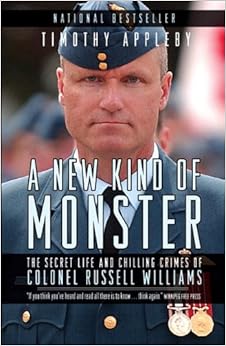
Timothy Appleby, "A New Kind of Monster" (2011)

Subtitle: "The Secret Life and Chilling Crimes of Colonel Russell Williams."

This 'true crime' book documents the many crimes committed by a well-respected, high-ranking member of Canada's military. It is a relatively easy, although certainly disturbing, read. Appleby refrains from wading into 'pop psychology' to explain Williams' behaviour, concentrating instead on narration.

Here's a link to the publisher's webpages for the book.

Wednesday, 1 July 2015

Stephen Williams, "Karla: A Pact with the Devil" (2003)

It's hard to offer any new insights on the sordid and tragic tale of sexual assaults and murders conducted by Paul Bernardo and Karla Homolka. In 2003, when this book was written, Williams was able to provide some new insights into the case, as well as Karla's state of mind in prison. Although he is evasive in the book, Williams apparently opened a mail conversation with her, while also seeking out interviews with a multitude of other people involved in the case.

The book plots out the legal prosecution of Karla Homolka, and explains the development of the plea bargain that would result in her serving much shorter jail time than she might otherwise face in exchange for testifying against her husband. Williams seems to want to tell the valid, but hard to integrate story of bureaucratic bungling in prosecuting Homolka (and Bernardo), along with a sympathetic telling of Homolka's suffering at the hands of a penal and justice system that approached her in a harsher fashion than other inmates guilty of similar crimes. In short, Williams seems to want to tell us that Karla is a criminal that deserved a worse sentence, but having reached a plea bargain, deserved to relish the terms she had been given by the state.

Williams lives in the region from which I grew up, and I wanted to enjoy this book, despite the story it tells. The tale he tells has all the hallmarks of a great work: internationally noteworthy crime, nationally much-discussed and controversial plea bargain, and suggestions of investigative and prosecutorial shortcomings. I found myself distracted by Williams rather awkward story-telling, and the poor editing of the book. Williams seems to fancy himself a cross between Truman Capote and Hunter S. Thomson. He blends comments on his own adventures, the food he's dining on and the company he keeps, with specious psychological analysis of the people he writes about. He makes an unfortunately showy love of vocabulary that I suspect serves to distance most readers, rather than impress them. I can only explain his strategy as a product of fearing his topic pandered to the stereotypical 'true crime' reader, and so sought to elevate his authorial persona with language he felt might better reflect his elevated intelligence. I found it more pompous and off-putting than appealing.


Quotations, and Gregory Klages' notes:

Chapter 7 - Cancer

"...post-traumatic stress disorder and its symptoms were fully extrapolated in a book by Arthur Kardiner, first published in 1941, called The Neuroses of War."

Chapter 9 - The Wedding Planner
"…[Karla] had seen a television program about how Italian men frequently live with their mothers until they are in their fifties. That might have explained it — Paul Bernardo was of Italian descent — but in the television program all the men really loved their mothers and Paul hated his and he wasn’t just saying it either and Karla could understand why."
NOTE: This sort of run-on sentence helps to establish a certain 'voice' for Karla. If it reflects her actual voice in the letters, wouldn't it have been more useful to actually use her words? I suppose this is part of the challenge of writing a textual conversation: if the author doesn't intervene, they become irrelevant. With too much intervention, the text becomes more about them than it does about the topic.

Chapter 22 - Deciphering Code
"Not to mention the anti-psychiatry, such as the idea that Karla was a malingering, histrionic hybristophiliac, developed for Bernardo’s defense team by Dr. Graham Clancy."
NOTE: If the average reader needs to check a dictionary more than once in a sentence, particularly when reading a pulp 'true crime' story, it should be a sign for concern.

Chapter 23 - The Man with Whom the Buck Stops
"And as Murray Segal said in this February 1995 letter to George Walker, they would continue to do exactly."
NOTE: End of sentence?… where are you?

Chapter 26 - A Propensity to Lie
"He was arraigned the next day, and held without bail for months even though Inspector Bevan’s charges on the murder charges had been thrown out."
NOTE: Editor? Did you disappear with the end of the sentence above?

Chapter 27 - The Fine Art of Adjudication
"What is now abundantly clear is that Michael Code’s ultimate decision not to charge Karla with respect to the repeated heinous attacks on Jane Doe, and the subsequent grant of blanket immunity, whereby, theoretically, he reinforced her “credibility” as an “accomplice witness,” has done nothing to maintain the public confidence in the administration of Justice — quite the opposite — but that consideration was clearly not the most important on Michael Code’s list. Although there are many facts and arguments to the contrary, which I tried to press on him time and again, he stubbornly asseverated that any prosecution of Karla Homolka would have put the successful prosecution of Paul Bernardo for first-degree murder at great risk. To him, Karla was by far the lesser of two evils, and was not then and is not now a danger to society."
NOTE: The quotation above is a fine example of all of the primary problems with this book.

"We did, however, agree on two other things. Karla should have been released on her statutory date, and that the prison officials far exceeded their mandate and their role when they detained her."

Chapter 30 - Macabre Cynicism
"On the surface, it seems lucid and logical but its observations and remarks are repetitive and pleonastic, as though they were uncomfortable with their subject matter, their decision and the basis on which it was made."

Chapter 31 - Back to the Future
"...doing time does something to one’s sense of time. You pass through it as though it is a vast mucilaginous bubble, emerging three months later none the wiser, feeling as though only three or four days have gone by."
NOTE: Hmmmm… is this Williams speculating, speaking from experience, or sharing Homolka's confidences? We'll never know.

"Understandably, this pecuniary redemption would ameliorate behavior and provide relief from stress and deliver some good old-fashioned middle-class stability."

Wednesday, 18 March 2015

Roy Porter, "Madness: A Brief History" (2002)

This short but pithy and informative book is an excellent read.

This similarly short and to-the-point review from Medical History will suffice to whet your appetite.

Comments and references that caught my attention:
- 32/33: “John Locke wrote to insist upon The Reasonableness of Christianity (1694): even religion now had to be rational. This pathologization of religious madness led Enlightenment free-thinkers to pathologize religiosity at large. In effect, this was also, much later, Freud’s position. God was an illusion, faith ‘wish-fulfilment’, and belief, though all too real, was a mental projection satisfying neurotic needs, to be explained in terms of the sublimation of suppressed sexuality or of the death wish. In reducing religion to psychopathology, Freud was echoing the more biting of the philosophes, like Voltaire and Diderot, who adjudged Christian beliefs the morbid secretion of sick brains. These days, while the Churches continue to accept, in principle, the reality of visions, spirit possession, and exorcism, they are profoundly suspicious of credulity and deception. The Roman Catholic or Anglican who claims to be assailed by the Devil has become an embarrassment. His priest may try to persuade him that such doctrines are merely metaphorical; and, if he persists, he may be urged to see a psychotherapist.”

- 89: “Foucault claimed that the great confinement essentially involved the sequestration of the mad poor by supporters of the bourgeois work ethic, and in his Madmen and the Bourgeoisie: A Social History of Insanity and Psychiatry (1981) Klaus Doerner followed suit. But there is little trace of organized labour in early asylums—indeed, critics accused them of being dens of idleness. And enterprising madhouse proprietors naturally sought rich and genteel patients, who would not be expected to work.”

- 93/94: “The decades around 1800 brought surging faith in the efficacy of personal treatment in sheltered asylum environments. In England, such doctors as Thomas Arnold, Joseph Mason Cox, and Francis Willis (called in to treat George III in 1788) followed Battie’s watchword that ‘management did more than medicine’ and pioneered a ‘moral management’ through which the experienced therapist would outwit the deluded psyche of his patient.”

- 94: “Shortly afterwards, the York Retreat developed ‘moral therapy’, with its emphasis upon community life in a domestic environment designed to recondition behaviour. The York Asylum, a charitable institution, had become bemired in scandal. By way of a counterinitiative, the local Quaker community, led by a tea merchant, William Tuke, established an alternative, the Retreat, opened in 1796. It was modelled on the ideal of bourgeois family life, and restraint was minimized. Patients and staff lived, worked, and dined together in an environment where recovery was encouraged through praise and blame, rewards and punishment, the goal being the restoration of self-control.”

- 98/99: “Criticism thus led not to the abolition of the madhouse, but to its rebirth, and institutionalization was transformed from a hand-to-mouth expedient into a positive ideal. In France the reforms of Pinel and the new legal requirements of the Napoleonic Code were further codified in the key statute of 1838. This formally required each departement either to establish public asylums, or to ensure the provision of adequate facilities. It guarded against improper confinement by establishing rules for the certification of lunatics by medical officers—though for paupers a prefect’s signature remained sufficient. Prefects were also given powers to inspect. Similar legislation was passed in Belgium twelve years later.
A comparable reform programme was put through in England, despite opposition from vested medical interests. Scandals revealing the improper confinement of the sane had already led to the Madhouses Act of 1774. Under its provisions, private madhouses had to be licensed annually by magistrates; a maximum size for each asylum was established; renewal of licences would depend upon satisfactory maintenance of admissions registers. Magistrates were empowered to carry out visitations (in London the inspecting body was a committee of the Royal College of Physicians). Most importantly, certification was instituted. Henceforth, although paupers could continue to be confined by magistrates, for all others a letter from a medical practitioner would be required to make confinement lawful. Further reforms followed. The 1774 legislation was strengthened in a series of Acts passed from 1828, above all establishing the Commissioners in Lunacy, first for the metropolis and then for the whole country. The Commissioners constituted a permanent body of inspectors (made up of doctors and lawyers) empowered to prosecute unlawful practices and to deny renewal of licences. They also took it upon themselves to improve and standardize care and treatment. The Commission ensured eradication of the worst abuses, for example, by requiring that all cases of the use of restraint should be documented. Safeguards against improper confinement were extended. Under an influential consolidating Act of 1890, two medical certificates were required for the detention of all patients.”

- 100: “Similar developments occurred in the United States, where the asylum arrived in the nineteenth century. The success of the York Retreat was the impulse behind the Frankford Asylum in Pennsylvania (1817), the Friends’ Asylum near Philadelphia (1817), the McClean Hospital in Boston (1818), the Bloomingdale Asylum in New York (1821), and the Hartford Retreat in Hartford, Connecticut, founded in 1824. Most early American asylums combined private (paying) and public (charity) patients. As in France, the early asylum era in America was spearheaded by physicians specializing in mental disorders, notably Samuel B. Woodward at the Worcester State Hospital and Pliny Earle of the Bloomingdale Asylum in New York, both of whom integrated medical and moral therapies in a climate of Pinelian therapeutic optimism. They were among the thirteen originators of the Association of Medical Superintendents of American Institutions for the Insane, established in 1844—it later became the American Psychiatric Association.”

- 101/102: “Throughout Europe, it was the nineteenth century which brought a skyrocketing in the number and scale of mental hospitals. In England, patient numbers climbed from perhaps 10,000 in 1800 to ten times that number in 1900. The jump in numbers was especially marked in new nation states. In Italy, no more than 8,000 had been confined as late as 1881; by 1907 that had soared to 40,000. Such increases are not hard to explain. Positivistic, bureaucratic, utilitarian, and professional mentalities vested great faith in institutional solutions in general— indeed quite literally in bricks and mortar. Schools, workhouses, prisons, hospitals, and asylums—would these not contain and solve the social problems spawned by demographic change, urbanization, and industrialization?”

- 103/104: “In England ‘non-restraint’ was introduced in the 1830s, by Robert Gardiner Hill at the Lincoln Asylum and independently John Conolly at the new Middlesex County Lunatic Asylum at Hanwell on London’s western outskirts. Taking moral therapy to its logical conclusion, Hill and Conolly renounced all forms of mechanical coercion whatsoever: not just irons and manacles but fabric cuffs and straitjackets too. These would be replaced by surveillance under ample trained attendants and a regime of labour, which would stimulate the mind and discipline the body.”

- 105: “…absolute non-restraint was seen by Continental reformers as a quixotically English idée fixe, a foible of doctrinaire liberalism, and it was little imitated. But French and German reformers made resourceful use of the asylum environment in their own ways. Work therapy was widely favoured. Planted in the countryside, the asylum typically became a self-sufficient colony, with its own farms, laundries, and workshops, partly for reasons of economy, partly to implement cures through labour. In France balneological treatments became a key feature of ‘asylum science’ (police intérieure). In Germany, C. F. W. Roller spelt out detailed directives for such matters as non-slip, smell-proof flooring, good drains, apparel, diet, and exercise at the influential Illenau asylum in Baden, where music and movement therapies were also pioneered. Everywhere, the care and cure of the mad became the subjects of the new ‘science’ of asylum management, spread by professional organs such as the significantly named Asylum Journal.”

- 139: “To some extent, psychiatrists were victims of their own propaganda. They had insisted that many of the aberrant and antisocial behaviours traditionally labelled vice, sin, and crime were actually mental disorders in need of the doctor and the asylum. As a result, magistrates deflected difficult cases from the workhouse or jail, but superintendents then discovered to their dismay and cost that rehabilitation posed more problems than anticipated. Furthermore, the senile and the demented, along with epileptics, paralytics, sufferers from tertiary syphilis (GPI), and other degenerative neurological disorders were increasingly shepherded through the asylum gates. For all such conditions, the prognosis was gloomy, and the asylum became a dustbin for hopeless cases.”

- 156: “Pinel’s favourite follower was Jean-Etienne Dominique Esquirol (1772-1840), whose Mental Maladies (1838) was the outstanding psychiatric text of his age. While asserting the ultimately organic nature of psychiatric disorders, Esquirol concentrated, like his mentor, on their psycho-social triggers. The diagnosis of ‘monomania’ was developed to describe a partial insanity identified with affective disorders, especially those involving paranoia, and he further delineated such conditions as kleptomania, nymphomania, and pyro-mania, detectable in advance only to the trained eye. A champion of the asylum as a therapeutic instrument, he became an authority on its design, and planned the National Asylum at Charenton, a suburb of Paris, of which he was appointed director. (It briefly housed the ageing Marquis de Sade.)”

- 156/7: “…the condition known as general paresis of the insane (one manifestation of tertiary syphilis) was elucidated in 1822 by Antoine Laurent Bayle. Although the micro-organism which causes syphilis had not yet been discovered—the bacteriological era lay ahead— the neurological and psychological features of GPI (notably euphoria and expansiveness), combined with the organic changes revealed by autopsy, supported Esquirol’s conviction that psychiatric disorders could be revealed using the techniques championed by such great French pathological anatomists as Laennec who had investigated tuberculosis and other internal conditions. Closely related to GPI, tabes dorsalis was another disorder, prevalent in the nineteenth century, which became the focus of neuro-pathological research. It was the subject of a masterly clinical study published in 1858 by Guillaume Duchenne, which established its syphilitic origin: so definitive was his account that it was soon named ‘Duchenne’s disease’. He was also at the forefront in describing many other neurological disorders involving personality degeneration, including progressive muscular atrophy and locomotor ataxia (lack of coordination in movement).”

- 177: “in the new world, where George M. Beard (1839-83) popularized the concept of ‘neurasthenia’, nervous breakdown produced by the frantic pressures of advanced civilization, which drained the individual’s reserves of ‘nerve force’. ‘American nervousness is the product of American civilization’ , he pronounced with mingled pride and regret. Neurasthenia’s prevalence in the modern era was no mystery, held Beard: the telegraph, railroad, press, and the market-driven rat race of Wall Street had rendered life insupportably hectic, intense, and stressful. Civilization made demands on nervous systems that nature had never anticipated. As with the eighteenth-century ‘English malady’, neurasthenia struck the elite and flagged up civilization and its discontents. Beard’s ideas were given a practical twist by Silas Weir Mitchell, who introduced the ‘Weir Mitchell treatment’—bed rest, strict isolation, fattening up with milk puddings, and passive massage—to counter such fatiguing tendencies amongst the neurasthenic.”

- 181: “The insanity plea became controversial in Britain when the trial in 1843 of Daniel M’Naghten for the murder of Prime Minister Sir Robert Peel’s private secretary was stopped on the grounds of insanity. The resulting furore led to new guidelines being drawn up, by the House of Lords, to clarify the legal basis for criminal insanity. The M’Naghten Rules (1844) grounded the insanity defence in the defendant’s inability to distinguish right from wrong. This pre-empted the claim advanced by post-Esquirolian psychiatrists that the grounds should be ‘irresistible impulse’, that is, disorders of emotion and volition, independently of delusions of the understanding. In France by contrast, ‘irresistible impulse’ and partial and temporary insanity figured large in the plea of insanity and crime passionelle. Disputes over the insanity defence (who was bad? who was mad?) highlighted conflicts between legal and psychiatric models of the person, and left the public standing of psychiatry dubious.”

- 182: “Mental illness, Hunter and Macalpine believed, was not psychogenic. Hence the utterances of the insane were but cries of distress—and not necessarily even good clues to its nature. You don’t crack mental illness by decoding what the mad say: for, they held, mental disease had a biological base. Powerful psychiatric currents have furthered such tendencies to silence the insane, especially in institutional environments.”

- 183: “…did not the methods of the natural sciences prescribe observation and objectivity, not interaction and interpretation? The noisiest patients were shunted off into the back wards, and all too often those who were shut up were, indeed, ‘shut up’—or at least nobody attended to what they were uttering, there being less communication than excommunication.”

- 215: “The course of psychiatric illness, he insisted, offered the best clue to its nature, rather than, as in common practice, the raft of symptoms the patient showed at a particular moment. On this basis, Kraepelin wrought a great innovation in disease concepts and classification. Amalgamating Morel’s demence precoce with the notion of hebephrenia (psychosis in the young, marked by regressive behaviour) developed by Karl Kahlbaum and his pupil Ewald Hecker, he launched the model of a degenerative condition which he named dementia praecox, to be decisively distinguished from manic-depressive psychoses (Falret’s ‘circular insanity’). The archetypal dementia praecox sufferer as pictured by Kraepelin on the basis of meticulous clinical experience might be astute and clever, but he seemed to have forsaken his humanity, abandoned all desire to participate in society, and withdrawn into a solipsistic world of his own, perhaps mute, violent, and paranoid. Kraepelin routinely used phrases like ‘atrophy of the emotions’ and ‘vitiation of the will’ to convey the sense that they were moral perverts, psychopaths, almost a species apart. As the precursor to schizophrenia, Kraepelin’s dementia praecox has left an indelible mark on modern psychiatry.”

- 242: “Invasive treatments equally reflect the powerlessness of patients in the face of arrogant and reckless doctors, and the ease with which they became experimental fodder. In a now notorious experiment, hundreds of black mental patients at the Tuskeegee Asylum in Alabama were guinea pigs without their knowledge or consent in an experiment to test longterm responses to syphilis, a minor echo of the atrocities committed by Nazi psychiatrists.”

- 272: “The growing centrality of women to psychiatry over the last couple of centuries is superbly handled in Elaine Showalter’s The Female Malady: Women, Madness, and English Culture, 1830-1980 (New York: Pantheon Press, 1986)…”

- 272: “Andrew Scull, Museums of Madness: The Social Organization of Insanity in Nineteenth-Century England (London: Allen Lane, 1979)—this has appeared in revised form as The Most Solitary of Afflictions: Madness and Society in Britain, 1700—1900 (New Haven and London: Yale University Press, 1993)”

- 276: “Leonard D. Smith, Cure, Comfort and Safe Custody: Public Lunatic Asylums in Early Nineteenth-Century England (London: Cassell, 1999)”

- 279: “Extracts from nineteenth-century English psychiatric texts may be found in Vieda Skultans, Madness and Morals: Ideas on Insanity in the Nineteenth Century (London and Boston: Routledge & Kegan Paul, 1975).”

- 279: “Autobiographical writings of ‘mad’ people have been anthologized and surveyed in Dale Peterson (ed.), A Mad People’s History of Madness (Pittsburgh: University of Pittsburgh Press, 1982); Michael Glenn (ed.), Voices from the Asylum (New York: Harper & Row, 1974); Allan Ingram, Voices of Madness: Four Pamphlets, 16831796 (Stroud: Sutton Publishing, 1997) and Roy Porter (ed.), The Faber Book of Madness (London: Faber, 1991; paperback 1993). Some attempt at reproducing their ‘view’ is offered in Roy Porter, A Social History of Madness: Stories of the Insane (London: Weidenfeld & Nicolson, 1987).”


Monday, 2 February 2015

Kim Zetter, "Countdown to Zero Day" (2014)

Zetter, a senior writer at Wired magazine, has done the nearly impossible: she has written an interesting, information dense, sometimes compelling case study of Stuxnet, a computer virus dubbed as the first digital weapon.

Zetter's story is told primarily from the perspective of the code analysts who discovered and 'unpacked' Stuxnet. She certainly offers the kinds of insights and jargon that I suspect those familiar with programming and code-breaking will enjoy, while couching her commentary in enough technological and political history to make it approachable for the intelligent general reader.

In progress.

You can read an excerpt here, courtesy of Wired.

Thursday, 22 January 2015

Thom Hartmann, "Crash of 2016" (2013)

Subtitle: "The Plot to Destroy America and What We Can Do About It".

What most surprised me about this book, and I'm not sure why, is that Hartmann seems to be left-leaning. Concern with financial crashes and plotting out one's financial survival generally seems to be associated with libertarian, conservative ideology.

Essentially, Hartmann tracks out a series of political decisions over the last several decades that indicate a potentially fatal loosening of controls over corporations that have allowed wealth to accumulate in fewer and fewer hands, and gutted the kinds of social policies that kept economic/class disparity under control within the United States. He suggests that this problem comes about cyclically, about every 80 years or so, based on the passing of the people who experienced the horrible outcomes of similar decisions within their own lifetime.

Frugal Musings has a very good, if lengthy, discussion of the book.

Gregory Klages -
Quotations from, and notes on:
Crash of 2016: The Plot to Destroy America and What We Can Do About It

CHAPTER 3: The Crisis Capitalists
"In 1947, two years after the war ended, Friedrich Hayek gathered a large group of economists, historians, journalists, and businessmen to a meeting in Mont Pelerin, Switzerland.

"...what Hayek was unable to do, mainly because he was operating with the catastrophic consequences of his free-market philosophy still fresh in everyone’s mind, Friedman would do—and that’s lead a global counterrevolution against controlled capitalism

"These so-called free-market reforms promoted by the members of the Mont Pelerin Society and later the Chicago Boys do not constitute a legitimate economic theory, as they’ve never worked anywhere they’ve been tried, anywhere in the world. They constitute a religion.

"...two years into Pinochet and the Chicago Boys’ rule, inflation had reached 341 percent—higher than anywhere else in the world. The price of goods increased by 375 percent. GDP decreased by 15 percent. Agriculture production sputtered to a grinding halt. Export values dropped 28 percent and Chile acquired a $280 million trade deficit. And to top everything off, Chile’s unemployment rate skyrocketed from 3 percent—among the lowest in that hemisphere—before Friedman stepped foot in the country to more than 10 percent and, in some parts of the country, as high as 22 percent

CHAPTER 4: A Middle-Class Primer
"The United States has had two great periods of what we today call a middle class. The first was from the 1700s to the mid-1800s, and was fueled by virtually free land for settlers (stolen from the Indians) and free labor (slavery in the South and indentured immigrants in the North). The result was (as de Tocqueville pointed out) the most well-educated, politically active, middle-class “nonaristocrats” in the world.

"...the period between 1947 and 1979 saw unparalleled equitable growth. During these thirty-plus years, the poorest fifth of Americans saw a 116 percent increase in their incomes. The middle fifth, a 111 percent increase. And the top 5 percent saw an 85 percent increase. All income classes shared in the prosperity of the times when the top marginal income tax rate was above 70 percent.

"...progressive taxation, which gave workers more to spend and gave the rich an incentive to pay their workers better to maintain a stable workplace (since if they took the money themselves, it would just mostly go to taxes), thus stimulating demand for more goods and services.

"Whenever top marginal tax rates were relatively high—above 60 percent usually—the economy was at its most stable.

"...in 1944, FDR...proposed a Second Bill of Rights.

These rights included:
"The right to a useful and remunerative job in the industries or shops or farms or mines of the nation; The right to earn enough to provide adequate food and clothing and recreation; The right of every farmer to raise and sell his products at a return which will give him and his family a decent living; The right of every businessman, large and small, to trade in an atmosphere of freedom from unfair competition and domination by monopolies at home or abroad; The right of every family to a decent home; The right to adequate medical care and the opportunity to achieve and enjoy good health; The right to adequate protection from the economic fears of old age, sickness, accident, and unemployment; The right to a good education

"An early instruction manual for the game of Monopoly in 1925 reads, “At the start of the game every player is provided with the same amount of capital and presumably has exactly the same chance of success as every other player. The game ends with one person in possession of all the money. What accounts for the failure of the rest, and what one factor can be singled out to explain the obviously ill-adjusted distributions of the community’s wealth which this situation represents?”

"...not only is the accumulation of vast amounts of wealth in the hands of an elite aristocracy not good for working people, it’s also not good for economies as a whole, which is exactly what the game Monopoly teaches us.

CHAPTER 5: Reagan Kidnapped the Jetsons
"In a 1966 article, TIME magazine looked ahead toward the future and what the rise of automation would mean for average working Americans. It concluded, “By 2000, the machines will be producing so much that everyone in the U.S. will, in effect, be independently wealthy. With Government benefits, even nonworking families will have, by one estimate, an annual income of $30,000–$40,000. How to use leisure meaningfully will be a major problem.” And that was $30,000–$40,000 in 1966 dollars, which would be roughly $199,000 to $260,000 in 2010 dollars.

CHAPTER 6: “Madness”
"That’s exactly what speculators were doing—buying up huge amounts of wheat contracts and holding on to them until they could be sold at a higher price. This had catastrophic effects on the global food supply.

"The force of Globalism,” [John Ralston] Saul writes, “through trade agreements, deregulation and privatization, would seriously weaken the ability of nation-states to act with any political independence.”

“Richer than a majority of nation-states on the planet, free of the geographical and social obligations of these old states, beyond the embarrassing demands of nationalism, freed in fact from the emotional, immeasurable demands of the citizenry, the transnational would be able to organize world affairs in a more rational, efficient manner.”

"Columnist Chrystia Freeland nailed this mind-set perfectly in her 2011 article “The Rise of the New Global Elite,” which ran in The Atlantic magazine. She reported that one influential American hedge fund manager argued that it didn’t matter if the US economy was in peril, because “if the transformation of the world economy lifts four people in China and India out of poverty and into the middle class, and meanwhile means one American drops out of the middle class, that’s not such a bad trade.”

"By 2008, actual commodity sellers and buyers were completely marginalized in the market by speculator banksters, who accounted for 80 percent of all futures purchases. And with their price manipulations, these derivative bombs cratered our economy with high gas prices.

Economist Steve Keen, author of Debunking Economics
"They will always want to lend more money… the banking sector profits by creating debt”...

CHAPTER 7: A Revolution Denied
"The Iroquois Confederation’s “Great Law,” which was a major inspiration for the American Constitution, famously called for all governmental decisions to be made in the context of their impact on “the Seventh Generation” down the line into the future.

CHAPTER 9: Betrayal on the High Court
"...with this decision in place and the law of the land, the First Amendment now protects the “free speech” rights of the presidents of Russia and China and Iran to form corporations in the United States and pour millions of dollars toward supporting or defeating the politicians of their choice. It protects the “right” of the largest polluting corporations on earth to politically destroy any politician who wants to give any more authority to the Environmental Protection Agency. It protects their “right” to elevate to elected status any politician who is willing to dismantle the EPA—or any other government agency that protects or defends the people of America from Royalist predation

"...the bible of legal scholars—the book that the framers of our Constitution had frequently cited and referenced in their deliberations in 1787 in Philadelphia—Sir William Blackstone’s 1765 Commentaries on the Laws of England...

"Stevens recounted the history of the evolution of corporations in America, noting, “Corporations were created, supervised, and conceptualized as quasi-public entities, ‘designed to serve a social function for the state.’

"As a result of Citizens United, outside political spending skyrocketed from just $68 million in the 2006 midterms, to over $304 million in the 2010 midterms. That’s a 400 percent increase in corporate cash influencing elections and buying politicians, just ten months after the Citizens United decision.

CHAPTER 10: Masters of the Universe
"On average, a member of the House of Representatives must raise $5,000 a week for his or her campaign. That means that every morning, Monday through Friday, they must wake up not thinking about governing but about fund-raising—how to scrounge up a thousand bucks that day. In the Senate it’s even worse, at an average of $14,000 a week.152 And those numbers were compiled by PBS before the Citizens United decision—today’s numbers are significantly higher.

American Legislative Exchange Council = ALEC

"...it’s a dating service setting up corporate lobbyists and state legislators,” he told me. “The culmination is the passing of special-interest legislation.”

"I don’t want everybody to vote. Elections are not won by a majority of people. They never have been from the beginning of our country and they are not now. As a matter of fact, our leverage in the elections goes up as the voting populace goes down.”

"It’s no wonder that the American people have played into the hands of the Royalists and, as a result, have very little trust in government. After all, there is no reason why they should, because democratic government, as we once knew it, no longer exists

CHAPTER 11: This Is the End
"...in 1977, Harold E. Davis wrote a brilliant monograph for the Georgia Historical Society titled The Scissors Thesis, or Frustrated Expectations as the Cause of the Revolution in Georgia...

CHAPTER 12: Organized People v. Organized Money
"Artificial entities, such as corporations, limited liability companies, and other entities, established by the laws of any State, the United States, or any foreign state shall have no rights under this Constitution and are subject to regulation by the People, through Federal, State, or local law. The privileges of artificial entities shall be determined by the People, through Federal, State, or local law, and shall not be construed to be inherent or inalienable

"On December 6, 2011, Los Angeles became the first major city in the United States to call for a constitutional amendment to end corporate personhood.

"There have been similar resolutions passed in Boulder, Colorado, and Missoula, Montana, that say corporations are not people and money is not speech.

"I particularly recommend the model put forth by David Cobb at MoveToAmend.org.

"...the headnote to the Santa Clara County 1886 decision that asserted corporations are the same as natural persons in terms of constitutional protections.

"The [U.S.] Supreme Court was beyond their constitutional power when they handed George W. Bush the victory in 2000...

"...the [U.S.] Supreme Court was way beyond their constitutional authority every single time they created out of whole cloth new legal doctrines, such as “separate but equal” in Plessy v. Ferguson, “privacy” in Roe v. Wade, or “corporations are people” in Citizens United v. Federal Election Commission.

Wednesday, 3 December 2014

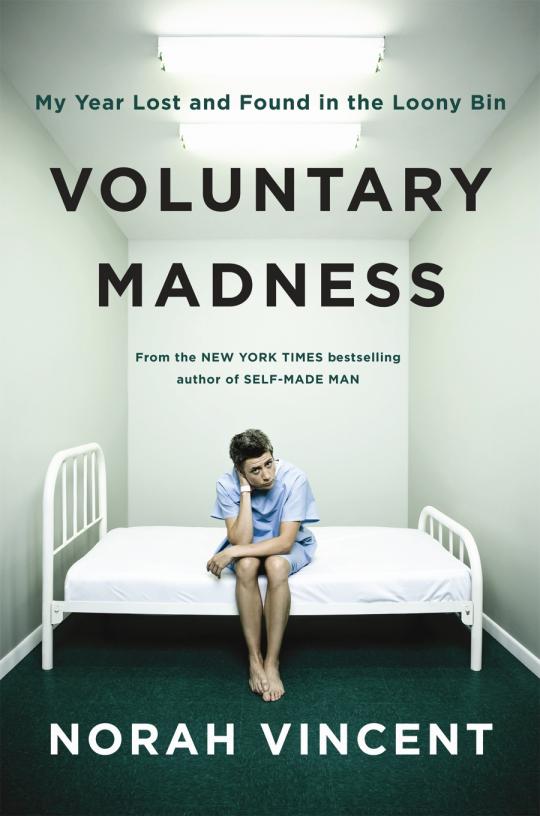
Norah Vincent, "Voluntary Madness" (2008)

Vincent undertook to understand the treatment of mental illness by 'immersing' herself in three different American treatment centres: one a public urban institution, one a private rural institution, and one a private 'progressive' institution in the US mid-west. Not purely a 'tourist' or 'poseur', Vincent believes that she may indeed have some form of mental illness, but her problems are not so debilitating as to render her incapable of researching and writing a book.

Her narrative of time spent in these institutions is believable. She captures details of scenery and thought that those who have spent time in psychiatric wards and asylums, particularly as patients, will recognize. In this regard, the work provides excellent insight, something like the affirmation of experiential commonality that an addict finds in a twelve-step program. She offers the kind of insights that "One Flew Over the Cuckoo's Nest" can't, and yet affirms in many respects that the situation in America's psychiatric institutions has not greatly improved or even changed.

Her desire to understand mental illness, to document its treatment and challenge some of the premises under which treatment is premised, was not convincing, however. Her capacity to stand back (or willingness to believe that she was) from her own mental illness, and to achieve some kind of overarching or privileged critical position, is unconvincing. The very reality that someone was putting up thousands of dollars for her to enter and stay in these institutions separates her experience from that of many people who find themselves in them - particularly when entry is not voluntary, but as incarceration by court order. I would expect that forced membership in the asylum not only alters the experience, it alters the perception of the experience. While Vincent is critical of many of her peers in the 'system', she particularly directs attention to persons incarcerated in the final institution (the nicest of the three) who do not seem to 'want to get better'. Of course they don't want to get better! They were sent there by court order. A system for caring for mental patients based on force by its very nature is likely going to be much different than one based on a preventative healthcare model.

You can read a short excerpt at Smith Magazine.

The Guardian offers a very prescient review.

Tuesday, 28 October 2014

Deborah Lipstadt, "History on Trial: My Day in Court with a Holocaust Denier" (2005)

This book details Lipstadt's court battle to prove that her assertion that author David Irving had engaged in a long-standing effort to falsify history: selectively using and misrepresenting documents to cast Adolf Hitler in a favourable light, as well as denying the very existence of an intentional, widespread, systematic, and state-sanctioned effort to slaughter Europe's Jewish population.

The case stemmed from claims Lipstadt made in her 1993 book, Denying the Holocaust: The Growing Assault on Truth and Memory, wherein she discussed Irving's work as well as the efforts of other 'deniers'. (See my discussion of the book here). Three years later, Irving sued Lipstadt and her publisher, Penguin, for libel (stemming from the statements in her book). According to British law, the onus was placed on the defendants to prove that their assertions could be supported by evidence.

Working with an impressive team of scholars and legal minds, arrayed against Irving's rather lacklustre and self-managed representation, Lipstadt and Penguin without a doubt brought Irving low. He was publicly shown to work less as a historian than an ideologue, calling into question the integrity of the entirety of his oeuvre. The revelation of his sloppy, highly biased, and clearly flawed use of documentary sources and other archival materials effectively ended his career as a historian. Banned from entering multiple countries, considered persona non grata by respectable publishers, and saddled with a significant financial burden after losing the case, Irving is unlikely to ever widely enter public consciousness other than as a sad, deluded figure.

As a result of the trial, and her unwillingness to compromise or back down from defending her observations, Lipstadt has become a far more widely known scholar and commentator on 20th-century Jewish history, particularly as it relates to the Nazi regime.

Her book is more narrative of the experiences of the trial, and exploration of some of the choices made in her legal team's efforts. In this regard, it is compelling and informative reading. For readers seeking a closer analysis of Irving's work, however, better sources are available, such as the expert analysis of Irving's work carried out for the trial by Richard Evans, Hajo Funke, and Robert Jan van Pelt. (Electronic editions of these can all be found at the Holocaust Denial on Trial website). Trial transcripts can be found at the same site.

I discuss Lipstadt's 1993 book, Denying the Holocaust, here.
I also discuss her 2011 book, The Eichmann Trial, here.
I discuss Irving's 1996 biography of Josef Goebbels here.

Friday, 17 October 2014

Norman Finkelstein, "The Holocaust Industry" (2000, rev. 2003)

Subtitle: "Reflections on the Exploitation of Jewish Suffering".

The book is essentially three essays ('Capitalizing The Holocaust', 'Hoaxers, Hucksters and History', and 'The Double Shakedown'), each arguing - with significant reference to media articles, legal activity, and some archival research - how a cadre of Zionists have co-opted the tragedy of the genocide carried out by Nazis during World War II to privilege Israeli political and economic interests, as well as Zionist advocacy groups outside of Israel.

Given the topic, and more so Finkelstein's position, the book is very, very controversial, and I expect it would prove challenging to pretty well any reader. I know that I am hesitant to even write a summary regarding the book, for fear sloppy language or thinking might make me appear to have some kind of hatred that I do not. The book has been characterized as an anti-Semitic attack (by someone whose mother died in the Nazi genocide, as Finkelstein informs his readers).

I will note a few (related) aspects that I found intriguing:

1) Finkelstein notes the tension, and in some respects competition, that has taken place over the definition (historicizing and politicizing) of the genocide carried out by the Nazis as a set of events. He notes that a cadre of Jews has worked to marginalize the importance of non-Jewish victims, or at the least to point to the necessity of understand Jews' experience of the genocide as the lens through which all other victims' experiences must be viewed.

2) He proposes that this cadre of Jews undertook a re-historicization and political/economic functionalization of the Nazi genocide in large part as a response to the period of military conflicts involving Israel that lasted from the late 1960s through the early 1970s.

3) Finkelstein spends much of the third chapter examining various claims for compensation, as well as 'repatriation' or return of funds and other goods held in several nations' banking systems (particularly Dutch and Swiss banks). He notes US support for investigation of Swiss banks (and the US calls for quick and willing restitution to be made to victims). He raises the disquieting point that if this is the US position, why has it quashed efforts to compensate descendants of slaves, and flattened demands to seek repatriation and return of money and other goods to victims of the Nazi genocide who had deposited their wealth in US banks? As Finkelstein notes, the US was one of the top three recipient countries of financial resources being exported by Jews from the Third Reich.

4) In his revised edition (I'm not sure about the original), Finkelstein occasionally indulges in some unhelpful, annoying and provocative personal attacks and less than professional use of language. In these portions, the book crosses from polemic to screed. Perhaps his indulgence is a product of the deep hostility that Finkelstein's work generated, but it does nothing to reinforce the sense of objective and informed scholarship. This is unfortunate, and helps to lend support to the idea that there might be more to Finkelstein's attacks than a pure desire to correct our understanding of how the world works.

5) Finkelstein is a graduate of Princeton, was being considered for tenure at DePaul University in 2007, and has published widely on the Israel/Palestine conflict (nine books).


Friday, 19 September 2014

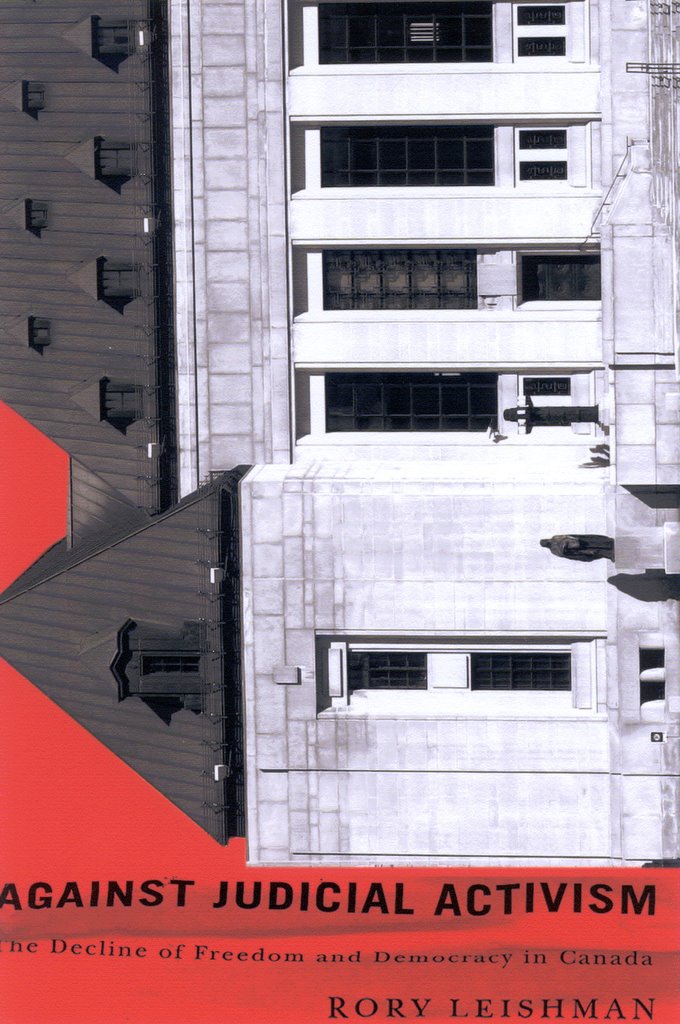
Rory Leishmann, "Against Judicial Activism" (2006)

Subtitle: "The Decline of Freedom and Democracy in Canada."

This fair assessment is offered in the Osgoode Hall Law Journal.

You can also read the introduction to the book here.


Gregory Klages -
Quotations from, and comments on
: Against Judicial Activism: The Decline of Freedom and Democracy in Canada


"there is not now, and never has been, any mention of sexual orientation in the Canadian Charter of Rights and Freedom.

"in Egan v. Canada, 1995 SCC, the Court read sexual orientation into the equality rights provisions of section 15 of the Charter...

"In M v. H., 1999 SCC, the Supreme Court of Canada followed up on Egan and Vriend by decreeing that the denial of spousal benefits to same-sex couples under the Ontario Family Law Act was inconsistent with the allegedly implicit equality rights of homosexuals in section 15 of the Charter to an extent that could not be demonstrably justified in a free and democratic society.

"In an attempt to limit the adverse impact of M. v. H. on marriage and the natural family, the Canadian Alliance proposed a resolution in the House of Commons on 8 June 1999 declaring: “It is necessary, in light of public debate around recent court decisions, to state that mar- riage is and should remain the union of one man and one woman to the exclusion of all others, and that Parliament will take all necessary steps within the jurisdiction of the Parliament of Canada to preserve this definition of marriage in Canada.” Prime Minister Jean Chrétien supported this Opposition resolution.

"With the backing of most Liberal and Progressive Conservative members of Parliament, this Canadian Alliance resolution upholding the historic definition of marriage in the common law of Canada was adopted by the overwhelming margin of 216 to 55.

"In reaction to these illegitimate rulings, Parliament could have invoked its power under the notwithstanding clause of the Constitution to enact a bill reaffirming the traditional definition of marriage. Chrétien rejected this option. He abandoned the formal commitment that he and his Liberal Cabinet colleagues had made just two years earlier

"...on 9 June 2005 when the Court handed down one of its rare right-wing decisions in Chaoulli v. Quebec (Attorney General), 2005 SCC 35, which struck down the prohibition on private health insurance in the health and hospital insurance acts of Quebec.

"Under the venerable rules of the common law, freedom of association was so firmly guaranteed that an organization like Rape Relief had an unimpeachable right in law to accept or reject anyone – homosexual, heterosexual, bisexual, or transsexual – as a voluntary rape crisis counsellor.

"Sensible precedents like Canada v. Owen mean nothing to activist judges and human rights adjudicators. They prefer to read their own ideological preferences into the law by subjecting the plain words of the text to large, liberal, progressive, and idiosyncratic interpretations.

"...the Supreme Court of Canada has twisted the original meaning of the Charter out of all recognition. Take, for example, the purported guarantee of freedom of con- science and religion in section 2(a) of the Charter. Under the guise of upholding this guarantee, the Supreme Court of Canada contrived in R. v. Big M Drug Mart, 1985 SCC, to strike down the longstanding Sunday-closing provisions in the federal Lord’s Day Act.

"In an aptly entitled book, The New Anti-Liberals, Borovoy notes: “The terms of the government’s proposed injunction were so broad that they could arguably have prohibited even silent, peaceful, information picketing within easy view of the abortion clinics. A restriction against physical obstruction is one thing; a ban on informational picketing is another thing entirely.” When Boyd obtained the picketing injunction on behalf of Rae’s NDP government, Charles Harnick, speaking for the Official Opposition, denounced the measure as an attack on freedom of speech. Yet after taking over from Boyd as attorney general of Ontario in Premier Mike Harris’s Progressive Conservative government, Harnick did nothing to get the injunction withdrawn. The infamous court order still remains in effect under the Liberal government of Premier Dalton McGuinty.

"...Gibbons once had an abortion. She is eager to protect vulnerable young women from making the same grievous error. To this end, she has insisted upon maintaining a peaceful, prayerful, and nonobstructive prolife witness immediately outside Toronto’s Scott Street abortion clinic in Toronto in violation of Boyd’s freedom-stifling court order. Time and again, Gibbons has been arrested, charged, convicted, and incarcerated. As punishment for her “silent, peaceful, information picketing,” she has spent close to four years in an Ontario jail as a prolife prisoner of conscience.

"The rule that judges of the common law must follow precedents is the doctrine of stare decisis...

"In conformity with this understanding of the proper role of the judiciary, judges who uphold the rule of law and respect the constitutional separation of legislative and judicial powers do not, in essence, make the law: They only interpret and apply the law to the specific case before the court as the law is found in precedents, statutes, and the Constitution. Blackstone emphasized that in the case of statutes, the guiding rule for interpretation must not be the will of the judge but the will of the legislator

"...the principle affirmed by the Supreme Court of Canada in A.G. Can. v. Hallet & Carey, 1952 SCC: “Statutes which encroach on the rights of the subject, whether as regards person or property, are subject to a ‘strict’ construction.” This phrase “strict construction” is a technical term denoting the doctrine of the common law that requires a court to construe statutes as con- forming with civil liberties unless the wording of the law contains clear and definite language constricting a fundamental freedom or human right.

"There is no reference to sexual orientation in section 15 or any other section of the Charter. The omission was deliberate. During clause-by-clause consideration of the Charter by the Special Joint Committee of the Senate and the House of Commons on the Constitution of Canada on 29 January 1981, New Democratic Party (NDP) Member of Parliament Svend Robinson proposed an amendment to include a ban on discrimination on the basis of sexual orientation in section 15. The committee decisively repudiated Robinson’s motion by a vote of twenty-two to two.

"Black’s Law Dictionary defines obiter dictum as “Words of an opinion entirely unnecessary for the decision of the case.”

"...human rights tribunals have carried on as usual, ordering mayors from one end of the country to another to issue gay pride proclamations regardless of the preferences of ordinary citizens.

"...the Oakes test represents a power grab by the Supreme Court of Canada that has no warrant in the language or history of the Charter. Nonetheless, Finlayson conceded: “I must apply the Oakes test.” Finlayson had no choice. In the Charter era, he and all other judges on the provincial courts of appeal are no less bound than ordinary citizens to obey the decrees of the Supreme Court of Canada.

"In the opinion of Brockie’s counsel, facilitating the provision of “a non-life-essential service” to one or other of the groups singled out for special treatment in the Ontario Human Rights Code cannot justify a gross violation of the fundamental right to freedom of religion.

"...the hitherto universal and constant teaching of the Christian church that sodomy is no less sinful and wrong than fornication and adultery. In support of this viewpoint, these Christians cite authoritative texts of the Bible such as the explicit reference to the sinfulness of homosexual acts by the Apostle Paul in Romans 1…

GK NOTE: The use of 'authoritative' here is an intriguing bit of rhetoric. The New Testament of the Bible (which includes Romans) is authoritative to Christians only. Why Leishmann chose this piece of Christian scripture, instead of something from the Old Testament or Pentateuch is intriguing, as that would seem to engage a far wider selection of belief communities.

"Given all the heartache and morbidity caused by promiscuous homosexual behaviour, one might reasonably expect that educators, religious leaders, and public officials would do whatever they can to warn young people about the perils of taking up a gay or lesbian lifestyle. At the least, the merits of homosexual practices should be a legitimate subject for public debate…

GK NOTE: Clearly, Leishmann has a bee-in-his-bonnet over homosexuality. Would be admit - given the predominance of heterosexuals - that young people should be even more aware of the perils of taking up a heterosexual lifestyle, given all the heartache and morbidity that such a lifestyle causes?

"Whatcott has first-hand knowledge of the seamier side of the gay lifestyle. He was a homosexual prostitute and drug abuser before converting to Christianity at age eighteen.

"the gay rights agenda

GK NOTE: I find this sort of reductionist titling of political interests troubling, similar to the misnomer of the 'pro-life' agenda. If someone is pursuing the practice of human rights, or even of - gasp - libertarianism, is that equal to being a consumer/advocate of a 'gay rights agenda'?

"Prior to enactment of the Canadian Charter of Rights and Freedoms, it would have been inconceivable for the courts to change the law and the Constitution so that someone like Scott Brockie, Bill Whatcott, or Mayor Dianne Haskett could end up in jail for expressing their views on the lifestyles of sexually active homosexuals.

"Morgentaler, 1988, was a legally unprincipled ruling in which a majority of the judges decided for a variety of conflicting reasons that the minimal restrictions on abortion that Parliament had enacted at Trudeau’s behest in 1969 violated the guarantee of life, liberty, and security of the person in section 7 of the Charter to an extent that could not be justified.

"In the judgment of the Court, the BC government’s failure to provide this translation service in publicly funded hospitals violated equality rights for the deaf as guaranteed in the Charter to an extent that is not reasonably justifiable in a free and democratic society.

"On 28 September 1981 the Supreme Court of Canada handed down its judgment in the Patriation Reference. The ruling was a legal shambles. On the key issue of the legality of Parliament acting without provincial consent to obtain a constitutional amendment affecting provincial powers, the Court was clear: Seven of the judges who took part in the case, including Laskin and Dickson, held that there is nothing “that casts any doubt in law as to the undiminished authority of the Parliament of the United Kingdom over the British North America Act.” This same majority also concluded that “the law knows nothing of any requirement of provincial consent, either to a resolution of the federal Houses or as a condition of the exercise of United Kingdom legislative power.”

"In a joint dissent in the Patriation Reference, they pointed out that: “The degree of provincial participation in constitutional amendments has been a subject of lasting controversy in Canadian political life for generations. It cannot be asserted, in our opinion, that any view on this subject has become so clear and so broadly accepted as to constitute a constitutional convention.”

"...the Chrétien government tried to clarify the issues surrounding Quebec separatism by referring the following questions to the Supreme Court of Canada: “1. Under the Constitution of Canada, can the National Assembly, legislature or government of Quebec effect the secession of Quebec from Canada unilaterally? 2. Does international law give the National Assembly, leg- islature or government of Quebec the right to effect the secession of Quebec from Canada unilaterally?”

"Theologically orthodox Christians and Jews hold that God is the supreme moral authority. Saunders gives precedence to the Supreme Court of Canada.

GK NOTE: Or… more accurately, the secular authority of the SCC's interpretation of the Charter. I'm not sure why Leishmann leaves out Muslim's belief in Allah. I wonder if there might be a implicit prioritization of what beliefs are correct for Canadians.

"Saunders explained that in her view: “Freedom of religion includes freedom from religion.” In support of this doctrine, she recalled that in striking down the federal Lord’s Day Act in R. v. Big M Drug Mart Ltd., 1985 SCC, Chief Justice Dickson stated: “Religious belief and practice are historically prototypical and, in many ways, paradigmatic of conscientiously-held [sic] beliefs and manifestations and are therefore protected by the Charter. Equally protected, are expressions of non-belief and refusals to participate in religious practice.” Therefore, Saunders concluded that the guarantee of freedom of religion in the Charter sanctions a law that imposes freedom from religion in the public schools.

"...the activist judges on Canada’s top court distorted the law to conform to their own ideological preferences in favour of having grade-school children indoctrinated in the acceptability of families headed by same-sex parents...

GK NOTE: "Indoctrinated." This phrasing suggests that without the intervention of the state/public education system, students would believe in something contrary to the acceptability of same-sex parenting. My convenience sample suggests that little children don't particularly care if another kid has two moms, two dads, or a dad and a mom, or for that matter, two dads and two moms. My sample suggests that kids care a lot more whether the kids around them are fun and interesting and willing to play nice. Perhaps those who are worried about the unacceptability of same-sex parents have been indoctrinated with that belief, and might benefit from exposure to contrary beliefs.

"Within Canada theologically orthodox Christians are in a minority, as are gay-rights activists. When the clashing viewpoints of these two minorities collide, McLachlin maintains that the gay-rights ideology must prevail. “This,” she insists, “is fair to both groups.” Faithful Catholics and Evangelical Christians might beg to differ. From their perspective, there is nothing at all fair about the judgment of the Supreme Court of Canada in Surrey. It constitutes an unprecedented attack on the democratic rights of all parents who uphold the traditional teaching of the Christian Church on the sinfulness of homosexual behaviour.

"In line with the reasoning in Trinity Western, the Supreme Court of Canada is all too likely to rule that a teacher has no right under the Charter to refer a young student to any counselling service that might help him or her to avoid taking up a potentially lethal homosexual lifestyle…

GK NOTE: If our goal was to establish this right, then we should require the same for referring students considering a potentially lethal heterosexual lifestyle, joining the military, driving a car, smoking, or not wearing sunscreen. The critical problem becomes what proof of 'lethality' is required to justify the reference?

"To justify flouting the original understanding of the drafters of the Constitution, Sankey contended: “The British North America Act planted in Canada a living tree capable of growth and expansion within its natural limits.”

"What, however, has the Supreme Court of Canada done since the Canadian Charter of Rights and Freedoms came into effect in 1982? It has assumed the right to change the law and dictate national policies on abortion and euthanasia, on lesbian and gay rights, on Aboriginal land claims and fishing rights, on the admission of refugees and immigrants to Canada – the list gets ever longer. Our judges-cum-politicians on the Supreme Court of Canada have laid down new rules governing the hot pursuit of murderers by the police. They have changed the rules on eligibility for spousal benefits under the Old Age Security Act. They have mandated translation services in the nation’s hospitals and imposed two-tiered medicine on the Province of Quebec. In Operation Dismantle v. The Queen, 1985 SCC, the Supreme Court of Canada even presumed to pass judgment on a key issue of national security. At issue was the decision by the federal Cabinet to permit the United States to test cruise missiles in Canada...

"...abetted by the Chrétien Cabinet, the Court broke the law and violated the Constitution by reading sexual orientation into section 15 of the Charter.

"On 14 January 2001 Bourassa and Varnell generated headlines across Canada by pledging their troth to each other in a simulacrum of a marriage ceremony at the Metropolitan Community Church in Toronto.

GK NOTE: The use of simulacrum here is pure rhetoric. If the ceremony was legally recognized, then how could it NOT be a marriage? It is a simulacrum only if the speaker refuses to accept the legitimacy of the act.

"In Roth v. United States, 1957 USSC, the Court dealt specifically with the issue of obscenity in relation to the guarantee of freedom of the press in the First Amendment. Mr Justice William Brennan began his reasons for the Court by reviewing the legislative history of the First Amendment. Among other considerations, he noted that when the provision came into effect in 1792, every state had a law designating blasphemy and/or profanity as statutory crimes. Consequently, he concluded that the unconditional phrasing of the First Amendment was “not intended to protect every utterance.”

"...a product of the abstract and generalized nature of the rights protected by the Charter. The very process of defining the content of the rights protected by the Charter seems inherently political. Many of these rights – most notably the right to ‘equality’ and ‘liberty’ – contain little or no substantive criteria; they resemble blank slates on which the judiciary can scrawl the imagery of their choice.” John T. Saywell has expressed much the same view in The Lawmakers: Judicial Power and the Shaping of Canadian Federalism. He holds that enactment of the Charter gave the Supreme Court of Canada a “mandate ... to fashion the law relating to rights and freedoms.” In the absence of any precedents for interpretation of the Charter, Saywell argues, “the court had a clean slate on which to write its constitutional prescriptions.”

"The 1960 Canadian Bill of Rights declares in section 1 that Canadians are entitled to an array of rights and freedoms, such as “(c) freedom of religion; (d) freedom of speech; (e) freedom of assembly and association; and (f) freedom of the press.” Yet the Supreme Court of Canada did not treat these generalized rights as so many blank slates. Rather, in conformity with the canons of judicial restraint, the Court took the view expressed in 1993 by Mr Justice Ritchie in Robertson and Rosetanni that “the Canadian Bill of Rights is not concerned with ‘human rights and fundamental freedoms’ in any abstract sense, but rather with such ‘rights and freedoms’ as they existed in Canada immediately before the statute was enacted.”

"Monahan notes the consequences: Having given content to these open-ended rights, the judiciary must then “balance” these rights against considerations of general welfare under s. 1.

"Stephen B. Presser, a professor of law at Northwestern University, has pointed out that the disposition of a majority of the United States Supreme Court to adopt interest balancing as an explicit mode of interpreting constitutional rights dates from the late 1930s and early 1940s. He bluntly affirms: “It is a jurisprudential approach that emerged when the Supreme Court abandoned the rule of law.”

"Hamilton rejected this argument. He wrote: The courts were designed to be an intermediate body between the people and the legislature, in order, among other things, to keep the latter within the limits assigned to their authority.

"Nor does this conclusion by any means suppose a superiority of the judicial to the legislative power. It only supposes that the power of the people is superior to both; and that where the will of the legislature, declared in its statutes, stands in opposition to that of the people, declared in the Constitution, the judges ought to be governed by the latter rather than the former...

"...the Supreme Court of Canada amended the ban on the possession of child pornography in the Criminal Code by decreeing that perverts have a right under the guarantee of freedom of expression in section 2 of the Charter to make and possess for their private use the most repugnant and degrading forms of child pornography.

GK NOTE: Leishmann's rhetoric is off-putting. He may find child pornography offensive. Many people very likely do. Name-calling doesn't seem necessary to support a legal argument, however.

"The appellant in this case was a Vancouver man who had fathered two children with his adult daughter. Consequently, he was charged with violating the ban on incest in section 155 of the Criminal Code, found guilty at trial, and sentenced to five years in prison. Upon appeal, counsel for the father asked the Court to strike down the ban on incest in the Criminal Code on the ground that it violates the rights of incestuous men to life, liberty, and security of the person as guaranteed in section 7 of the Charter.

"Prior to enactment of the Charter and the onset of judicial activism, Canadians who had access to expert counsel could know their legal rights with a fair degree of certainty. Today, that is no longer the case. Activist judges predominate. They routinely flout rules fixed and announced beforehand. Like vacillating politicians, they lurch from one arbitrary ruling to another...

"In October 2002 Paul Martin had endorsed the idea of having judicial nominees vetted by a parliamentary committee

"In an address to the Faculty of Law of the University of Toronto on 6 February 1998, Chief Justice Lamer likewise opposed the idea. He pointed out that the views expressed by nominees to a parliamentary committee would not be a reliable guide to their behaviour on the bench. To illustrate the point, Lamer confided: “Had you asked me at a hearing if I was for or against [abortion], I would have said against.” Why, then, did he back the decision of the Supreme Court of Canada in Morgentaler, 1988, to strike down the restrictions on abortion in the Criminal Code? Lamer explained: “My reasoning is that unless you have a vast majority of people think something is criminal, you should not make it a crime.” Note his rationale: Lamer made no reference to the current state of public opinion on abortion in his reasons for judgment in Morgentaler, 1988. The conclusion is inescapable: His ostensibly legal reasons for judgment in that case were just a fig leaf to disguise his essentially political decision to strike down the country’s abortion law.

"If the Supreme Court of Canada had been able to draw upon the advice of a public interest officer, it might perhaps have avoided its disastrous judgment in R. v. Askov, 1990 SCC.

"In a dissenting opinion supported by Mr Justice Charles Gonthier in Marshall, she flatly asserted: “There is no existing right to trade in the Treaties of 1760–61 that exempts the [Mi’kmaq] appellant from the federal fisheries regulations.”

"In Canada a limited version of the kind of constitutional authority recommended by Bork for checking the judicial subversion of legislative and executive powers is already available to our legislators. Section 33(1) of the Charter provides: “Parliament or the legislature of a province may expressly declare in an Act of Parliament or of the legislature, as the case may be, that the Act or a provision thereof shall operate notwithstanding a provision included in s. 2 or ss. 7 to 15 of this Charter.” Section 33 further provides that for these declarations...

"Parliament has never invoked the notwithstanding clause, and among the provincial legislatures, only the Quebec National Assembly has made extensive use of the provision. In June 1982 the separatist Parti Québécois government of Quebec prompted the Legislature to invoke section 33 to shelter every Quebec law from Charter review by the courts. After regaining provincial power in 1985, the Quebec Liberals allowed this blanket use of the notwithstanding clause to lapse, but they invoked section 33 in twelve other cases, including, most controversially, Bill C-178, the legislation enacted in 1988 that prohibited the use of English on outdoor commercial signs. Most recently, on 4 May 2005 Quebec education minister Jean-Marc Fournier announced plans to extend invocation of the notwithstanding clause in the Quebec Education Act for an additional three years from July 2005 to August 2008 so that the government can continue to fund Catholic and Protestant schools during this period despite any perception by the courts that this arrangement is incompatible with the guarantee of freedom of religion in section 2(a) of the Charter.

"Saskatchewan used it in 1984 to prevent the courts from interfering with a back-to-work law in a dairy strike. In 2000 the Legislature of Alberta declared that the traditional definition of “marriage” as between a man and a woman in the provincial Marriage Act shall apply notwithstanding the provisions in sections 2 and 7 to 15 of the Charter. However, this invocation of the notwithstanding clause was of no legal consequence because the definition of marriage is a subject matter that comes within the exclusive jurisdiction of Parliament by virtue of section 91(26) of the Constitution Act, 1867.

"In an article published in Policy Insights on 1 October 2001, he observed that anyone who arrives in Canada and makes a refugee claim, no matter how transparently bogus, is entitled to free legal counsel and one appeal after another as the case winds through the system.

"The Charter was not, is not, and never will be necessary to safeguard the rights and freedoms of Canadians. However, the same 1982 Constitution Act that entrenched the Charter in the Constitution also saddled the country with a dead- lock-prone constitutional amendment formula that makes it all but impossible for Parliament and the provincial legislatures to get rid of the Charter…"